
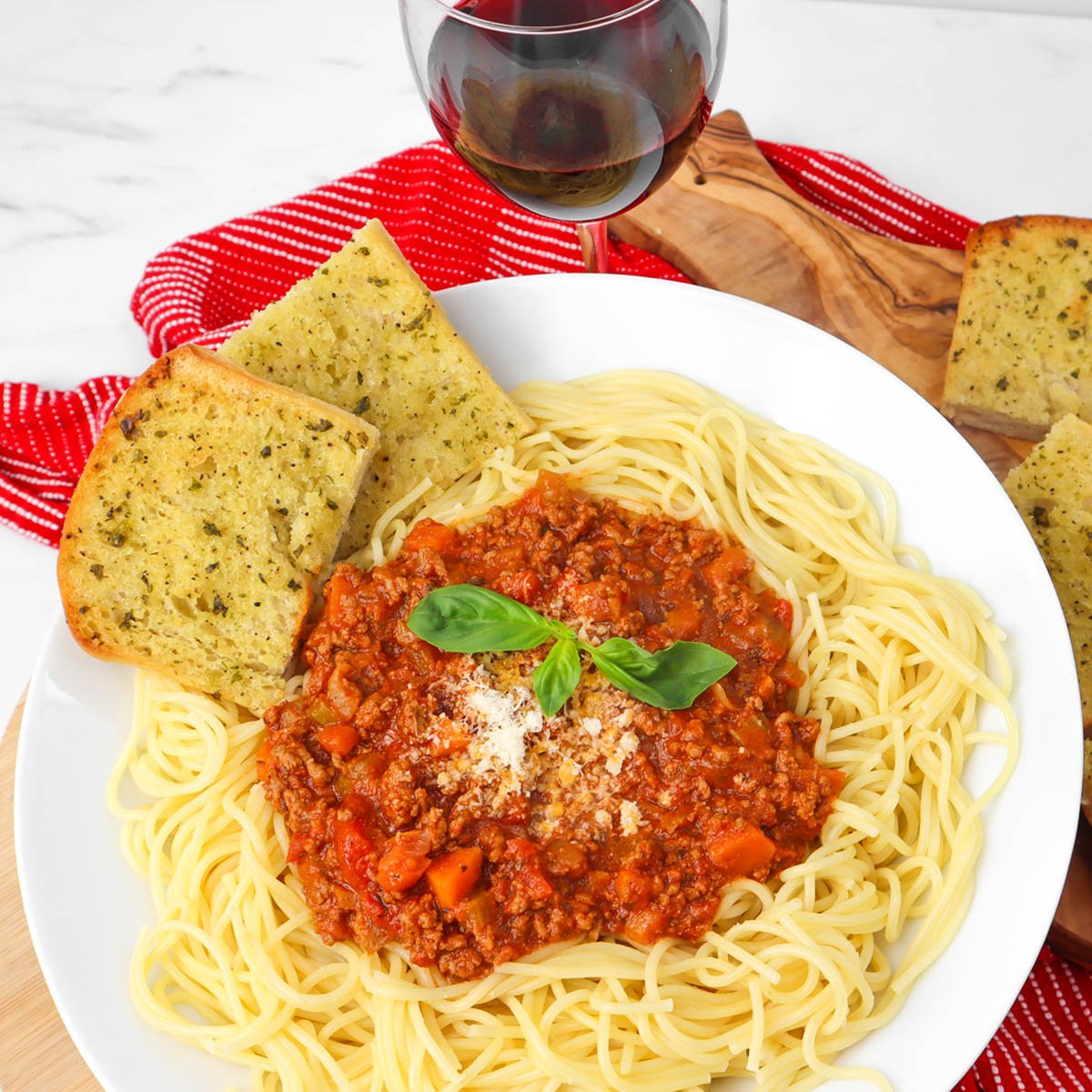





Índice
- ¿Te has enamorado alguna vez de un plato antes incluso de probarlo?
- ¿Qué hace que los tradicionales espaguetis a la boloñesa sean tan especiales?
- ¿Tienes la paciencia para dejar que los sabores se desarrollen?
- ¿Cómo conseguir esa textura sedosa y perfecta?
- ¿Qué ingredientes hacen la mayor diferencia?
- ¿Por qué cocinar con intención lo cambia todo?
- ¿Cuál es la mejor manera de almacenar y disfrutar las sobras?
- ¿Puede una receta llevar un recuerdo?
- Mantengámonos conectados
- Ir a la receta
¿Te has enamorado alguna vez de un plato antes incluso de probarlo?
Me pasó por teléfono. Mi hermana, que vive en Barcelona, me contaba la cena que había preparado: unos espaguetis a la boloñesa tradicionales. Su voz se suavizó al describir la cocción lenta de los tomates y el vino, cómo la salsa fue espesando poco a poco con el paso de las horas, el aroma a ajo y albahaca que inundaba su apartamento. Casi podía olerlo a través del teléfono.
Había algo en la forma en que hablaba de esa comida, no solo de la comida en sí, sino del amor y la paciencia con que la había preparado, que me conmovió profundamente. Recuerdo colgar el teléfono y sentir un poco de envidia. No porque no pudiera tenerla, sino porque deseaba vivir esa misma experiencia, ese acto de crear algo tan reconfortante, tan emotivo, que pudiera silenciar el ruido del mundo por un instante.
Así que hice lo que cualquier amante de la comida haría: me propuse prepararla yo misma. La receta que usé no era mía originalmente; me la dio una amiga italiana que amablemente compartió conmigo la versión de su madre.
No es un plato rápido para una noche entre semana. Es algo que preparas cuando quieres cocinar con intención. Cuando quieres que tu hogar huela a calidez y paciencia. Cuando quieres crear algo que sepa a tiempo.
¿Qué hace que los tradicionales espaguetis a la boloñesa sean tan especiales?
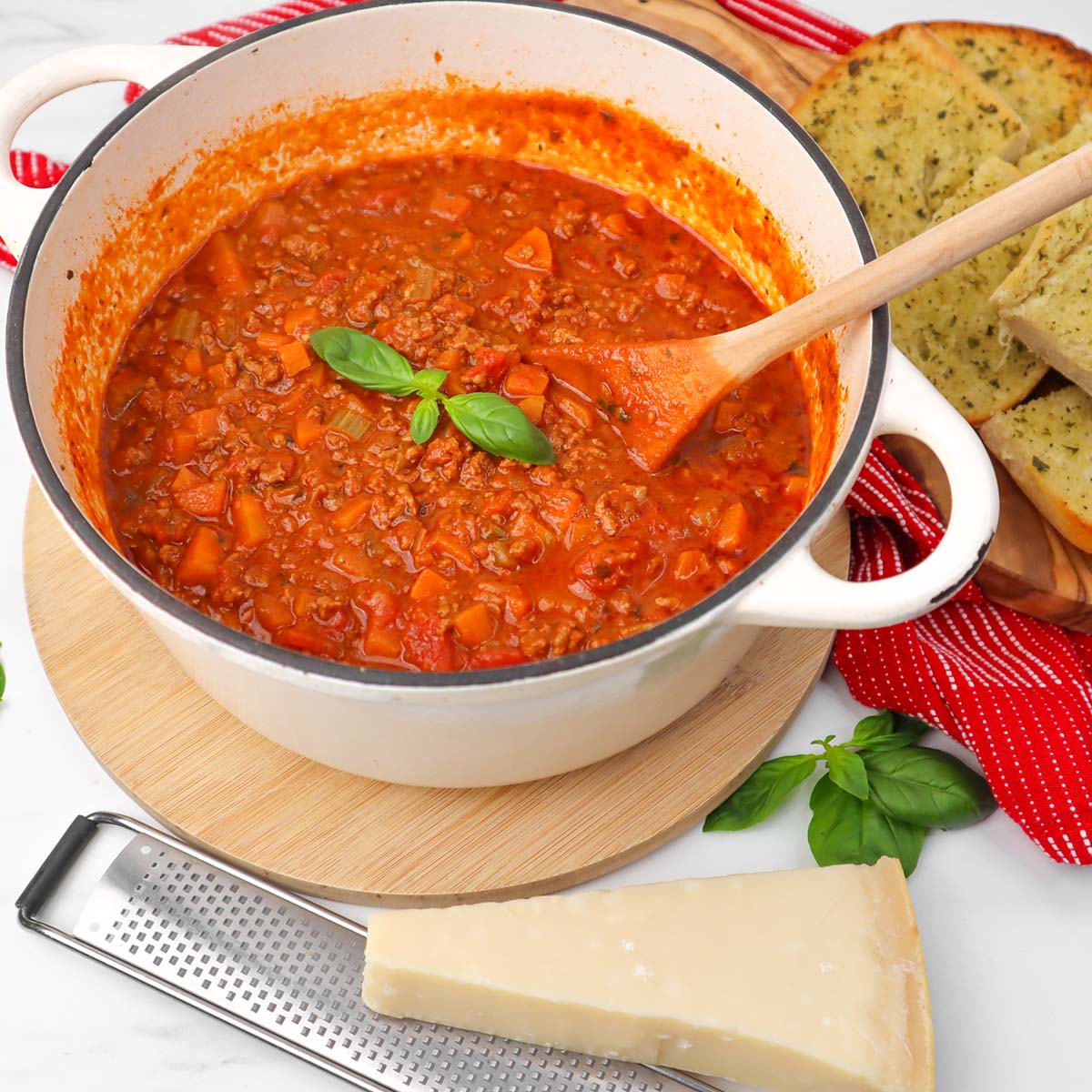
La primera vez que preparé esta receta, comprendí por qué los italianos la aprecian tanto: te enseña a tomarte las cosas con calma. Un espagueti a la boloñesa tradicional no consiste en echar los ingredientes en una olla y olvidarse; se trata de extraer el sabor de alimentos sencillos y cotidianos.
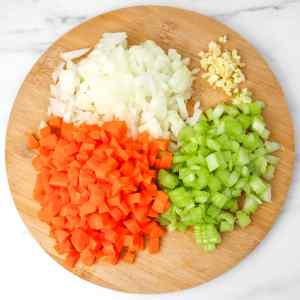
Cada elemento cumple una función. Las cebollas, las zanahorias y el apio forman un sofrito, la base aromática que aporta dulzor y profundidad. Cocinarlos suavemente durante diez minutos permite que sus sabores se liberen sin amargar. Añadir la carne molida a continuación crea esa base rica y carnosa, y dorarla bien le da a la salsa su esencia.
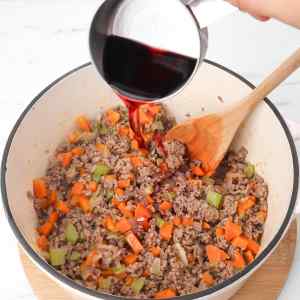
Al añadir el vino tinto, déjalo hervir a fuego lento hasta que se evapore el alcohol. Ahí reside la clave. El vino realza el sabor de los tomates, aportando a la salsa un sabor redondo y pleno, en lugar de ácido. Pequeños detalles como este marcan la diferencia entre una buena salsa y una excelente.
¿Tienes la paciencia para dejar que los sabores se desarrollen?
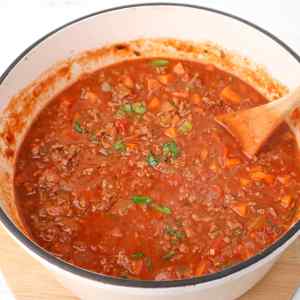
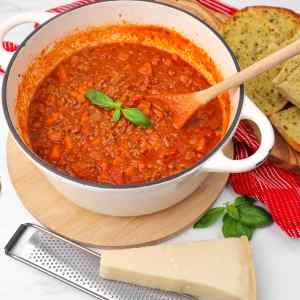
La paciencia es el ingrediente más importante de este plato. Una vez que se añaden los tomates, las hierbas y la albahaca, la salsa necesita tiempo, unas tres horas en total, para transformarse. Durante esa cocción lenta, los sabores se fusionan, la textura se espesa y el color se intensifica hasta alcanzar un rojo ladrillo intenso.
Si tienes la tentación de apresurarte, recuerda esto: cuanto más tiempo se cocine, más se suavizará la acidez de los tomates y la carne absorberá el dulzor de las verduras. Me gusta revisar la salsa cada 30 minutos, removerla suavemente y probarla. Si empieza a secarse, le añado un chorrito de agua o un poco más de passata.
Cocinar de esta manera es relajante y permite una experiencia consciente. No solo esperas, sino que observas cómo algo se desarrolla. Es un buen recordatorio de que las cosas bellas requieren tiempo, ya sea una salsa o cualquier otra cosa en la vida.
¿Cómo conseguir esa textura sedosa y perfecta?
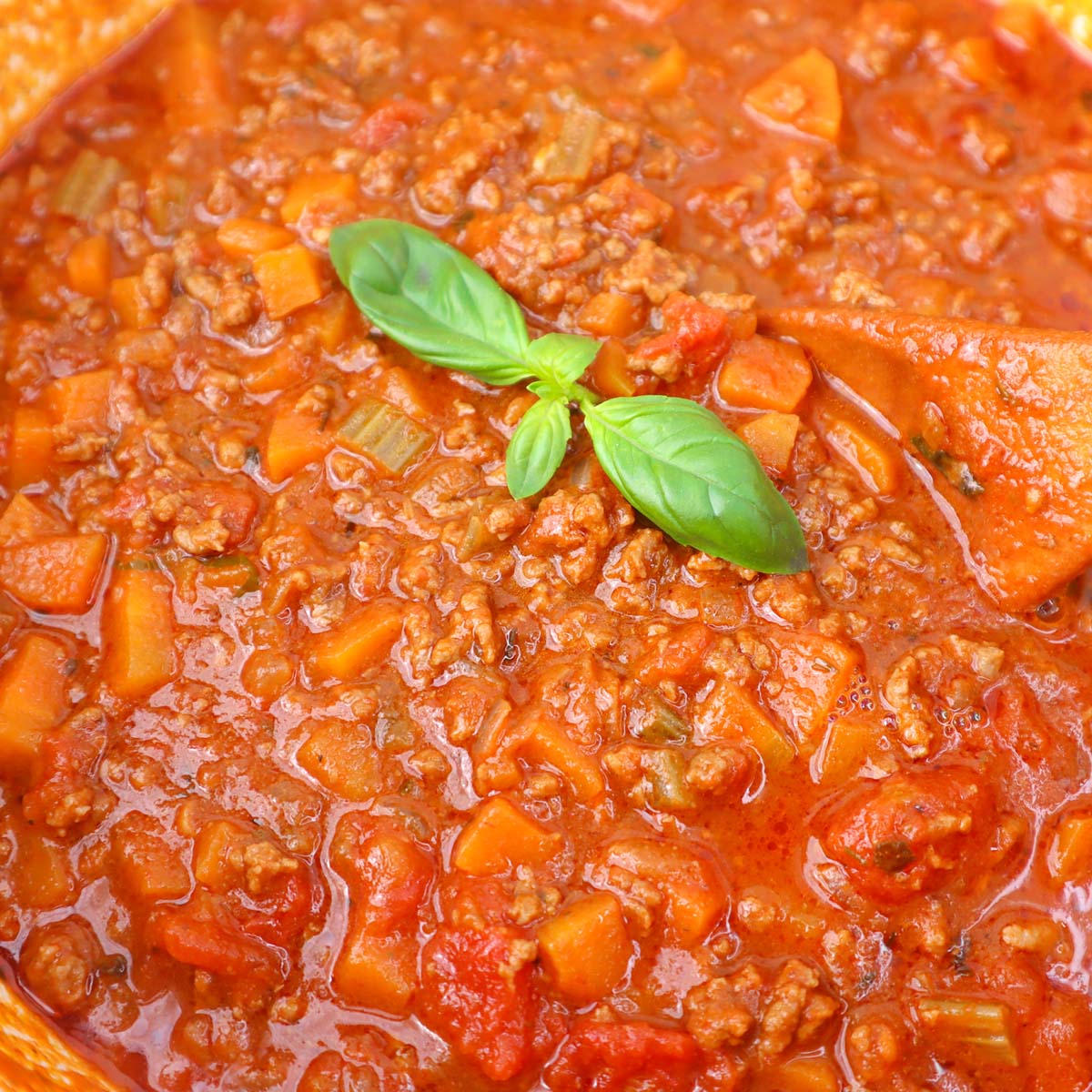
Mucha gente se pregunta por qué la pasta de restaurante es más suave y rica que la casera. El secreto está en los pequeños pasos. Primero, corta las verduras en dados finos para que prácticamente desaparezcan en la salsa. Segundo, deshaz bien la carne mientras se dora; los grumos grandes impiden que la salsa quede cohesiva.
Y aquí está el truco que lo cambia todo: termina de cocinar los espaguetis en la salsa. Hierve la pasta hasta que esté casi al dente, luego escúrrela y añádela directamente a la salsa boloñesa hirviendo con un cucharón del agua de cocción de la pasta. Esa agua ayuda a que la salsa se adhiera a cada hebra, creando ese acabado brillante y profesional.
Al combinarlos, remueve lentamente hasta que los espaguetis absorban el sabor de la salsa. Notarás la diferencia de inmediato; cada bocado tendrá un sabor equilibrado, no solo cubierto de salsa.
¿Qué ingredientes hacen la mayor diferencia?
Los ingredientes de calidad realzan incluso los platos más sencillos. He comprobado que usar carne de res extra magra aporta un sabor más limpio, pero una mezcla de carne de res y cerdo le da una riqueza maravillosa si se busca un sabor italiano más tradicional.
Los tomates también son importantes. Busca tomates troceados enlatados de buena calidad o passata italiana elaborada con tomates maduros de la variedad ciruela. Son naturalmente dulces y menos ácidos. Si tus tomates tienen un sabor ácido, añade media cucharadita de azúcar para equilibrarlo.
En cuanto a las hierbas, el orégano y el tomillo secos aportan profundidad, pero la albahaca fresca aporta frescura. Desmenuce la albahaca a mano en lugar de picarla, ya que al cortarla se magullan las hojas y se pierde su aroma. Estos pequeños detalles pueden parecer insignificantes, pero realzan el resultado final.
¿Por qué cocinar con intención lo cambia todo?
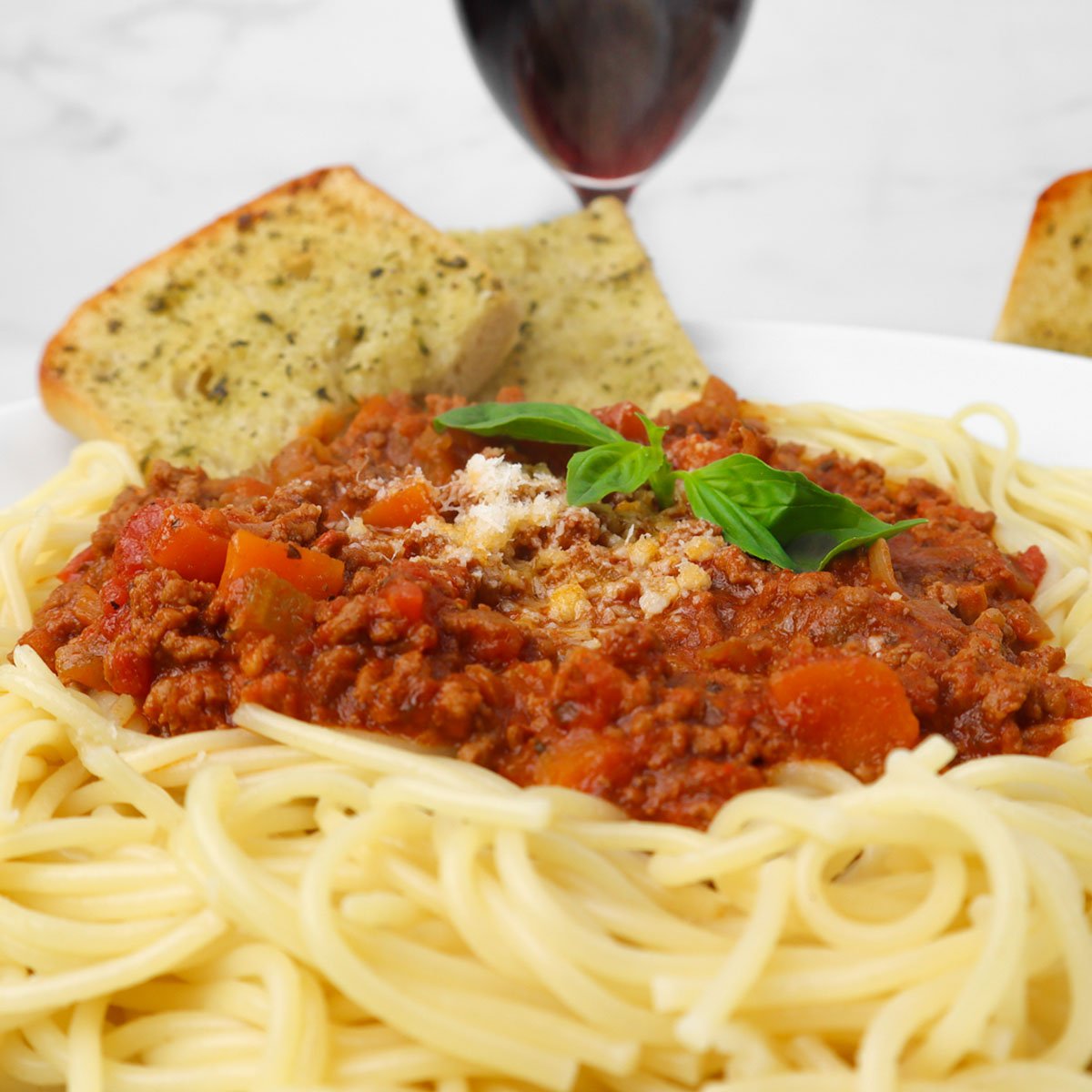
He llegado a creer que la comida sabe mejor cuando le prestas toda tu atención. Preparar espaguetis a la boloñesa tradicionales me obliga a estar presente. Escucho cómo burbujea la salsa, ajusto el fuego y pruebo hasta que tenga el punto justo. Cocinar así convierte la cena en una forma de meditación.
Notarás que, a medida que la salsa espesa, tu cocina empieza a oler a puro confort: cálido, sabroso y ligeramente dulce. Solo ese aroma ya justifica prepararla. Te anuncia que algo bueno está por venir, algo que vale la pena esperar.
Esta receta también me ha enseñado a apreciar la generosidad en la cocina. Cuando preparo una olla grande, siempre congelo algunas porciones para los días ajetreados. Saber que mi yo del futuro tendrá una comida casera esperando en el congelador es profundamente satisfactorio.
¿Cuál es la mejor manera de almacenar y disfrutar las sobras?
Si eres como yo, te encantará saber que los espaguetis a la boloñesa tradicionales saben aún mejor al día siguiente. Una vez que la salsa se haya enfriado por completo, la guardo en recipientes herméticos en el refrigerador hasta por cuatro días, o la congelo hasta por tres meses. Al recalentarla, me gusta añadir un chorrito de agua o un poco de aceite de oliva para recuperar esa textura sedosa; le da un toque refrescante delicioso. ¡Y no te limites a recalentarla solo con pasta! A menudo uso la boloñesa sobrante para rellenar papas al horno, para la lasaña, para rellenar pimientos o incluso para untar en pan tostado para un almuerzo rápido y rústico. Es una de esas recetas excepcionales que parece nueva cada vez que la preparas.
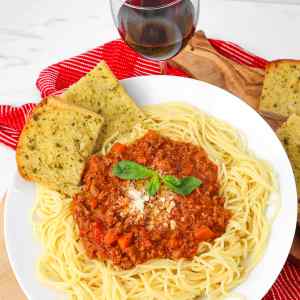
Espaguetis a la boloñesa tradicionales

Ingredientes
- 1 cucharada de aceite de oliva
- 1 Medio cebolla cortado en cubitos
- 2 Medio zanahorias cortado en cubitos
- 2 tallos de apio cortado en cubitos
- 3 dientes de ajo picado
- 6 hojas de albahaca fresca
- 400 gramos tomates troceados en conserva
- 500 gramos passata de tomate o tomates triturados
- 120 ml vino tinto ½ taza
- 2 cucharilla orégano seco
- ½ cucharilla tomillo seco
- 450 gramos Carne molida extra magro si se prefiere
- 1 pizca sal y pimienta negra probar
- 450 gramos espaguetis secos
Opcional para servir:
- hojas de albahaca fresca reservadas
- queso parmesano recién rallado
Instrucciones
- Comience cortando en cubitos la cebolla, las zanahorias, el apio y picando el ajo para que todo esté preparado y listo para cocinar.1 cebolla mediana, 2 zanahorias medianas, 2 tallos de apio, 3 dientes de ajo

- Calienta 1 cucharada de aceite de oliva en una sartén grande y profunda o en una olla holandesa a fuego medio-bajo.1 cucharada de aceite de oliva
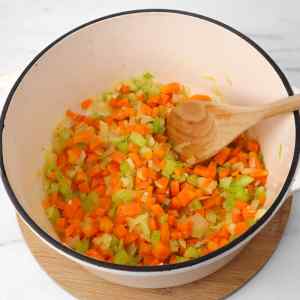
- Añade la cebolla picada, la zanahoria, el apio y el ajo picado. Cocina a fuego lento durante unos 10 minutos, removiendo de vez en cuando. Las verduras deben ablandarse, pero no dorarse.
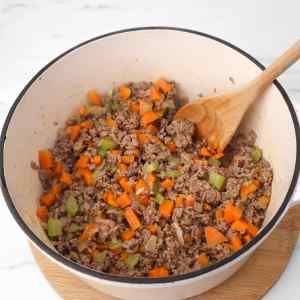
- Añade la carne molida a la sartén y cocínala hasta que esté completamente dorada, deshaciéndola con una cuchara mientras se cocina (aproximadamente 5 a 7 minutos).450 gramos de carne molida
- Vierta 1/2 taza de vino tinto y deje cocinar por un minuto.120 ml de vino tinto
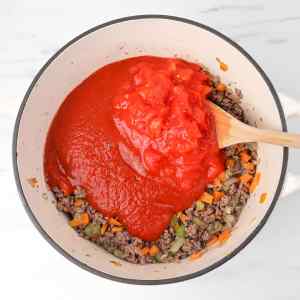
- Añade los tomates picados y la passata de tomate (o tomate triturado). Remueve bien.400 gramos de tomates enlatados en cubos, 500 gramos de passata de tomate
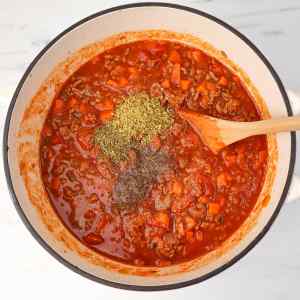
- Condimentar con sal, pimienta, orégano, tomillo y la mayor parte de la albahaca (reservar algunas hojas pequeñas de albahaca para decorar).6 hojas de albahaca fresca, 2 cucharaditas de orégano seco, ½ cucharadita de tomillo seco, 1 pizca de sal y pimienta negra
- Hierva la salsa y luego reduzca el fuego a bajo. Déjela hervir a fuego lento con la tapa ligeramente entreabierta durante 2,5 a 3 horas, removiendo ocasionalmente hasta que la salsa espese y adquiera un sabor intenso.
- Casi al final del tiempo de cocción, hierva una olla grande con agua con sal. Cocine los espaguetis según las instrucciones del paquete, pero reduzca el tiempo de cocción entre 1 y 2 minutos para que queden al dente.
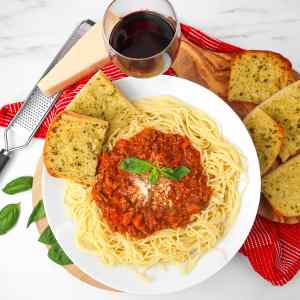
- Escurre la pasta y mézclala suavemente con la salsa boloñesa. Retírala del fuego.450 gramos de espaguetis secos
- Decorar con las hojas de albahaca reservadas y servir con queso parmesano recién rallado.hojas de albahaca fresca reservadas, queso parmesano recién rallado
Notas
- Ahorro de tiempo: ¿Quieres una versión más rápida? Cocina a fuego lento durante 45 minutos para una cena entre semana que sigue estando deliciosa.
- Opciones de carne: Pruebe una mezcla de carne picada de res y cerdo para una base más tradicional y sabrosa.
- Opción vegetariana: Reemplace la carne de res con champiñones o lentejas finamente picados.
- Apto para congelador: Esta salsa se congela perfectamente; duplique la cantidad y guarde las sobras para una comida fácil en el futuro.
- Consejo sobre la pasta: Siempre termine de cocinar la pasta en la salsa para una mejor absorción del sabor.
Información nutricional
Un comentario sobre “Traditional Spaghetti Bolognese”
Deja un comentario
¿Puede una receta llevar un recuerdo?
Cada vez que preparo este tradicional espagueti a la boloñesa, recuerdo aquella llamada con mi hermana, la que lo inició todo. Recuerdo a la madre de mi amiga italiana compartiendo su receta familiar con tanta calidez, segura de que yo la prepararía con el mismo cuidado que ella siempre le dedicaba. Cocinarla ahora es como honrar esa confianza. La comida tiene una hermosa manera de conectarnos, se transmite de generación en generación, cruza océanos y llega a nuestras mesas como un pedacito de la historia de alguien. Por eso, este plato siempre será más que una simple cena para mí; es consuelo, recuerdo y amor, todo mezclado.
Si te apetece seguir disfrutando de esa sensación, prueba una de mis otras cenas favoritas a continuación. Te enamorarás perdidamente de ella. Casate conmigo pollo, saborea la jugosidad de mi Receta de hamburguesa de carne casera, o condimentar las cosas con Pollo Piri-PiriPara algo acogedor y clásico, Pollo asado con mantequilla de limón y hierbas es imprescindible, y cuando te apetece algo divertido y rápido, mi Pizza de pepperoni perfecta En Menos de una hora te encantará. Cada una cuenta su propia historia, y estoy deseando que las incorpores a la tuya.

Mantengámonos conectados
Me encanta ver cómo otros dan vida a estas recetas en sus propias cocinas. Si preparas este tradicional espagueti a la boloñesa, o cualquiera de mis otros platos, ¡comparte tus creaciones conmigo en las redes sociales! Etiquétanos y cuéntame cómo te quedó, qué toques personales le añadiste o con quién lo compartiste. Nos encontrarás en Instagram, Pinteresty Facebook, únete a nuestra comunidad de cocineros caseros que creen que cada comida cuenta una historia.




El detalle de dejar que el vino reduzca para que se evapore el alcohol es un gran consejo. Realmente realza la profundidad de la salsa.