






Inhaltsverzeichnis
- Darum werden Sie diesen mediterranen Salat lieben
- Tipps für die beste Konsistenz und den besten Geschmack
- Variationen und alternative Zutaten
- Was passt zu mediterranem Salat?
- Häufig gestellte Fragen
- Kann ich mediterranen Salat im Voraus zubereiten?
- Wie verhindere ich, dass mediterraner Salat wässrig wird?
- Welche Oliven eignen sich am besten für mediterranen Salat?
- Ist mediterraner Salat dasselbe wie griechischer Salat?
- Kann ich diesen Salat ohne Feta zubereiten?
- Was kann ich anstelle von Rotweinessig verwenden?
- Wie lange hält sich mediterraner Salat?
- Zum Rezept
Darum werden Sie diesen mediterranen Salat lieben
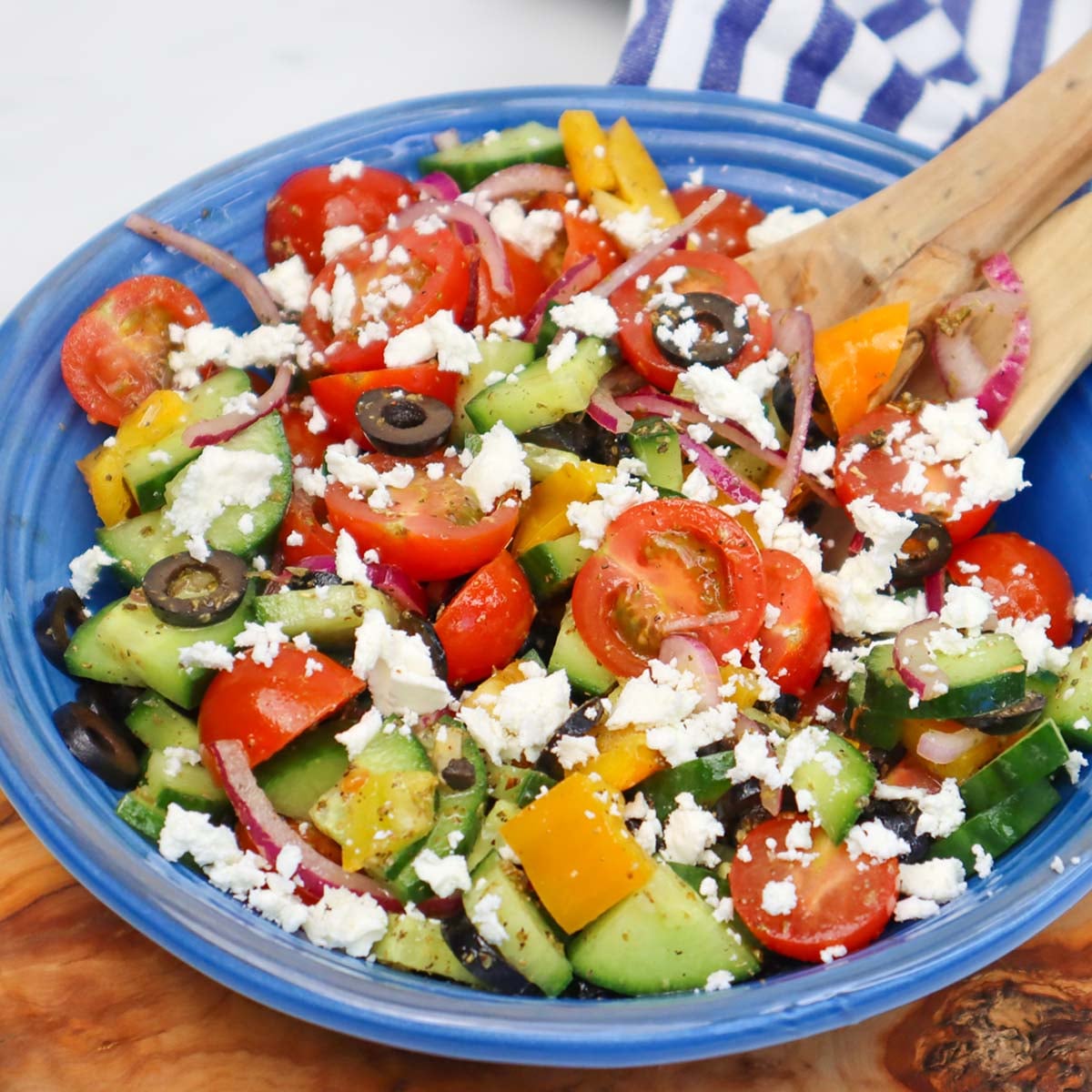
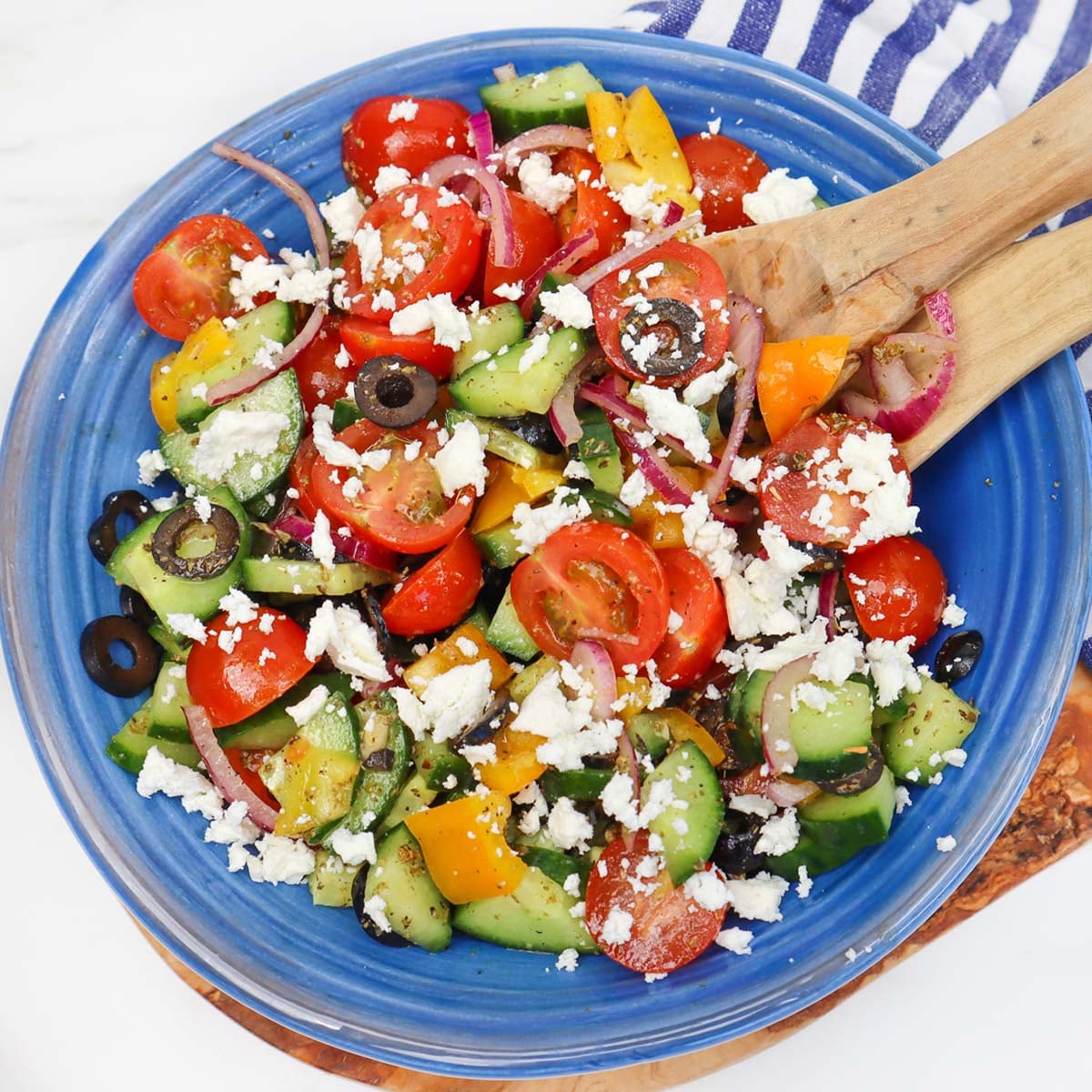
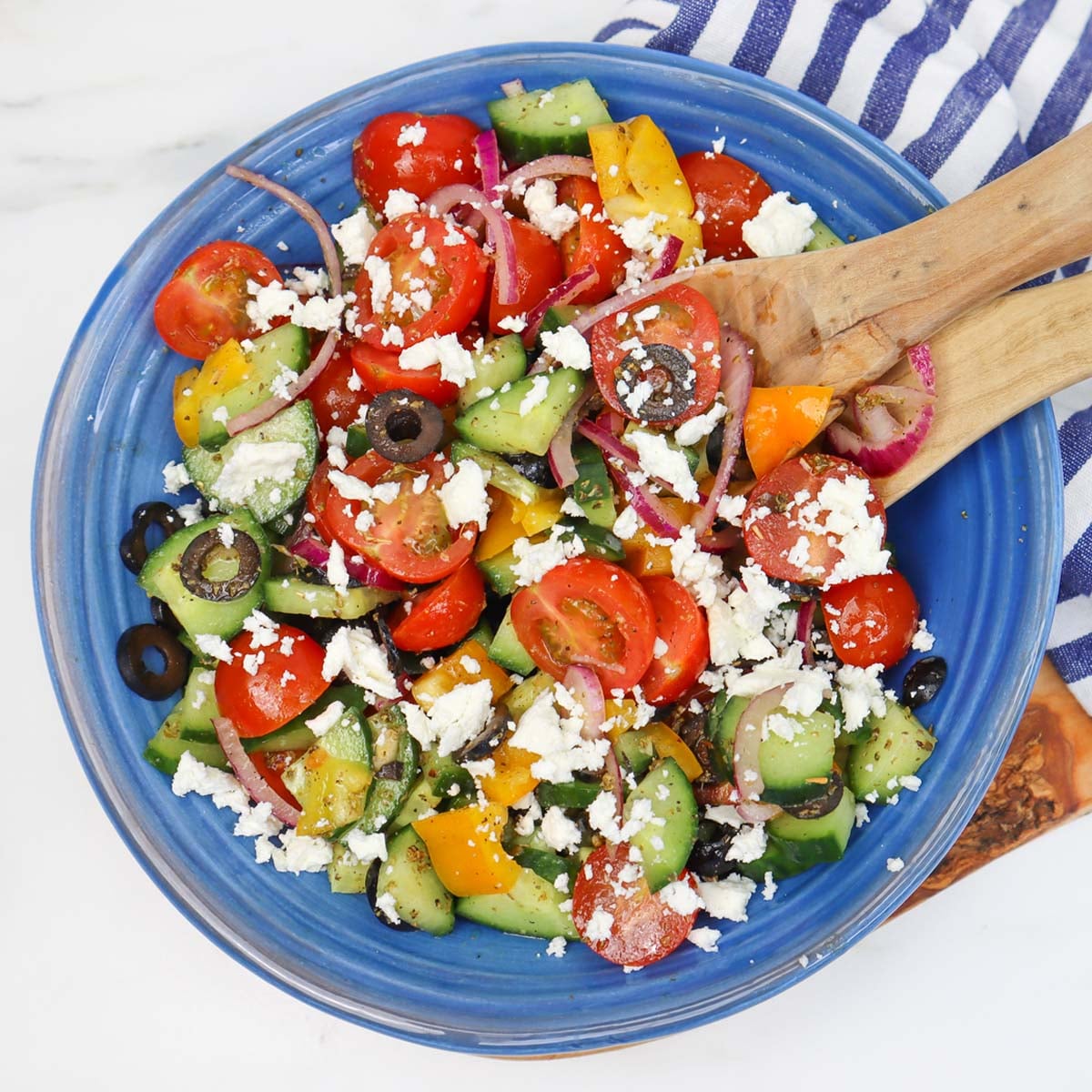
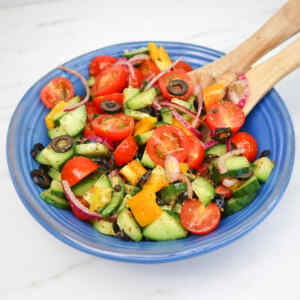
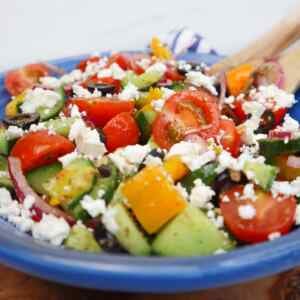
Dieser mediterrane Salat gehört zu meinen Lieblingsoptionen, wenn ich schnell eine Beilage brauche, die nicht gekocht werden muss. Die Gurke und die gelbe Paprika sorgen für reichlich Biss, während die Kirschtomaten Süße und Saftigkeit beisteuern. Schwarze Oliven bringen eine milde salzige Note ein, und der zerbröselte Feta verleiht dem Salat zum Abschluss eine cremige, würzige Note.
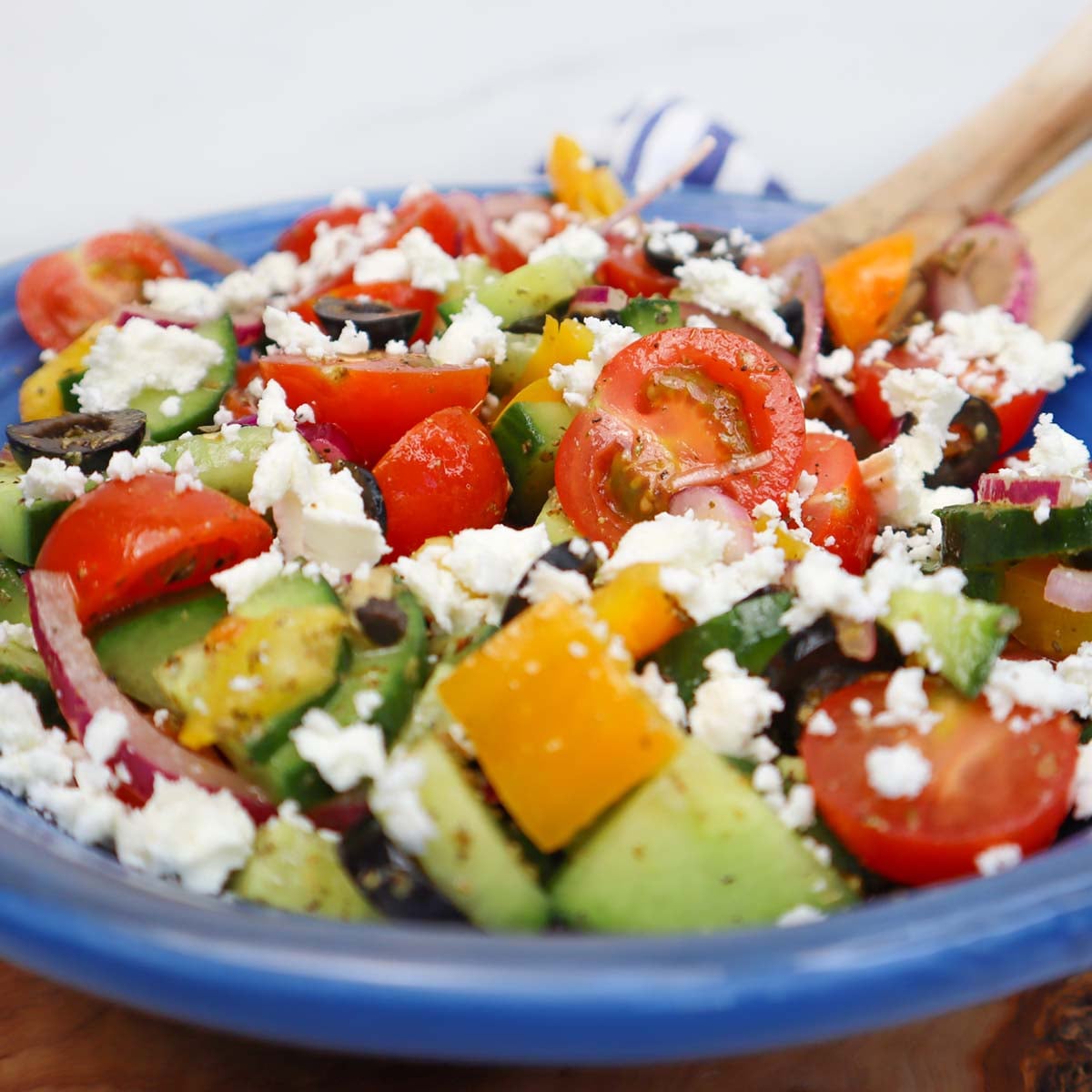
Das Dressing ist eine einfache Mischung aus Olivenöl, Rotweinessig, Oregano, koscherem Salz und schwarzem Pfeffer. Es überzieht das Gemüse leicht, ohne dessen Geschmack zu überdecken, und weder ein fertiges Dressing aus der Flasche noch eine lange Zutatenliste sind nötig.
Da der Salat in wenigen Minuten zubereitet ist, eignet er sich besonders für geschäftige Abende unter der Woche, sommerliche Zusammenkünfte und Mittagessen in letzter Minute. Sie können ihn sofort servieren oder vor dem Servieren kurz in den Kühlschrank stellen.
Tipps für die beste Konsistenz und den besten Geschmack
Trocknen Sie das Gemüse nach dem Waschen gründlich ab. Überschüssiges Wasser kann das Dressing verdünnen und sich am Boden der Schüssel sammeln. Eine feste kernlose Gurke eignet sich besonders gut, weil sie kleine Kerne hat und normalerweise nicht geschält werden muss.
Schneiden Sie Gurke, Paprika und Tomaten in ähnlich große Stücke, damit jede Portion eine ausgewogene Mischung der Zutaten enthält. Schneiden Sie die rote Zwiebel in dünne Scheiben, sodass sie eine angenehme Schärfe beisteuert, ohne Gurke, Tomaten und Feta zu überdecken.
Verrühren Sie das Dressing mit einem Schneebesen, bevor Sie es über das Gemüse geben. So verbinden sich Öl, Essig, Oregano, Salz und Pfeffer gleichmäßig. Das Gemüse sollte leicht überzogen sein und nicht in einer Pfütze aus Dressing liegen.
Geben Sie den Feta erst hinzu, nachdem Sie das Dressing unter das Gemüse gemischt haben. Heben Sie ihn vorsichtig unter den Salat oder verteilen Sie ihn darüber, damit seine krümelige Konsistenz erhalten bleibt. Wenn Sie den Salat im Voraus zubereiten, bewahren Sie Dressing und Feta bis kurz vor dem Servieren getrennt auf.
Variationen und alternative Zutaten
Gewöhnliche schwarze Oliven verleihen diesem Salat einen milden Geschmack. Kalamata-Oliven sind jedoch eine gute Alternative, wenn Sie ein kräftigeres und salzigeres Aroma bevorzugen. Lassen Sie die Oliven vor dem Hinzufügen gut abtropfen, damit sie keine unnötige Flüssigkeit in den Salat bringen.
Feta am Stück hat in der Regel eine cremigere Konsistenz als bereits zerbröselter Feta. Zerbröseln Sie ihn erst kurz vor der Zubereitung des Salats. Für eine milchfreie oder vegane Variante können Sie ihn weglassen oder eine milchfreie Feta-Alternative verwenden.
Sie können den Salat außerdem mit einer oder zwei der folgenden Zutaten abwandeln:
- Fügen Sie Kichererbsen hinzu, damit er sättigender wird.
- Geben Sie kurz vor dem Servieren gewürfelte Avocado hinzu, um den Salat noch cremiger zu machen.
- Mischen Sie gehackte Petersilie oder Minze unter, um dem Salat ein frisches Kräuteraroma zu verleihen.
- Fügen Sie getrocknete Tomaten hinzu, um ein intensiveres Tomatenaroma zu erzielen.
- Geben Sie zum Schluss einen Spritzer frischen Zitronensaft über den Salat, um ihm mehr Säure zu verleihen.
Beschränken Sie sich auf wenige zusätzliche Zutaten, damit Gurke, Tomaten, Oliven und Feta im Mittelpunkt des Salats bleiben.
Was passt zu mediterranem Salat?
Dieser mediterrane Salat passt gut zu gegrilltem Hähnchen, Fisch, Ofengemüse, Pasta oder warmem Fladenbrot. Er kann auch allein als leichtes Mittagessen serviert werden, insbesondere wenn Kichererbsen hinzugefügt werden, die ihn etwas gehaltvoller machen.
Ich habe ihn beim sommerlichen Grillfest meiner Eltern serviert und Dressing und Feta bis kurz vor dem Essen getrennt aufbewahrt. Dieser einfache Schritt trug dazu bei, dass das Gemüse knackig blieb und der Feta sich nicht im Dressing auflöste.
Mit seinem frischen Gemüse und dem säuerlichen Dressing passt er besonders gut zu gegrillten oder gerösteten Speisen, ist aber vielseitig genug, um auch als Beilage zu einem alltäglichen Familienessen serviert zu werden.
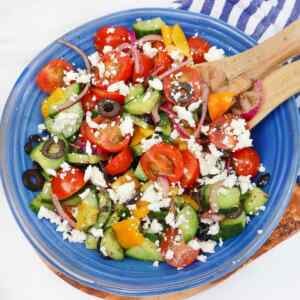
Mediterraner Salat

Utensilien
- Kleine Schüssel (für das Dressing)
- Löffel oder Salatzange
Zutaten
- 1 große kernlose Gurke gewürfelt
- 1 gelbe Paprika gewürfelt
- 1½ Tassen Kirschtomaten halbiert
- ½ mittelgroße rote Zwiebel, in Scheiben geschnitten
- ⅔ Tasse schwarze Oliven entsteint und in Scheiben geschnitten
- ¾ Tasse Feta zerbröselt
- 2 Esslöffel Olivenöl
- 2 Esslöffel Rotweinessig
- 1 Teelöffel Oregano
- ½ Teelöffel koscheres Salz
- ⅛ Teelöffel frisch gemahlener schwarzer Pfeffer
Zubereitung
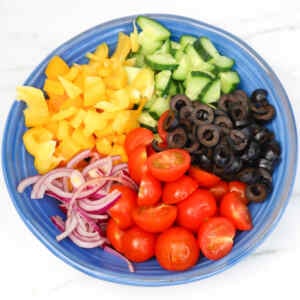
- Geben Sie die gewürfelte Gurke, die halbierten Kirschtomaten, die in Scheiben geschnittene rote Zwiebel, die gewürfelte Paprika und die Oliven in eine große Rührschüssel.1 große kernlose Gurke, 1 gelbe Paprika, 1½ Tassen Kirschtomaten, ½ mittelgroße rote Zwiebel, ⅔ Tasse schwarze Oliven

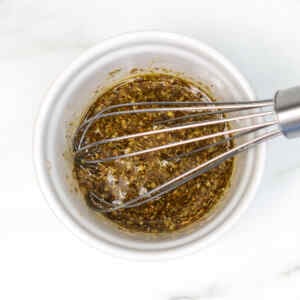
- Verrühren Sie Olivenöl, Rotweinessig, Oregano, Salz und schwarzen Pfeffer in einer kleinen Schüssel mit einem Schneebesen, bis alles gut vermischt ist.2 Esslöffel Olivenöl, 2 Esslöffel Rotweinessig, 1 Teelöffel Oregano, ½ Teelöffel koscheres Salz, ⅛ Teelöffel frisch gemahlener schwarzer Pfeffer
- Gießen Sie das Dressing über den Salat und vermengen Sie alles vorsichtig, sodass alle Zutaten gleichmäßig damit überzogen sind.
- Streuen Sie den zerbröselten Feta darüber und vermengen Sie den Salat noch einmal leicht oder lassen Sie den Feta zum Servieren obenauf liegen.¾ Tasse Feta
- Servieren Sie den Salat sofort oder stellen Sie ihn für 10–15 Minuten in den Kühlschrank, damit sich die Aromen entfalten können.
Notizen
- Schneiden Sie die Zwiebeln in dünne Scheiben. So bleibt der Geschmack ausgewogen und wird nicht zu dominant.
- Verwenden Sie frische Zutaten. Die Qualität Ihres Gemüses macht einen großen Unterschied.
- Geben Sie den Feta zuletzt hinzu. So bleibt seine Konsistenz erhalten.
- Passen Sie den Salat nach Belieben an. Fügen Sie für mehr Abwechslung getrocknete Tomaten, Avocado oder Kichererbsen hinzu.
- Im Voraus zubereiten. Bereiten Sie den Salat im Voraus zu, geben Sie das Dressing für die beste Konsistenz aber erst kurz vor dem Servieren hinzu.
- Mehr Aroma. Ein Spritzer Zitronensaft kann dem Gericht noch mehr Frische verleihen.
- Serviervorschlag. Perfekt als Beilage, leichtes Mittagessen oder Ergänzung zum Grillen.
Nährwerte
Häufig gestellte Fragen
Kann ich mediterranen Salat im Voraus zubereiten?
Ja. Schneiden Sie das Gemüse und bereiten Sie das Dressing im Voraus zu. Stellen Sie beides anschließend getrennt in den Kühlschrank. Geben Sie Dressing und Feta erst kurz vor dem Servieren hinzu, damit das Gemüse knackig bleibt und der Feta seine Konsistenz behält.
Wie verhindere ich, dass mediterraner Salat wässrig wird?
Trocknen Sie das Gemüse nach dem Waschen gründlich ab, lassen Sie die Oliven abtropfen und geben Sie Salz und Dressing nicht zu früh hinzu. Wenn Sie eine große Gurke mit einem wässrigen Kerngehäuse verwenden, entfernen Sie dieses vor dem Schneiden mit einem Löffel. Geben Sie das Dressing erst kurz vor dem Servieren über den Salat, damit er möglichst knackig bleibt.
Welche Oliven eignen sich am besten für mediterranen Salat?
Kalamata-Oliven haben ein kräftiges, fruchtiges und angenehm salziges Aroma, das besonders gut zu Salaten mediterraner Art passt. Gewöhnliche schwarze Oliven sind milder und ebenfalls eine gute Wahl. Verwenden Sie die Sorte, die Ihnen am besten schmeckt.
Ist mediterraner Salat dasselbe wie griechischer Salat?
Nicht unbedingt. Griechischer Salat, auch als Horiatiki bekannt, ist ein bestimmtes griechisches Gericht, das traditionell mit Zutaten wie Tomaten, Gurke, Zwiebel, Oliven, Feta, Oregano und Olivenöl zubereitet wird. Mediterraner Salat ist ein weiter gefasster Begriff und kann viele verschiedene Gemüsearten, Dressings, Getreideprodukte, Hülsenfrüchte oder Käsesorten enthalten.
Kann ich diesen Salat ohne Feta zubereiten?
Ja. Sie können den Feta einfach weglassen oder eine milchfreie Feta-Alternative verwenden. Auch Kichererbsen oder Avocado können hinzugefügt werden, um den Salat gehaltvoller zu machen. Sie verleihen ihm allerdings nicht denselben salzigen Geschmack wie Feta.
Was kann ich anstelle von Rotweinessig verwenden?
Weißweinessig ist der ähnlichste Ersatz und kann im Allgemeinen in derselben Menge verwendet werden. Frischer Zitronensaft eignet sich ebenfalls, verleiht dem Dressing jedoch ein frischeres Zitrusaroma. Geben Sie ihn nach Geschmack hinzu und passen Sie die Würzung nach Bedarf an.
Wie lange hält sich mediterraner Salat?
Mediterraner Salat schmeckt am Tag der Zubereitung am besten. Reste können jedoch bis zu zwei Tage in einem luftdicht verschlossenen Behälter im Kühlschrank aufbewahrt werden. Das Gemüse wird allmählich weicher und gibt Flüssigkeit ab. Rühren Sie den Salat daher vor dem Servieren vorsichtig um und gießen Sie überschüssiges Dressing ab.


