


Inhoudsopgave
- Uw gids voor klassieke Griekse broodsoorten en moderne variaties
- Pitabrood (Grieks platbrood)
- Lagana (platbrood voor schone maandag)
- Ladenia (plat brood met tomaten en uien uit Kimolos)
- Tsoureki (Grieks zoet paasbrood)
- Christopsomo (Grieks kerstbrood)
- Vasilopita (geluksbrood voor Nieuwjaar)
- Lazarakia (Griekse Lazarus-broodjes)
- Horiatiko Psomi (dorpsbrood)
- Koulouri Thessalonikis (Sesambroodringen)
- Kritsinia (Griekse sesambroodstengels)
- Stafidopsomo (rozijnenbroodjes)
- Tiropsomo (Fetakaasbrood)
- Eliopsomo (Olijvenbrood)
- Paximadi (Gerstbeschuit)
- Tiganopsomo (Gefrituurd brood met feta)
- Spanakopita Brood Twist (Spinazie & Feta Twist)
- Glutenvrij pitabrood (moderne bewerking)
- Loukoumades (honingsiroopdeegballetjes)
- Hoe maak je een Griekse broodschotel?
- Veelgestelde vragen over Grieks brood
- Wat is het populairste Griekse brood?
- Welk Grieks brood is het beste om in te dippen?
- Hoe heet Grieks zoet brood?
- Kan ik Grieks brood maken zonder een standmixer?
- Welk meel is het beste voor Grieks brood?
- Authentiek Grieks pitabroodrecept
- Traditioneel Lagana platbrood
- Ladenia met erfgoedtomaten
- Traditionele Griekse Tsoureki
- Grieks Christopsomo brood
- Vasilopita Grieks nieuwjaarsbrood
- Lazarakia (Griekse Paas-Lazarus-broodjes)
- Dorpsbrood (Horiatiko Psomi)
- Koulouri Thessalonikis
- Griekse sesambroodstengels (Kritsinia)
- Rozijnenbrood (Stafidopsomo)
- Grieks fetakaasbrood (Tiropsomo)
- Grieks olijvenbrood (Eliopsomo)
- Authentieke Griekse gerstebeschuit (Paximadi)
- Tiganopsomo met feta
- Spanakopita Brood Twist
- Glutenvrije Griekse pita
- Loukoumades (Honingdeegballetjes)
De Griekse keuken kent een rijke broodtraditie, van eeuwenoude platbroden tot feestelijke broden voor de feestdagen. Brood staat centraal in de Griekse cultuur – of het nu gaat om een eenvoudig dorpsbrood dat bij elke maaltijd wordt geserveerd of een zoet, gekruid brood dat voor speciale gelegenheden wordt bereid. In dit overzicht verkennen we meer dan twintig soorten Grieks brood, zowel traditionele klassiekers als creatieve, moderne varianten.
Uw gids voor klassieke Griekse broodsoorten en moderne variaties
Grieks brood is meer dan een bijgerecht. Het is geschiedenis op een bord, van eenvoudige dorpsbroden tot rijkelijk versierde feestbroden die familietradities in zich dragen. In dit overzicht vindt u meer dan twintig soorten. Grieks brood: zachte flatbreads, ontbijtringen met sesamkorst, tomatenbrood in eilandstijl en zoete feestbroden. Elk item linkt naar een betrouwbaar, beproefd recept en bevat serveerideeën, ingrediëntennotities en culturele context.
Gebruik deze gids om een Griekse mezze-avond te plannen, een feestelijk brood te bakken voor een feesttafel of een moderne twist te proberen met glutenvrije pita of een spanakopita-broodvariant. Als je nog niet bekend bent met Grieks brood, begin dan met pita. Ervaren bakkers kunnen zich verdiepen in tsoureki, christopsomo en gerstebeschuit.
Pitabrood (Grieks platbrood)
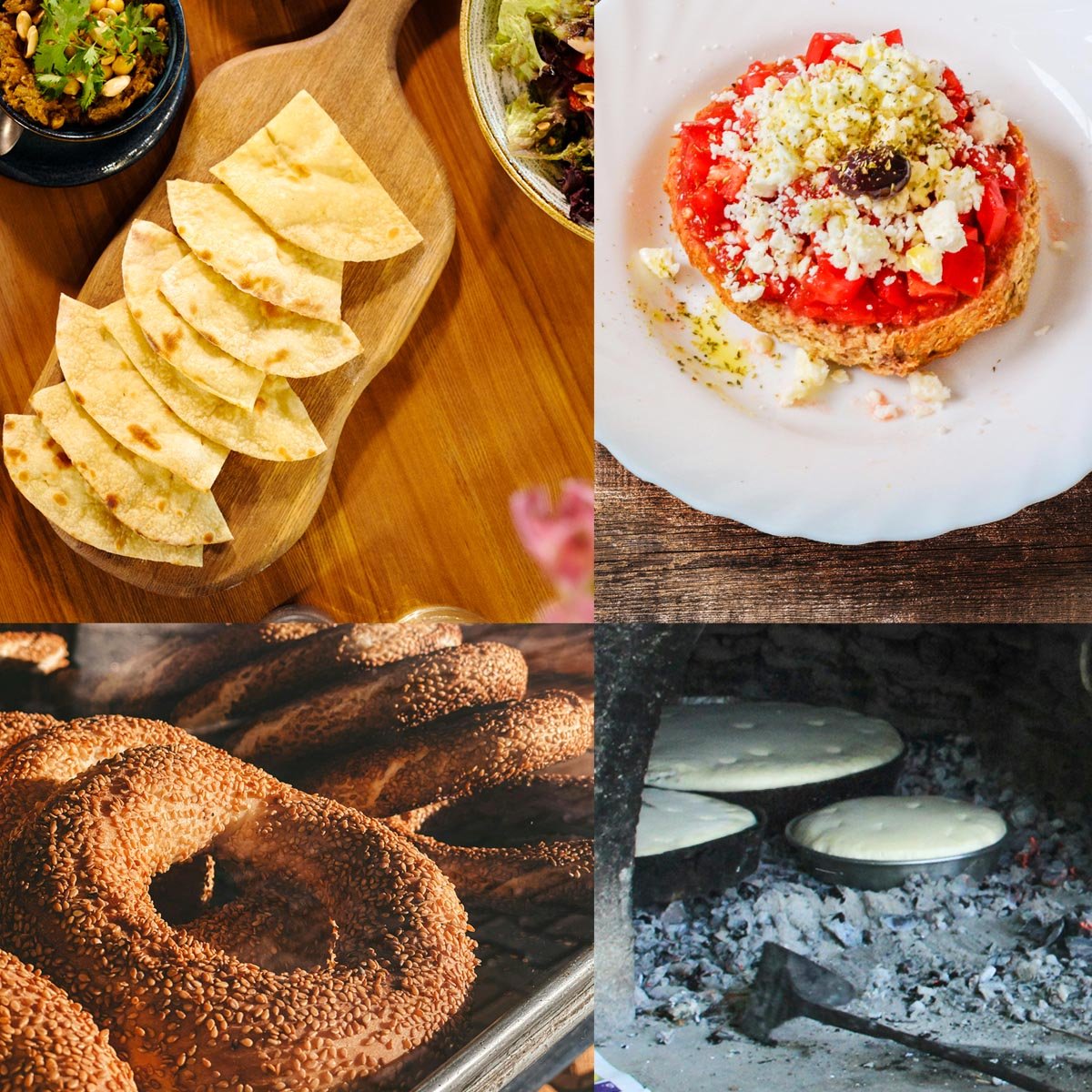
Pita is het iconische Griekse platbrood, zacht en luchtig met een kenmerkende holte vanbinnen. Het is een rond, met gist gerezen platbrood dat tijdens het bakken opzwelt en een luchtkamer creëert, perfect om te vullen. Grieken serveren pita met dipsauzen zoals tzatziki En hummus, of in punten gesneden bij gegrild vlees. Dit platbrood heeft een eeuwenoude oorsprong en is nog steeds een favoriet in Griekenland en het Middellandse Zeegebied, geliefd om zijn veelzijdigheid en stevige textuur.
Buiten de eettafel is pitabrood vooral bekend als de wrap voor geliefde streetfoodgerechten. In Athene en de rest van Griekenland worden souvlaki- en gyros-sandwiches gemaakt door sappig gegrild vlees, tomaten, uien en tzatziki in warm pitabrood te wikkelen, vaak met een paar frietjes erbij. Pitabrood wordt ook gebruikt om hartige gerechten op te scheppen of gevuld met vullingen voor snelle snacks. Het wordt traditioneel gebakken in hete ovens of op een bakplaat, waardoor het mooi opzwelt en bruin wordt. Voor mensen die gluten vermijden, zijn er zelfs glutenvrije varianten. glutenvrije pitabroodrecepten die de zachte, krokante textuur van deze klassieker opnieuw creëren.
Authentiek Grieks pitabroodrecept
Wil je zelf authentieke Griekse pitabroodjes maken? Bekijk dan dit recept van The Greek Foodie. Het biedt stapsgewijze instructies voor het bakken van luchtige, perfecte pitabroodjes thuis. Met eenvoudige ingrediënten en een hete koekenpan of oven heb je zo warme, zelfgemaakte pitabroodjes klaar om in te wikkelen of te dippen!
Lagana (platbrood voor schone maandag)
Lagana is een traditioneel Grieks platbrood dat speciaal wordt gebakken op Schone Maandag, de eerste dag van de vastentijd in de Grieks-orthodoxe kalender. Dit platte, ovale brood is meestal rijkelijk bestrooid met sesamzaadjes en onderscheidt zich door zijn ongedesemd brood (ongezuurd) brood in zijn klassieke vorm. Families bakken of kopen lagana slechts één keer per jaar voor het feest van Schone Maandag, als begeleiding bij zeevruchten en mezze in de vastentijd. Het brood heeft een licht knapperige korst en een luchtige binnenkant als het vers is. Het bevat vaak olijfolie, waardoor het vochtig blijft ondanks het ontbreken van eieren of zuivel (aangezien het traditioneel veganistisch is tijdens de vastenperiode).
De geschiedenis van lagana gaat terug tot de oudheid, maar het blijft een geliefd onderdeel van de moderne Griekse cultuur tijdens de vastenperiode. Het recept heeft eenvoudige ingrediënten: bloem, water, gist (moderne versies gebruiken vaak gist), een snufje suiker en zout. Hierdoor komt de rijke sesamsmaak goed tot zijn recht. Het bakken van lagana vult de keuken met een heerlijke geroosterde geur en het goudbruine platbrood is verrukkelijk om in taramasalata (viskuitdip) te dippen of gewoon zo te eten.
Traditioneel Lagana platbrood
Wilt u deze jaarlijkse traktatie zelf uitproberen? Gebruik dan een betrouwbaar recept zoals dit recept voor traditioneel Lagana-platbrood van Souvlaki for the Soul. Dit recept laat u zien hoe u de perfecte textuur en topping creëert.
Ladenia (plat brood met tomaten en uien uit Kimolos)
Ladenia wordt vaak de "Griekse pizza" genoemd - een rustiek platbrood belegd met olijfolie, rijpe tomaten en uien. Afkomstig van het kleine Cycladische eiland Kimolos, is ladenia een volledig veganistisch gerecht dat de nadruk legt op eenvoudige, hoogwaardige ingrediënten. De broodbodem lijkt op focaccia: een zacht, olijfolierijk deeg dat in een pan wordt gedrukt. Daarop worden plakjes sappige tomaat en dunne plakjes ui gelegd, plus een scheutje extra vierge olijfolie (de naam komt dan ook van de Griekse oorsprong). dame(Grieks voor "olie"). Tijdens het bakken roosteren de tomaten en karamelliseren de uien lichtjes, waardoor het brood zijn zoete sappen krijgt.
Dit traditionele eilandrecept wint de laatste tijd aan populariteit, nu steeds meer mensen de charme ervan ontdekken. Ladenia smaakt het lekkerst warm of op kamertemperatuur, vaak in vierkantjes gesneden als voorgerecht of snack. Het is volledig plantaardig en was van oudsher een gerecht dat tijdens de vastentijd of als alledaags gerecht werd gegeten op Kimolos, waarbij gebruik werd gemaakt van de verse producten van het eiland.
Ladenia met erfgoedtomaten
Zie ladenia als een Griekse voorloper van de Italiaanse pizza - zonder kaas of zware saus, maar o zo lekker. Als je deze Egeïsche delicatesse wilt proeven, volg dan het ladenia-recept met heirloomtomaten uit Souvlaki for the Soul. Met gedetailleerde instructies kun je het authentieke Kimolos-platbrood thuis namaken.
Tsoureki (Grieks zoet paasbrood)
Tsoureki is een lichtzoet, zacht gistbrood dat traditioneel met Pasen in Griekenland wordt gebakken. Het meest herkenbare kenmerk is het gevlochten brood, versierd met rood geverfde hardgekookte eieren in het deeg – een symbool van nieuw leven en de wederopstanding. Het rijke deeg van tsoureki is verrijkt met melk, boter, suiker en eieren, en geparfumeerd met aromatische kruiden zoals mahlep (mahaleb) – een specerij gemaakt van kersenpitten – en vaak mastiek of sinaasappelschil. Het resultaat is een goudkleurig, luchtig brood met een delicate zoetheid en een heerlijke geur. In de Byzantijnse tijd was het gebruikelijk om ringvormige paasbroden te bakken met een rood ei in het midden, een traditie die vandaag de dag nog steeds voortleeft bij tsoureki.
Dit gevlochten paasbrood lijkt op andere feestbroden zoals brioche of challah, maar heeft een onmiskenbaar Griekse smaak. Families bakken tsourekia tijdens de Heilige Week, en het brood wordt na de middernachtelijke Paasdienst op Pasen gebroken en gedeeld. De vlecht van het brood symboliseert de Heilige Drie-eenheid, en de rode eieren staan voor het bloed van Christus en de wedergeboorte.
Traditionele Griekse Tsoureki
Tsoureki is zo geliefd dat Grieken er nu het hele jaar door van genieten - varianten zoals met chocolade gevulde of met amandelen bedekte broden verschijnen ook rond Kerstmis of Nieuwjaar. Als je een authentieke tsoureki wilt bakken, compleet met de traditionele smaken en vlechttechniek, bekijk dan dit traditionele Griekse tsoureki-recept van The Mediterranean Dish. Het biedt stapsgewijze instructies (zelfs voor beginnende bakkers) om die zachte, luchtige textuur en prachtige vlecht te bereiken.
Christopsomo (Grieks kerstbrood)
Christopsomo, wat zich vertaalt als "Christusbrood", is een rijk, feestelijk brood dat in Griekenland op kerstavond wordt gebakken. Dit ronde, zoete brood is zeer symbolisch - het wordt vaak versierd met een kruis van deeg bovenop en andere sierlijke patronen (soms worden er bijvoorbeeld bloemen, dieren of initialen van familieleden in het deeg gemaakt). Christopsomo wordt meestal op smaak gebracht met verwarmende specerijen zoals kaneel, kruidnagel, nootmuskaat, anijs en sinaasappelschil, en kan noten of andere ingrediënten bevatten. rozijnen. Vóór het kerstdiner slaat het gezinshoofd traditioneel een kruis over het Christopsomo-brood en snijdt het aan, terwijl hij een gebed uitspreekt voor zegeningen in het komende jaar. In veel regio's wordt het brood gezien als een symbool van de hoop van de familie op voorspoed en gezondheid.
Het bakken van Christopsomo is een liefdevol proces - het deeg wordt vaak met de hand gekneed en langzaam laten rijzen, waardoor het huis zich vult met een zoete, kruidige geur. Eenmaal gebakken heeft het een goudbruine korst (vaak bestreken met een beetje olijfolie of siroop) en een zachte, cakeachtige kruim. Soms wordt er een hele walnoot in de schil in het midden van het brood gedrukt als onderdeel van de versiering, als symbool voor vruchtbaarheid of de geboorte van Christus.
Grieks Christopsomo brood
Elk stukje Christopsomo hoort met eerbied gegeten te worden. Als je deze betekenisvolle Griekse kersttraditie wilt beleven, probeer dan Dimitra's Christopsomo-recept. Het recept begeleidt je bij het maken van het gekruide deeg en de prachtige versieringen, zodat je een vleugje Griekse kerstsfeer aan je eigen tafel kunt brengen.
Vasilopita (geluksbrood voor Nieuwjaar)
Vasilopita is het Griekse nieuwjaarsbrood (of soms cake) waarin een geluksmunt verstopt zit. Op nieuwjaarsdag (de dag van Sint-Basilius) snijden families de vasilopita aan om het huis te zegenen en te kijken wie de munt vindt die erin gebakken zit - die persoon zou geluk hebben voor het komende jaar. Traditioneel vasilopita-brood is vaak een rond, lichtzoet brood, vergelijkbaar met brioche of tsoureki, geparfumeerd met sinaasappel en soms mahlep. Een andere populaire variant lijkt meer op een compacte cake. Wat beide gemeen hebben, is het ritueel: vóór het aansnijden wordt een kruis in de onderkant van het brood gekerfd, de eerste plak is voor Jezus of Sint-Basilius, de tweede voor het gezin, en vervolgens één plak voor elk gezinslid in volgorde van leeftijd.
De klassieke vasilopita, gemaakt in broodvorm, wordt bereid met melk, eieren en boter, en op smaak gebracht met citroenschil. De cakevariant kan ook vanille en brandy bevatten. De bovenkant wordt meestal bestrooid met poedersuiker of versierd met geblancheerde amandelen die het nieuwe jaar vormen (bijvoorbeeld "2025"). Het is heerlijk om te eten, maar de spanning zit hem in de zoektocht naar het muntje (dat voor het bakken in folie wordt gewikkeld).
Vasilopita Grieks nieuwjaarsbrood
Dit feestelijke brood verbindt eten met feestelijk plezier en zegeningen. Als je een vasilopita wilt bakken voor je nieuwjaarsviering, probeer dan het recept voor Vasilopita Nieuwjaarsbrood van Bowl of Delicious. Het bevat instructies voor een vochtige, naar sinaasappel geurende cake-broodhybride vasilopita, inclusief hoe je de munt erin kunt steken. Maak je klaar om de Griekse traditie voort te zetten en een jaar vol geluk aan te snijden!
Lazarakia (Griekse Lazarus-broodjes)
Lazarakia zijn kleine, zoete kruidenbroodjes die gemaakt worden ter herdenking van Lazaruszaterdag (de dag voor Palmzondag). Deze speelse broodjes hebben de vorm van kleine mannetjes gewikkeld in lijkwaden – in feite is elk broodje gevormd naar de figuur van Sint Lazarus, gehuld in grafkleding, vaak met hele kruidnagels als ogen. Volgens de traditie bakken Griekse families lazarakia om het wonder te eren waarbij Jezus Lazarus uit de dood opwekte. In tegenstelling tot de meeste feestbroden zijn lazarakia veganistisch (vastentijd), omdat ze geen eieren of zuivel bevatten, aangezien Lazaruszaterdag in de vasten valt. Ze worden meestal op smaak gebracht met warme specerijen zoals kaneel en kruidnagel, en soms gevuld of gegarneerd met rozijnen en noten voor de zoetheid.
Lazarakia (Griekse Paas-Lazarus-broodjes)
Lazarakia maken is een leuke activiteit waar vaak kinderen bij betrokken zijn, die helpen bij het vormen van de deegpoppetjes. Elk broodje heeft een mensachtige vorm: armen over de borst gevouwen (gevormd door twee deegstrengen te kruisen) en soms een klein 'hoofd'. Na het bakken zijn de broodjes lichtzoet, vergelijkbaar met kruidige broodjes, en passen ze goed bij thee. Ze worden niet geglazuurd of gesmoord - eenvoud is de sleutel, wat de plechtige maar hoopvolle aard van de dag weerspiegelt. Als je deze symbolische lekkernijen voor Pasen wilt proberen, volg dan dit authentieke Lazarakia-recept van My Greek Dish. Het legt het vormproces in detail uit en gebruikt geurige kruiden om je keuken heerlijk te laten ruiken. Het resultaat is niet alleen heerlijk, maar ook een prachtige manier om de Grieks-orthodoxe paastradities te beleven.
Horiatiko Psomi (dorpsbrood)
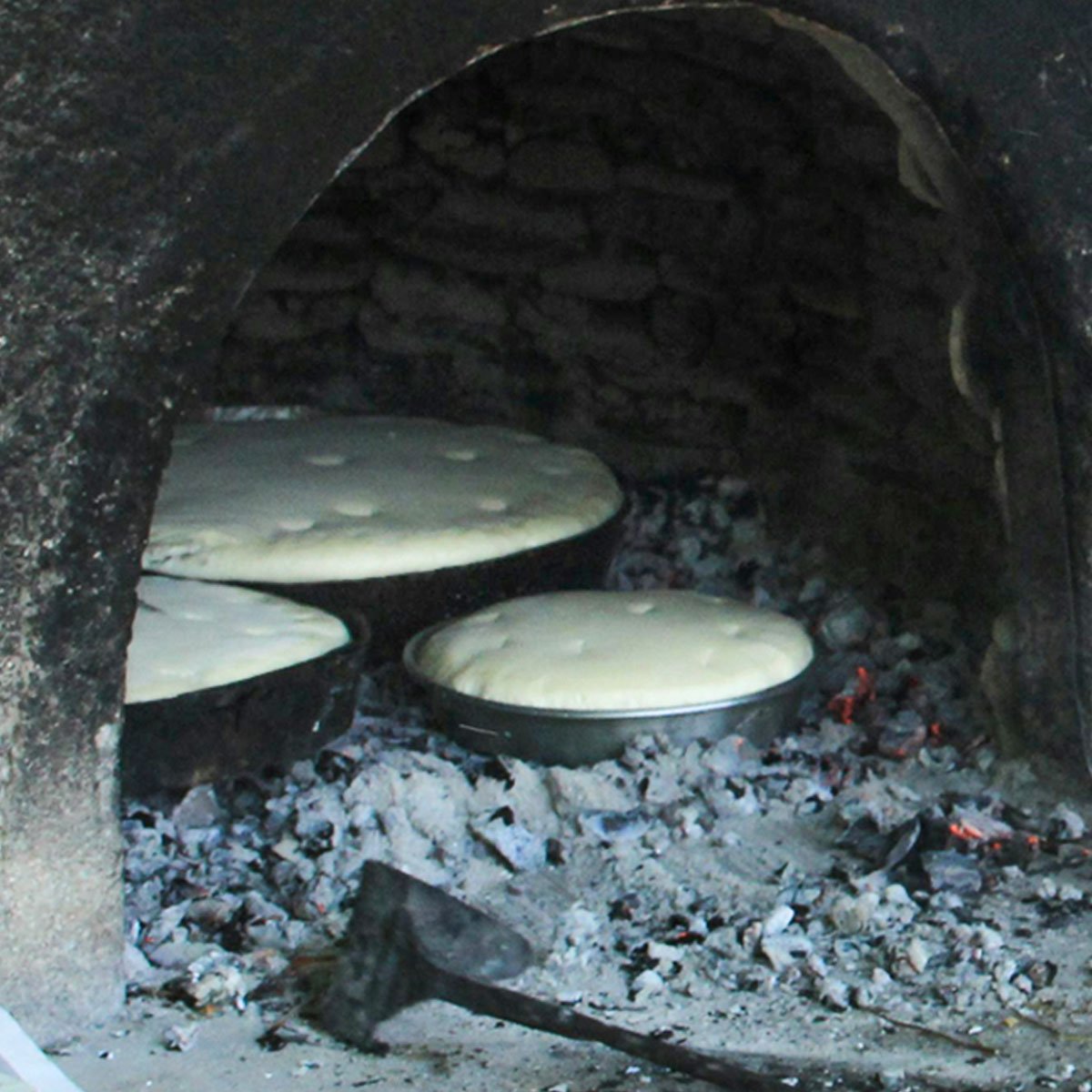
Horiatiko psomi betekent letterlijk "dorpsbrood" of "plattelandsbrood". Dit is het alledaagse, rustieke brood dat generaties Grieken heeft gevoed. Het is een knapperig, stevig brood dat meestal wordt gemaakt met een combinatie van tarwebloem en vaak een beetje gerst of griesmeel, wat het een lichtgouden tint en een robuuste smaak geeft. Traditioneel dorpsbrood is vaak op basis van zuurdesem of gebruikt een kleine hoeveelheid gist met een lange rijstijd. Het deeg kan beginnen met een prozymi (voorgerecht), soms zelfs een kikkererwtenvoorgerecht in vroegere tijden, wat een brood met een uitstekende diepte van smaak opleverde. Na het kneden wordt het ronde brood meestal gebakken in een houtoven, waardoor het een dikke, knapperige korst krijgt.
De textuur van horiatiko psomi is perfect om in olijfolie of sauzen te dippen - het is taai en stevig, met een open kruim. Het is het brood dat in tavernes in dorpen wordt geserveerd, in flinke plakken op tafel gezet als bijgerecht bij salades, soepen en hoofdgerechten. Het is ook lang houdbaar; oudere plakken worden vaak gedroogd om beschuit van te maken of gebruikt in recepten zoals panzanella of de Griekse salade met beschuit (dakos).
Dorpsbrood (Horiatiko Psomi)
Dit is het soort brood dat de basis vormt van het mediterrane dieet: eenvoudig, rustiek en voedzaam. Als je thuis graag een knapperig dorpsbrood wilt bakken, raadpleeg dan het recept voor dorpsbrood van My Greek Dish. Het begeleidt je bij het creëren van die rustieke textuur, zelfs als je geen houtgestookte oven hebt. Het resultaat brengt je direct naar een Griekse plattelandskeuken, waar de geur van vers brood de lucht vult.
Koulouri Thessalonikis (Sesambroodringen)
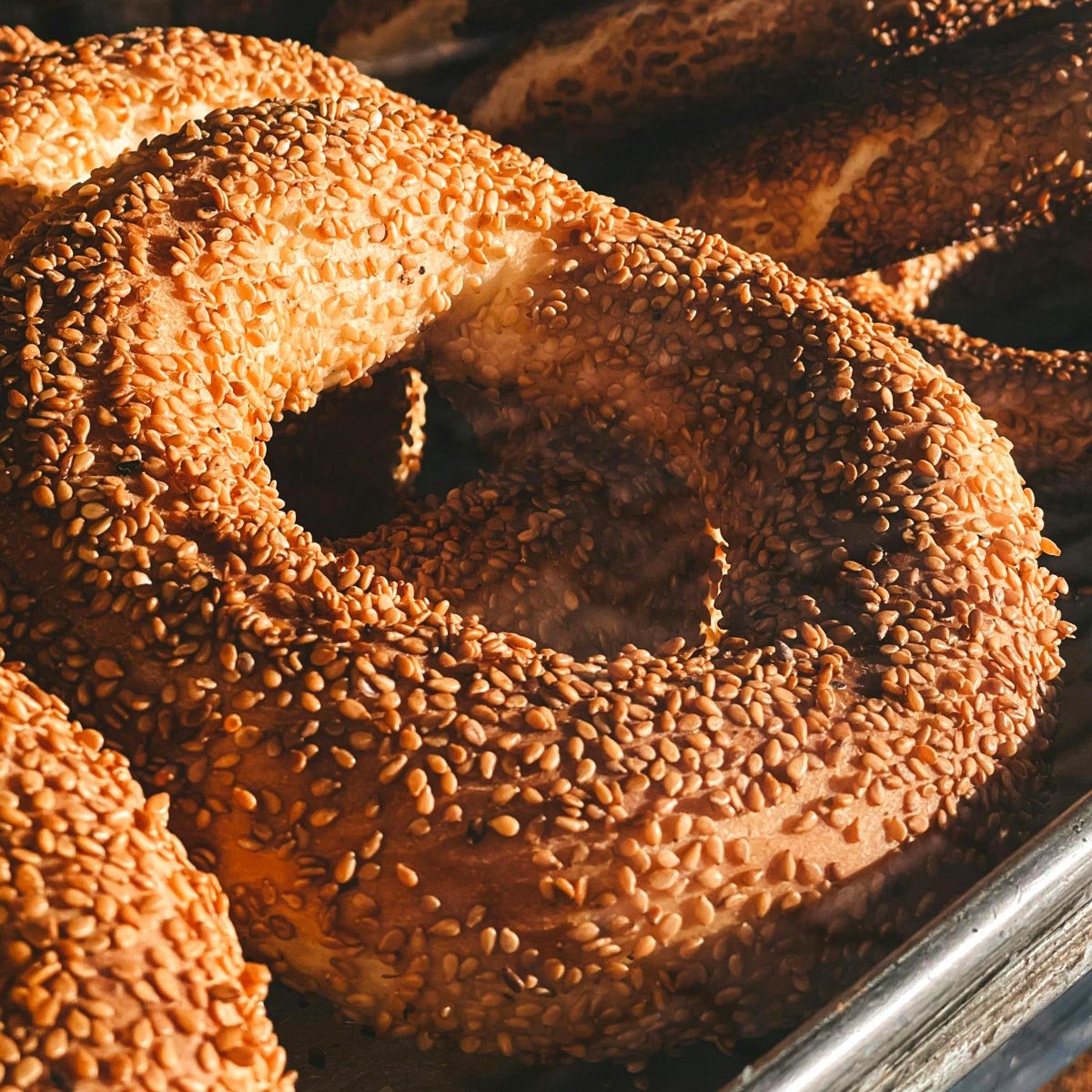
Als je 's ochtends door de straten van Griekenland loopt, vooral in Thessaloniki of Athene, kom je waarschijnlijk verkopers tegen die van alles verkopen. koulouri - Gouden sesamkorstbroodringen. Koulouri (meervoud: koulouria) is een geliefd Grieks ontbijt voor onderweg: een rond brood dat een beetje lijkt op een kruising tussen een bagel en een pretzel (maar dan zonder het koken of loogproces). Het heeft een licht krokante buitenkant dankzij een royale laag sesamzaadjes en een zachte, taaie binnenkant. Thessaloniki staat vooral bekend om zijn koulouri, vandaar de naam "Koulouri Thessalonikis". Deze ringen zijn niet erg dik - het zijn meestal dunne lussen van ongeveer 12-15 centimeter doorsnee. Ze hebben een milde smaak, lichtzoet en gistachtig, waardoor ze perfect zijn om zo te eten of bij de koffie.
De eenvoud van koulouri is een deel van de charme: bloem, water, gist, een snufje suiker en een flinke hoeveelheid sesamzaadjes. Maar als het goed gemaakt is, is het ongelooflijk lekker. Grieken eten koulouri vaak als ontbijt of tussendoortje, en het is niet ongebruikelijk om mensen er eentje te zien eten op weg naar hun werk of school. Sommige moderne varianten bevatten kruiden of een topping van kaas, maar de klassieke versie is gewoon met sesamzaadjes.
Koulouri Thessalonikis
Om deze thuis te bakken, kun je een recept gebruiken dat de juiste textuur garandeert: licht compact maar toch mals. Probeer het Easy Koulouri-recept van Olive Tomato. Daarin wordt uitgelegd hoe je het deeg tot ringen vormt en die authentieke sesamkorst krijgt. Binnenkort geniet je van versgebakken koulouria, net zo lekker als die van een Griekse straatverkoper!
Kritsinia (Griekse sesambroodstengels)
Kritsinia zijn knapperige Griekse broodstengels, meestal bedekt met sesamzaadjes of soms andere zaden zoals zonnebloem-, lijn- of anijszaad. Kritsinia worden vaak verkocht in bakkerijen en supermarkten in heel Griekenland en zijn een populaire snack die op elk moment van de dag gegeten kan worden. Ze zijn doorgaans ongeveer vingerdik en kunnen 10 tot 25 centimeter lang zijn. De textuur is knapperig – vergelijkbaar met Italiaanse grissini, maar vaak iets dikker en steviger. Sommige varianten worden gemaakt met volkorenmeel of bevatten een beetje honing of olijfolie voor extra smaak. Omdat ze geen zuivel of bederfelijke ingrediënten bevatten, zijn kritsinia lang houdbaar en perfect als tussendoortje voor onderweg.
Griekse sesambroodstengels (Kritsinia)
In Griekenland krijg je misschien wel eens een kritsini aangeboden bij je koffie, of zie je ze bij een kaasplankje of salade. Kinderen vinden ze lekker als gezonde snack, en ze zijn ook heerlijk om in smeersels te dippen (probeer ze eens met tzatziki of hummus). Het woord "kritsini" zelf komt van kritinos Kritsinia betekent "gemaakt van gerst" in het Grieks, omdat sommige traditionele varianten op gerst gebaseerd waren. Tegenwoordig worden ze gemaakt met tarwebloem of volkorenmeel. Wil je zelf een portie van deze knapperige lekkernijen bakken? Probeer dan het recept voor Griekse sesambroodstengels (Kritsinia) van The Mediterranean Dish. Het is een eenvoudig recept dat heerlijk knapperige broodstengels oplevert. In minder dan een uur heb je je eigen sesambroodstengels klaar om in je favoriete dipsaus te dippen of gewoon zo te eten als een lichte, schuldvrije snack.
Stafidopsomo (rozijnenbroodjes)
Stafidopsomo betekent 'rozijnenbrood' in het Grieks en is een voedzame lekkernij die vaak als tussendoortje in de ochtend of licht ontbijt wordt gegeten. Het zijn meestal kleine, individuele broodjes of bolletjes die royaal gevuld zijn met rozijnen (stafides). Grieks rozijnenbrood is slechts lichtzoet - de zoetheid komt voornamelijk van de rozijnen zelf en eventueel een vleugje honing in het deeg. Veel recepten bevatten ook kaneel, wat perfect samengaat met de zoetheid van de rozijnen. Het deeg kan deels met volkorenmeel worden gemaakt, waardoor stafidopsomo een relatief gezond gebakje is - het is dan ook niet ongebruikelijk om het in de lunchtrommels van Griekse schoolkinderen te vinden of het te kopen bij bakkerijketens als een 'gezonde snack'.
Rozijnenbrood (Stafidopsomo)
De textuur van stafidopsomo is zacht en luchtig, net als een klassiek dinerbroodje, maar dan zoeter. Het wordt vaak in knoopvorm of als eenvoudige ronde broodjes verkocht. Je kunt ze zo eten of besmeren met een beetje boter of tahin. Deze rozijnenbroden geven een fijne energieboost dankzij de natuurlijke suikers, en de vezels van volkorenmeel en gedroogd fruit maken ze behoorlijk vullend. Als je ze thuis wilt maken (ze zijn een geweldig alternatief voor gebak of muffins in de ochtend), probeer dan dit recept voor Grieks rozijnenbrood (stafidopsomo) van My Greek Dish. Het recept begeleidt je bij het maken van het lichtzoete gistdeeg en het vormen ervan tot broodjes. Een hap nemen van een warme, zelfgebakken stafidopsomo met sappige rozijnen is heerlijk en geeft je gegarandeerd een voorproefje van Grieks thuisbakken.
Tiropsomo (Fetakaasbrood)
Tiropsomo is een hartig Grieks kaasbrood waar elke kaasliefhebber dol op zal zijn. De naam betekent letterlijk "kaasbrood" (tiri betekenis kaas, psomi (wat brood betekent). Het is in wezen een rustiek brood of platbrood dat verrijkt is met stukjes fetakaas door het hele deeg, of soms gevuld met een fetamengsel. Tijdens het bakken wordt de zoute, romige feta zacht en geeft het brood zijn smaak. Je krijgt uiteindelijk stukjes gesmolten kaas in elke plak – het is een beetje zoals de Griekse variant van een met kaas gevulde focaccia. Sommige recepten voor tiropsomo bevatten Griekse yoghurt of olijfolie in het deeg voor extra malsheid, en je vindt er vaak een vleugje oregano of rozemarijn in terug om de kaas te complementeren.
Tiropsomo wordt vaak gegeten als voorgerecht of bijgerecht – stel je voor dat je een stukje in een stevige kom soep dipt of het serveert met olijven en tomaten als onderdeel van een lichte lunch. Het smaakt het lekkerst warm, wanneer de feta nog zacht is. In Griekse bakkerijen vind je soms ook individuele tiropsomo-broodjes (vergelijkbaar met een kaasbroodje). Dit brood laat de Griekse liefde voor feta zien, die ze dan ook in hun baksels verwerken.
Grieks fetakaasbrood (Tiropsomo)
Wil je zelf tiropsomo maken? Bekijk dan Dimitra's recept voor Grieks fetabrood (Tiropsomo). Het resultaat is een zacht, luchtig brood gevuld met feta, en ze geeft tips om ervoor te zorgen dat de kaas gelijkmatig verdeeld is. Eén hap van dit hartige brood en je begrijpt waarom feta en brood een hemelse combinatie vormen.
Eliopsomo (Olijvenbrood)
Eliopsomo – letterlijk “olijvenbrood” – is een traditioneel Grieks brood dat twee basisproducten van het Griekse leven combineert: brood en olijven. Dit geurige brood wordt meestal gemaakt met een deeg in dorpsstijl, gekneed met veel gehakte olijven (vaak Kalamata-olijven of zwarte olijven) en een flinke scheut olijfolie. De olijven geven de zachte kruim een zilte smaak en de olijfolie maakt het brood vochtig en mals. Veel varianten bevatten ook kruiden zoals rozemarijn, tijm of oregano, die prachtig samengaan met de olijven. De geur tijdens het bakken van een eliopsomo is ongelooflijk – alsof je een Griekse olijfgaard in je keuken hebt!
Dit brood wordt vaak gebakken in rustieke ronde broden of soms als een focaccia-achtig platbrood. Het is heerlijk op zichzelf, gewoon in plakjes gesneden en gegeten, of geserveerd met een beetje kaas. Eliopsomo is ook een fantastische basis voor een sandwich (stel je voor, met verse tomaat en feta, heerlijk!). Doordat de olijven al voor de zoutigheid zorgen, heeft het brood zelf niet veel extra zout in het deeg nodig. Elke hap geeft je een zacht stukje brood met een licht zoute olijf – een perfecte balans.
Grieks olijvenbrood (Eliopsomo)
Ben je dol op olijven? Dan wil je zeker eens een eliopsomo bakken. Je kunt het recept van Dimitra voor Grieks olijvenbrood (Eliopsomo) volgen, dat eenvoudig en authentiek is. Met haar recept maak je een brood dat knapperig is van buiten, zacht van binnen en vol zit met de heerlijke smaak van olijven in elke hap.
Paximadi (Gerstbeschuit)
Paximadia zijn traditionele Griekse tweemaal gebakken broden of beschuitjes - zie ze als zeer harde, droge sneetjes brood die lang bewaard kunnen worden. Ze waren vroeger een belangrijk voedsel voor Griekse boeren en zeelieden vanwege hun uitstekende houdbaarheid. Een van de bekendste varianten is de Kretenzische gerstebeschuit (genaamd dakos (wanneer belegd met tomaat en feta, zoals in de bekende Kretenzische salade). Deze beschuiten worden vaak gemaakt met gerst of een mengsel van gerst- en tarwemeel, wat ze een stevige textuur, een hoog vezelgehalte en een kenmerkende nootachtige smaak geeft. Het deeg wordt eerst tot een brood gebakken, vervolgens gesneden en opnieuw op lage temperatuur gebakken om volledig te drogen.
Hoewel paximadia extreem hard zijn als je er zo in bijt, worden ze heerlijk zacht als ze bevochtigd worden. Vaak worden ze even in water of wijn gedoopt voordat ze gegeten worden, of belegd met sappige gehakte tomaten en olijfolie, waardoor ze net genoeg gehydrateerd worden. Het resultaat is een bevredigend taaie, voedzame basis voor toppings. Ze kunnen ook zoet zijn (zoals beschuit met kaneel-sinaasappelsmaak), maar de gewone gerstvariant is het meest voorkomend.
Authentieke Griekse gerstebeschuit (Paximadi)
In de Griekse keuken zie je paximadi vaak gebruikt worden in plaats van vers brood in salades of bij soepen. Ze worden ook gegeten bij de koffie (net als biscotti). Als je authentieke paximadi wilt maken, bekijk dan het recept voor authentieke Griekse gerstebeschuit (paximadi) op Olive Tomato. Het begeleidt je bij het vormen en dubbelbakken van het deeg om die keiharde beschuit te krijgen die barst van de volkoren goodness. Zodra je een portie hebt, kun je je eigen dakos maken: week de beschuit, beleg met verse tomaat, verkruimelde feta, olijfolie en oregano - een eenvoudige Griekse delicatesse!
Tiganopsomo (Gefrituurd brood met feta)
Tiganopsomo is een verrukkelijk Grieks platbrood dat goudbruin gebakken wordt. In het Grieks, tiganopsomo Het betekent "koekenpanbrood", en dat is precies hoe het gemaakt wordt: een eenvoudig brooddeeg, vaak met een beetje yoghurt erin, wordt uitgerold en meestal gevuld of bestrooid met verkruimelde feta, vervolgens dubbelgevouwen en in olijfolie gebakken tot het knapperig en opgeblazen is. Het resultaat is een hartig, bladerig brood aan de buitenkant met warme, gesmolten feta vanbinnen. Het is als een snellere, op het fornuis gemaakte versie van een kaastaart. Deze lekkernij komt oorspronkelijk uit Noord-Griekenland, maar er bestaan variaties in het hele land (soms wordt het deeg gewoon gebakken zonder vulling en wordt de kaas er later bovenop gedaan).
Tiganopsomo met feta
Tiganopsomo wordt meestal als voorgerecht of mezze geserveerd, in partjes gesneden. Stel je een kruising voor tussen een gevuld pitabroodje en een gegrilde kaas sandwich – maar dan met de unieke smaak van feta en de onweerstaanbare knapperigheid van gefrituurd deeg. Het smaakt het lekkerst direct, als het nog warm en knapperig is. Omdat het zo heerlijk is, wordt het vaak thuis gemaakt om restjes deeg op te maken of gewoon om de trek in iets hartigs te stillen. Als je jezelf eens wilt verwennen, probeer dan eens tiganopsomo met feta te maken volgens het recept van Mia Kouppa. Het is verrassend eenvoudig: maak een snel deeg, vouw er feta doorheen en frituur het. Binnen een paar minuten heb je een bord onweerstaanbare tiganopsomo – wees gewaarschuwd, ze zijn meestal snel op!
Spanakopita Brood Twist (Spinazie & Feta Twist)
Deze moderne creatie combineert twee Griekse favorieten: spanakopita (de klassieke spinazie- en fetataart) en brood! De spanakopita-broodtwist is een prachtig brood of een ringvormig brood gevuld met een hartige vulling van spinazie, kruiden en feta, net als de vulling van spanakopita. Een populaire variant, bekend geworden door foodbloggers, heeft een gedraaide, gevlochten vorm waarbij lagen deeg de groene vulling omsluiten, waardoor er na het bakken mooie wervelingen van spinazie te zien zijn. Het is in feite gevuld brood, maar dan op een visueel aantrekkelijke manier gepresenteerd - vaak als een gedraaide krans of een brood dat je kunt delen. Het brood zelf is meestal gemaakt van gistdeeg verrijkt met olijfolie, wat het een zachte textuur en een heerlijke smaak geeft die perfect samengaat met de vulling.
Spanakopita Brood Twist
Deze combinatie van traditionele taart en brood is een hit op feestjes en familiebijeenkomsten. Het is voedzaam en vullend, met alle smaken van spanakopita - veel spinazie, dille of peterselie, lente-uitjes en pittige feta - omhuld door luchtig brood in plaats van filodeeg. De broodtwist is ook makkelijker te vervoeren en te serveren dan losse driehoekjes spanakopita, waardoor het ideaal is voor potlucks. Om dit indrukwekkende brood te bakken, kun je het recept voor Spanakopita Bread Twist van Half Baked Harvest volgen. Het geeft duidelijke instructies voor het samenstellen en draaien van het brood. Het resultaat is niet alleen heerlijk (wie kan er nu kaas en spinazie in brood weerstaan?), maar ook een blikvanger op tafel - een prachtig voorbeeld van een moderne interpretatie van Griekse smaken.
Glutenvrij pitabrood (moderne bewerking)
Traditionele Griekse pitabroodjes worden gemaakt met tarwemeel, maar voor mensen met een glutenintolerantie of die gluten vermijden, hebben moderne keukens glutenvrije pitabroodrecepten ontwikkeld, zodat iedereen van dit basisproduct kan genieten. Een glutenvrije pitabroodje heeft als doel de zachte, flexibele textuur van het origineel na te bootsen, vaak met een mix van meelsoorten zoals rijstmeel, tapioca- of aardappelzetmeel, en eventueel sorghum- of maïsmeel. Xanthaangom of psylliumvezels worden meestal toegevoegd om de elasticiteit van gluten na te bootsen, waardoor het deeg lucht vasthoudt en opbolt. Hoewel glutenvrije pitabroodjes niet altijd een grote zak krijgen, kunnen ze wel worden opgerold of gevouwen en zijn ze heerlijk als wrap of met dipsauzen.
Het proces voor het maken van glutenvrije pita is vergelijkbaar: je maakt een deeg (dat meestal wat plakkeriger en zachter is dan tarwedeeg), laat het rijzen, verdeelt het vervolgens in porties en bakt het op een hete koekenpan of baksteen. Het resultaat zijn versgebakken platbroden die veilig zijn voor mensen met coeliakie of glutenintolerantie, maar toch heerlijk smaken. Veel mensen zijn aangenaam verrast over hoe goed deze alternatieven uitpakken: zacht en zelfs een beetje taai, perfect voor gyros of souvlaki.
Glutenvrije Griekse pita
Zoekt u een betrouwbaar recept? Probeer dan het glutenvrije Griekse pitabroodrecept van The Loopy Whisk. Het is uitgebreid getest om ervoor te zorgen dat de pitabroodjes mooi rijzen en soepel blijven. Zelfs met een glutenvrij dieet kunt u nu genieten van zelfgemaakt pitabrood bij uw favoriete Griekse gerechten!
Loukoumades (honingsiroopdeegballetjes)
We sluiten af met iets zoets: loukoumades, vaak omschreven als Griekse honingdonuts. Hoewel het geen brood in de traditionele zin is, vormen deze gefrituurde deegbolletjes een geliefd onderdeel van de Griekse zoetwarencultuur en werden ze dan ook gevraagd in ons overzicht. Loukoumades zijn kleine balletjes van gistdeeg, die krokant en goudbruin worden gefrituurd en vervolgens direct worden gedrenkt in een warme honingstroop. Ze worden meestal op een schaal geserveerd, plakkerig van de honing en vaak bestrooid met kaneel en gemalen walnoten of sesamzaadjes. Het contrast in texturen is goddelijk: de buitenkant is licht krokant, terwijl de binnenkant zacht en luchtig blijft. Sommigen beweren dat loukoumades teruggaan tot het oude Griekenland (mogelijk werden ze als prijs uitgereikt aan Olympische winnaars), waardoor ze een van de oudste bekende gebakjes zijn.
In het hedendaagse Griekenland kun je loukoumades eten op festivals, in banketbakkerijen of zacharoplastie (zoetwarenwinkels). Ze smaken het lekkerst vers en warm, wanneer ze praktisch in je mond smelten. Moderne varianten zijn bijvoorbeeld met toppings zoals chocoladesaus of ijs, maar de klassieke combinatie van honing en kaneel blijft onovertroffen. Loukoumades thuis maken is vrij eenvoudig: je maakt een los deeg, laat het rijzen en laat dan lepels of afgemeten stukjes in hete olie vallen. Zodra ze opgezwollen en goudbruin zijn, leg je ze in siroop en zie je ze glinsteren.
Loukoumades (Honingdeegballetjes)
Als je zin hebt in deze verslavende zoete lekkernijen, volg dan het traditionele recept voor loukoumades van My Greek Dish. Het bevat tips voor de perfecte textuur en instructies voor de honingstroop. Wees gewaarschuwd: als je eenmaal zelfgemaakte loukoumades hebt geproefd, verdwijnen ze misschien wel sneller dan je denkt, want iedereen zal om "nog eentje" van deze heerlijke honingbolletjes grijpen!
Van knapperige dorpsbroden tot zoete feestbroden: de Griekse bakkunst heeft voor ieder wat wils. Deze collectie laat zien hoe brood in Griekenland zowel dagelijkse voeding als een centraal element bij feestelijke gelegenheden kan zijn. Of je nu een familierecept zoals tsoureki bakt voor de feestdagen of een trendy spanakopita-brood probeert, je draagt bij aan een heerlijk erfgoed. Met de bovenstaande recepten kun je de smaak van Griekenland in je eigen keuken brengen. Καλή όρεξη - smakelijk eten en veel bakplezier!
Hoe maak je een Griekse broodschotel?
- Baseren: een rustiek brood van horiatiko psomi of een stapel warme pitabroodjes.
- Accenten: olijven, tomatenpartjes, komkommer, feta, kappertjes, oregano.
- Spreads: tzatziki, melitzanosalata, taramasalata, hummus.
- Zoete hoek: plakjes tsoureki met honing en boter; een kom walnoten.
Veelgestelde vragen over Grieks brood
Wat is het populairste Griekse brood?
Pitabroodje is wereldwijd het meest bekende Griekse brood, dankzij gyros en souvlaki. Thuis in Griekenland, horiatiko psomi (dorpsbrood) is het dagelijkse tafelbrood.

Welk Grieks brood is het beste om in te dippen?
Warm pita en rustiek horiatiko zijn ideaal voor olijfolie, dips en stoofschotels met saus. Paximadi is perfect als het eenmaal bevochtigd en afgetopt is voor dakos.
Hoe heet Grieks zoet brood?
Tsoureki is het klassieke zoete gevlochten Griekse brood, geparfumeerd met mahlep en sinaasappel. Zoek tijdens Kerstmis naar christopsomo, en met Nieuwjaar vasilopita.
Kan ik Grieks brood maken zonder een standmixer?
Ja. De meeste recepten hier zijn geschikt voor handkneden. Voor verrijkte degen zoals tsoureki, gebruik je korte kneedcycli met rustpauzes om gluten te ontwikkelen.
Welk meel is het beste voor Grieks brood?
Universele bloem is geschikt voor de meeste broden en platbroden. horiatiko Voeg griesmeel toe voor kleur en bite. Voor paximadi bevatten gerstemeel voor authenticiteit.
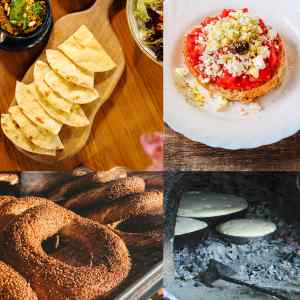
18 Traditionele Griekse Broodrecepten

Benodigdheden
Ingrediënten
- Authentiek Grieks pitabroodrecept
- Traditioneel Lagana platbrood
- Ladenia met erfgoedtomaten
- Traditionele Griekse Tsoureki
- Grieks Christopsomo brood
- Vasilopita Grieks nieuwjaarsbrood
- Lazarakia (Griekse Paas-Lazarus-broodjes)
- Dorpsbrood (Horiatiko Psomi)
- Koulouri Thessalonikis
- Griekse sesambroodstengels (Kritsinia)
- Rozijnenbrood (Stafidopsomo)
- Grieks fetakaasbrood (Tiropsomo)
- Grieks olijvenbrood (Eliopsomo)
- Authentieke Griekse gerstebeschuit (Paximadi)
- Tiganopsomo met feta
- Spanakopita Brood Twist
- Glutenvrije Griekse pita
- Loukoumades (Honingdeegballetjes)
Instructies
- Selecteer uw favoriete Griekse broodrecepten!
- Verzamel alle benodigde ingrediënten voor het Griekse brood dat u kiest.
- Bereid uw recept voor Grieks brood voor, serveer en geniet ervan.