







Table des matières
- Pourquoi j’aime ces boules de pâte à l’ail
- Conseils de préparation à l’avance et de congélation
- Pourquoi la cuisson en deux étapes fonctionne
- Conseils pour une pâte moelleuse et une garniture beurrée à l’ail
- Variantes faciles
- Ajouter du fromage
- Ajouter une touche piquante
- Résoudre les problèmes liés aux boules de pâte à l’ail
- Avec quoi les servir
- Questions fréquentes
- Puis-je diviser par deux cette recette de boules de pâte à l’ail ?
- Puis-je congeler les boules de pâte à l’ail ?
- Pourquoi cuire les boules de pâte avant d’ajouter le beurre à l’ail ?
- Comment savoir si les boules de pâte sont entièrement cuites ?
- Pourquoi utiliser un plat à bords hauts pour la cuisson avec le beurre à l’ail ?
- Comment conserver les restes de boules de pâte à l’ail ?
- Les boules de pâte à l’ail sont-elles identiques aux nœuds à l’ail ?
- Aller à la recette
Pourquoi j’aime ces boules de pâte à l’ail
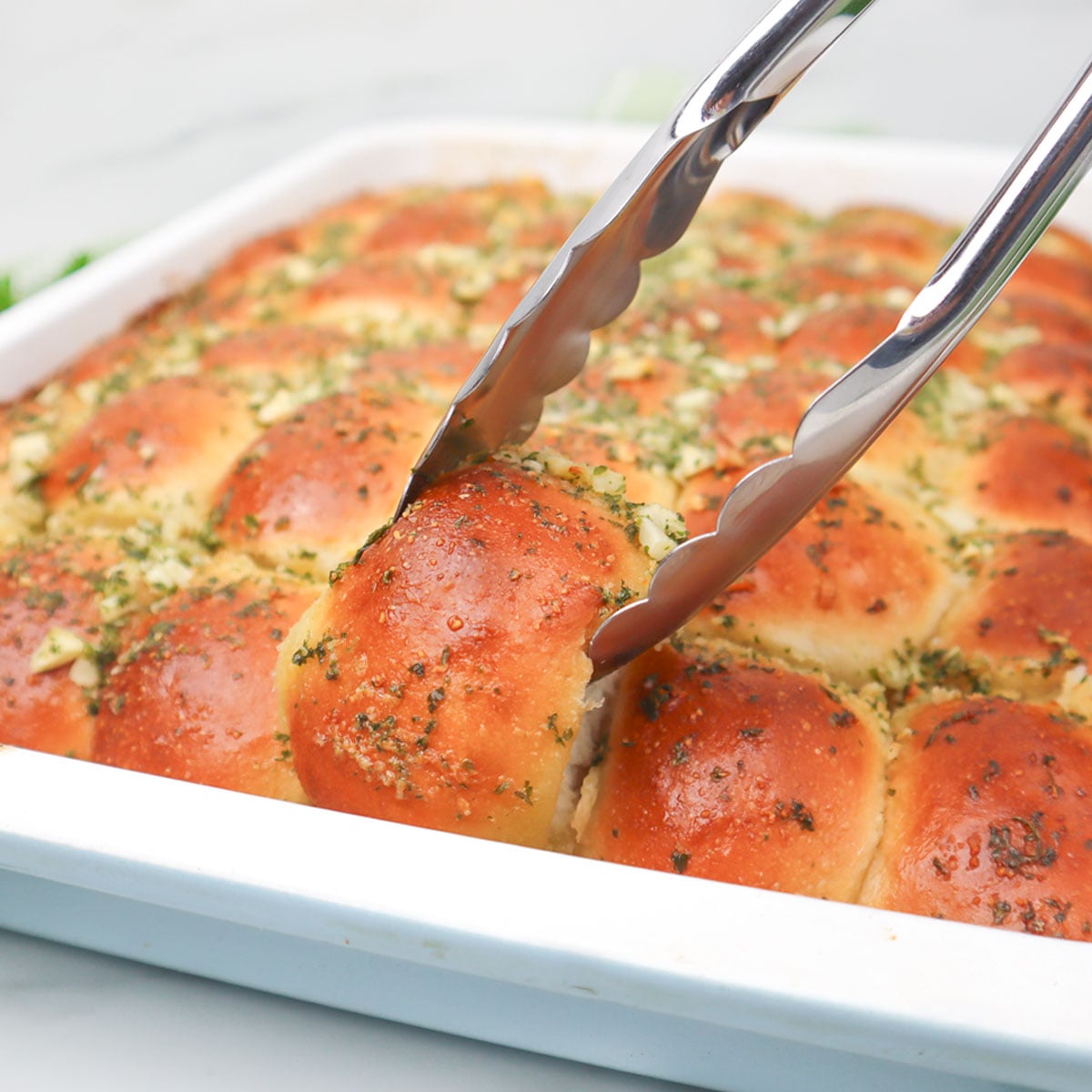
Ces boules de pâte à l’ail sont le genre de recette que je prépare lorsque je veux un accompagnement chaud et beurré pour un petit groupe. La pâte devient dorée à l’extérieur et moelleuse au centre pendant la cuisson, puis reçoit une généreuse garniture au beurre à l’ail qui fond sur chaque morceau.
Conseils de préparation à l’avance et de congélation
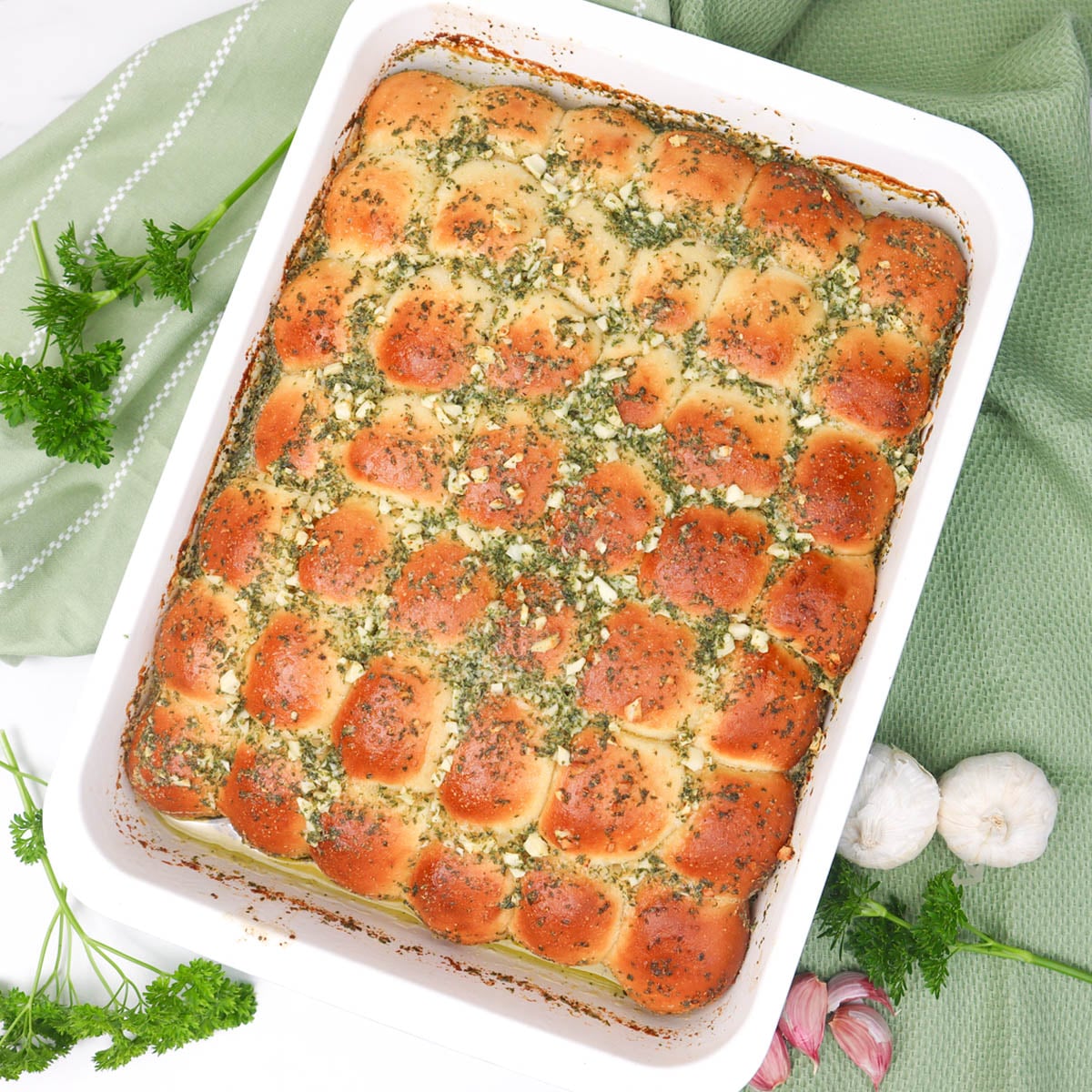
Cette recette donne environ 42 boules de pâte à l’ail, mais vous pouvez facilement diviser par deux la quantité de chaque ingrédient si vous souhaitez en préparer moins. Je réalise généralement la recette entière, car elles sont idéales pour les repas préparés à l’avance, et il m’arrive même de doubler les quantités afin d’en avoir en réserve pour de futurs dîners.
Les boules de pâte se congèlent également très bien. Laissez-les refroidir complètement après la première cuisson, puis congelez-les avant d’ajouter le beurre à l’ail. Lorsque vous êtes prêt à les servir, faites-les décongeler au réfrigérateur, ajoutez la garniture au beurre à l’ail et enfournez-les jusqu’à ce qu’elles soient bien chaudes, dorées et parfumées.
Pourquoi la cuisson en deux étapes fonctionne
C’est la cuisson en deux étapes qui donne à ces boules de pâte à l’ail leur texture moelleuse et leur généreuse finition au beurre à l’ail. Elles cuisent d’abord sur une plaque jusqu’à ce qu’elles soient dorées et entièrement cuites. Lorsqu’elles ont suffisamment refroidi pour pouvoir être manipulées, transférez-les dans un plat à bords hauts, étalez le beurre à l’ail sur le dessus et remettez-les au four. Les bords hauts maintiennent le beurre à l’ail fondu autour des boules de pâte au lieu de le laisser déborder du plat.
J’adore les servir avec une pizza maison ou des spaghettis bolognaise traditionnels. Elles sont moelleuses, savoureuses, faciles à partager et parfaites pour recueillir la sauce ou apporter un accompagnement chaud et beurré à un repas en famille.
Conseils pour une pâte moelleuse et une garniture beurrée à l’ail
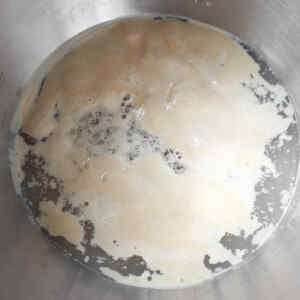
La première chose à surveiller est le mélange à base de levure. Après avoir laissé reposer ensemble l’eau tiède, la levure instantanée et le sucre, le mélange doit dégager une légère odeur de levure et sembler actif. C’est un signe utile indiquant que vous pouvez poursuivre la préparation de la pâte.
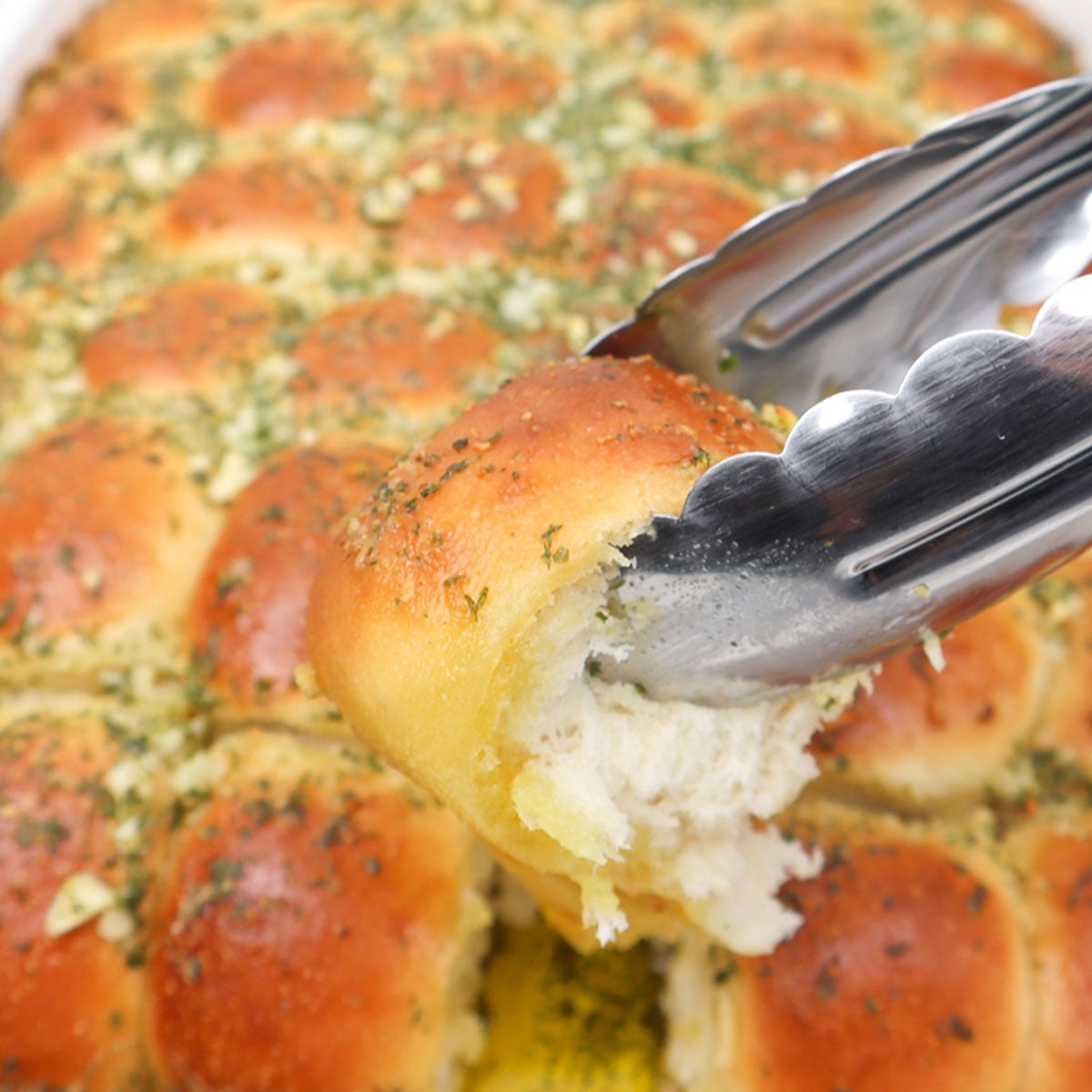
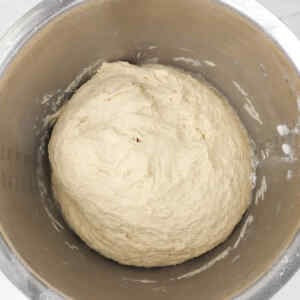
Ajoutez progressivement la farine à pain pendant que le crochet pétrisseur fonctionne à faible vitesse. La pâte doit se détacher des parois du bol, sans être sèche. Lorsque vous en prélevez un petit morceau et le roulez en boule, elle doit être souple et ne laisser qu’un léger résidu collant sur vos doigts.
Si la pâte est trop collante, ajoutez lentement de la farine. Quelques cuillères à soupe à la fois suffisent. Une trop grande quantité de farine peut rendre les boules de pâte moins moelleuses.
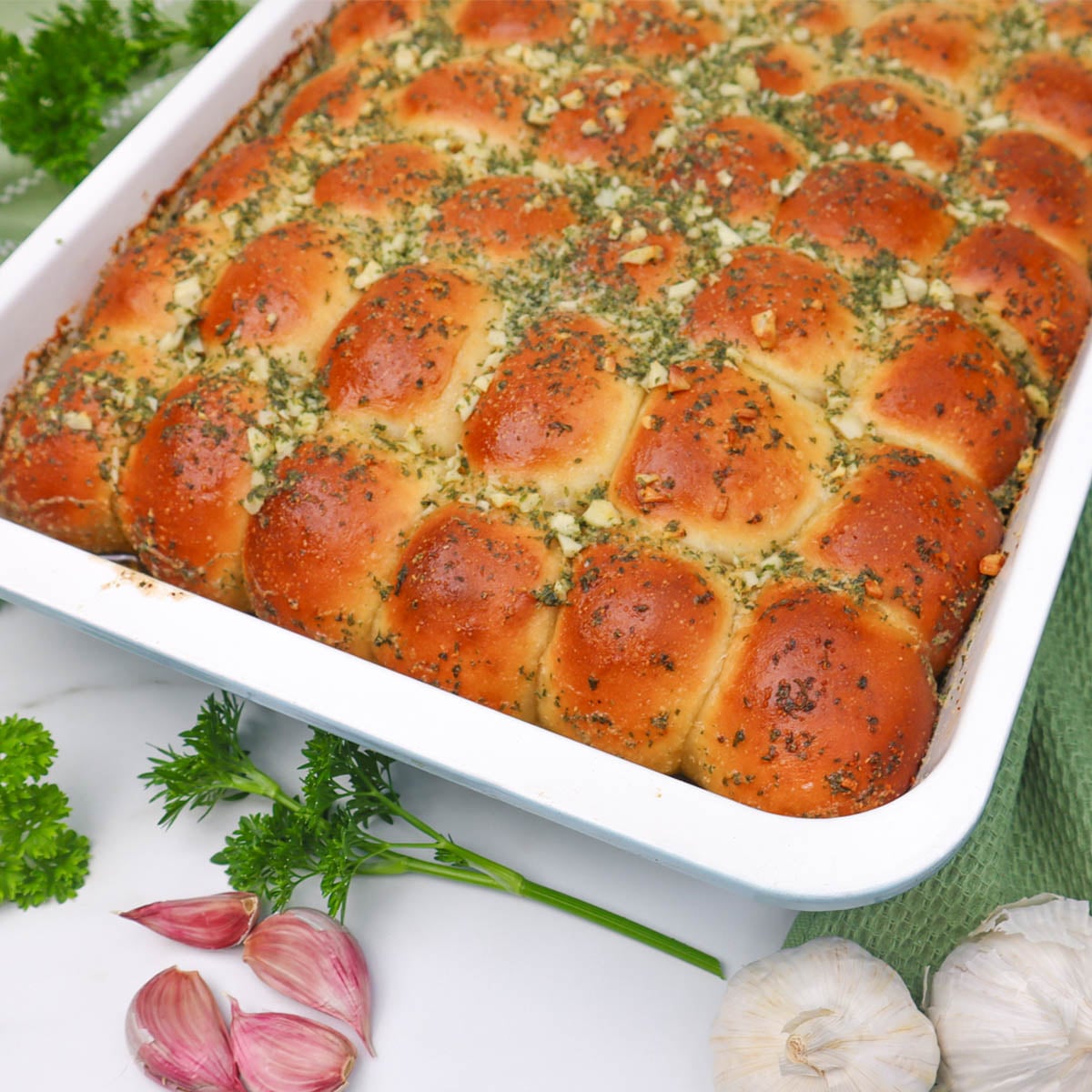
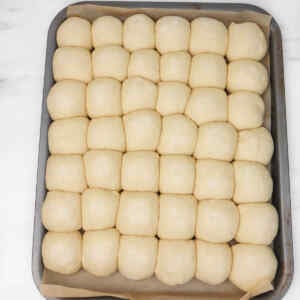
Laissez lever les boules de pâte façonnées jusqu’à ce qu’elles paraissent gonflées. Ce repère visuel est important, car il contribue à leur donner une texture plus légère après la cuisson. Utilisez une balance de cuisine si vous souhaitez obtenir des morceaux de taille plus régulière.
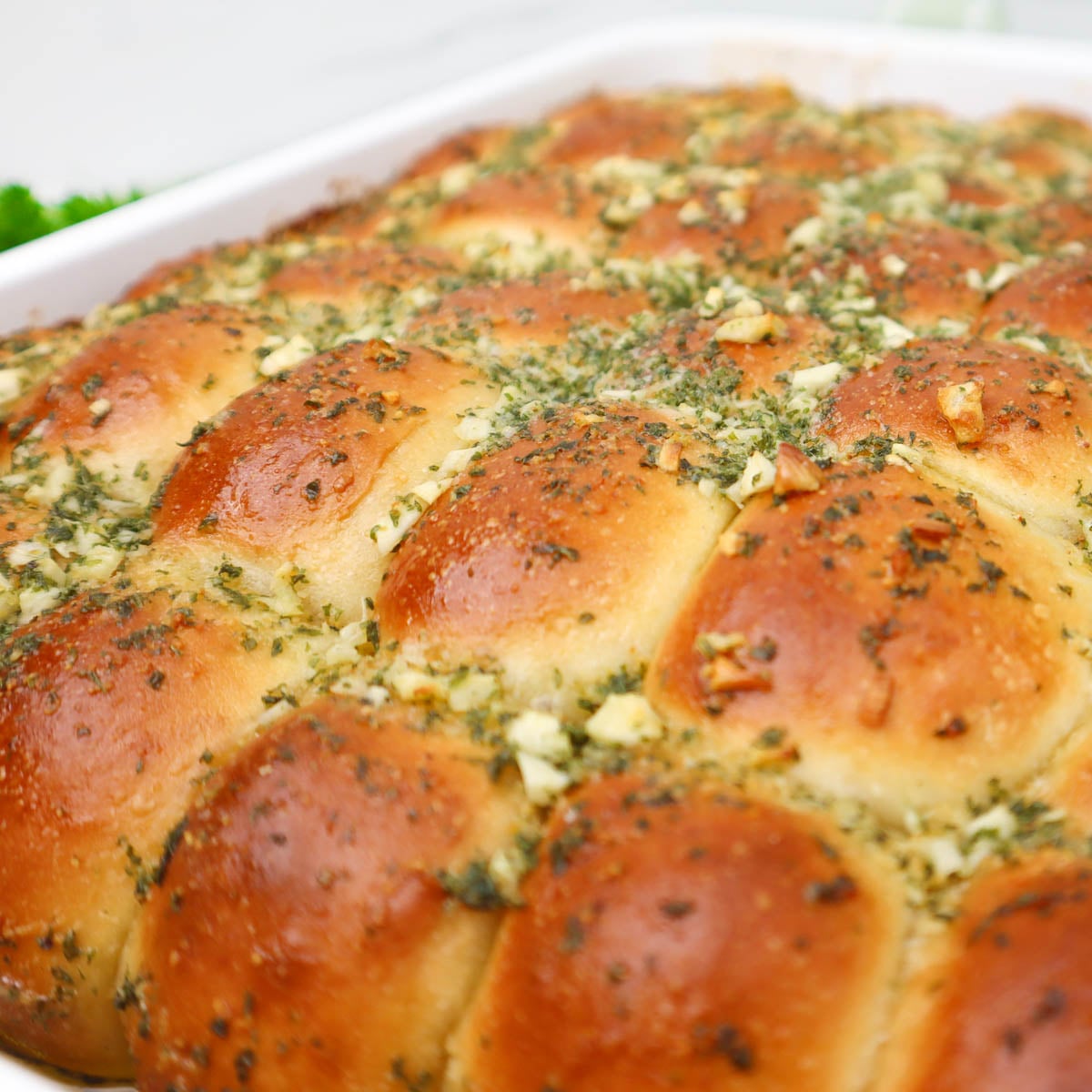
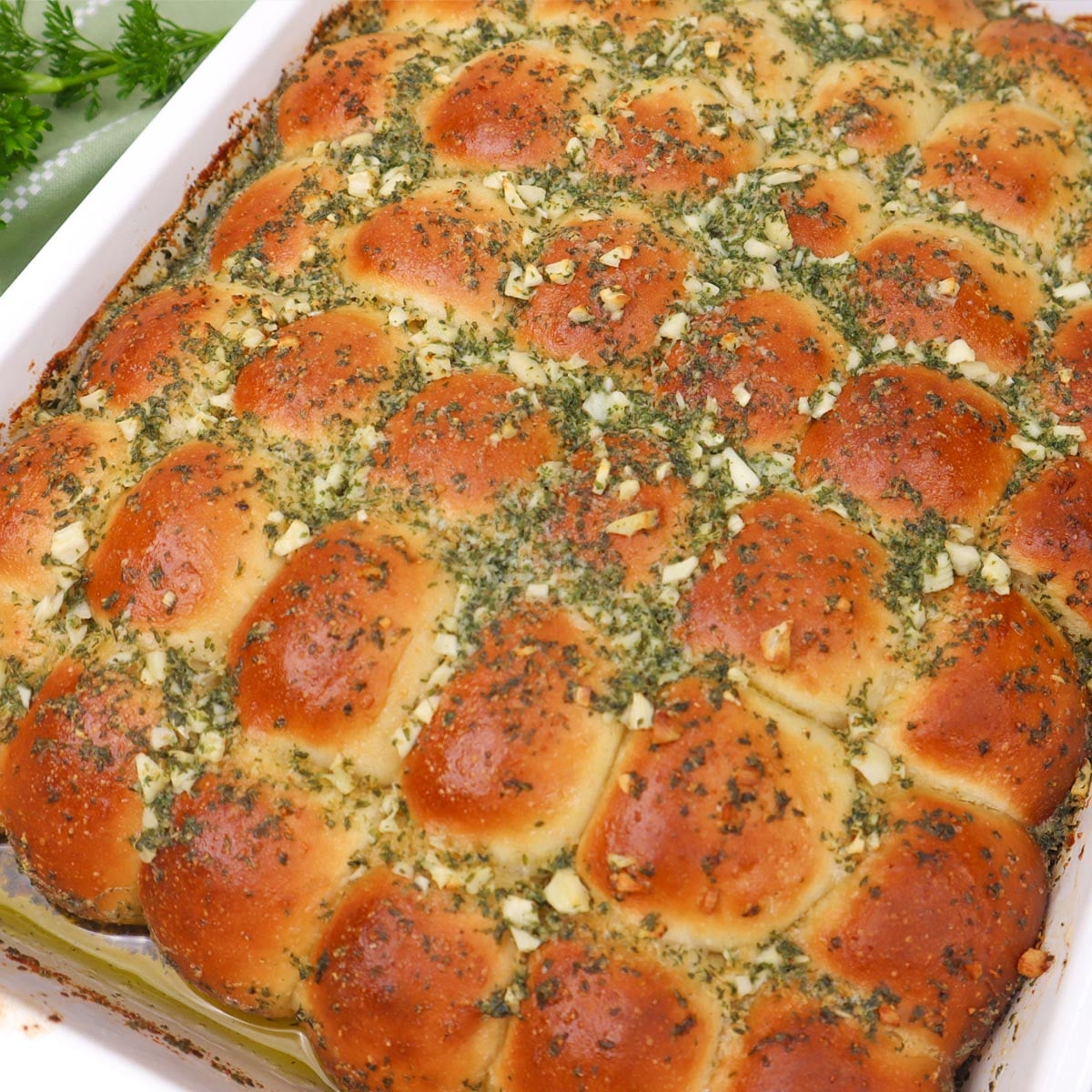
Le plat à bords hauts est important pour la garniture. Il maintient le beurre à l’ail fondu autour des boules de pâte au lieu de le laisser s’écouler hors du plat. Laissez refroidir les boules de pâte cuites avant d’ajouter la garniture afin de pouvoir les transférer et les enrober plus facilement.
Variantes faciles
Ajouter du fromage
Pour des boules de pâte à l’ail au fromage, glissez un petit cube de mozzarella au centre de chaque boule avant la cuisson. Vous pouvez également parsemer la garniture au beurre à l’ail de parmesan râpé avant la cuisson finale, pour une note salée et savoureuse.
Ajouter une touche piquante
Incorporez une pincée de flocons de piment rouge à la garniture au beurre à l’ail avant de l’étaler sur les boules de pâte. Cela apporte une chaleur légère qui s’accorde bien avec l’ail, le persil et le sel marin.
Résoudre les problèmes liés aux boules de pâte à l’ail
Si la pâte est trop collante, ajoutez quelques cuillères à soupe de farine à la fois, jusqu’à ce qu’elle soit souple et légèrement collante. Si les boules de pâte ne cuisent pas uniformément, utilisez une balance de cuisine pour leur donner une taille similaire. Si elles lèvent mal, vérifiez que la levure dégage une odeur indiquant qu’elle est active avant de préparer la pâte. Si le beurre à l’ail commence à s’échapper, utilisez un plat à bords hauts. Faites cuire les boules de pâte jusqu’à ce qu’elles soient dorées et atteignent une température à cœur de 190-195°F.
Avec quoi les servir
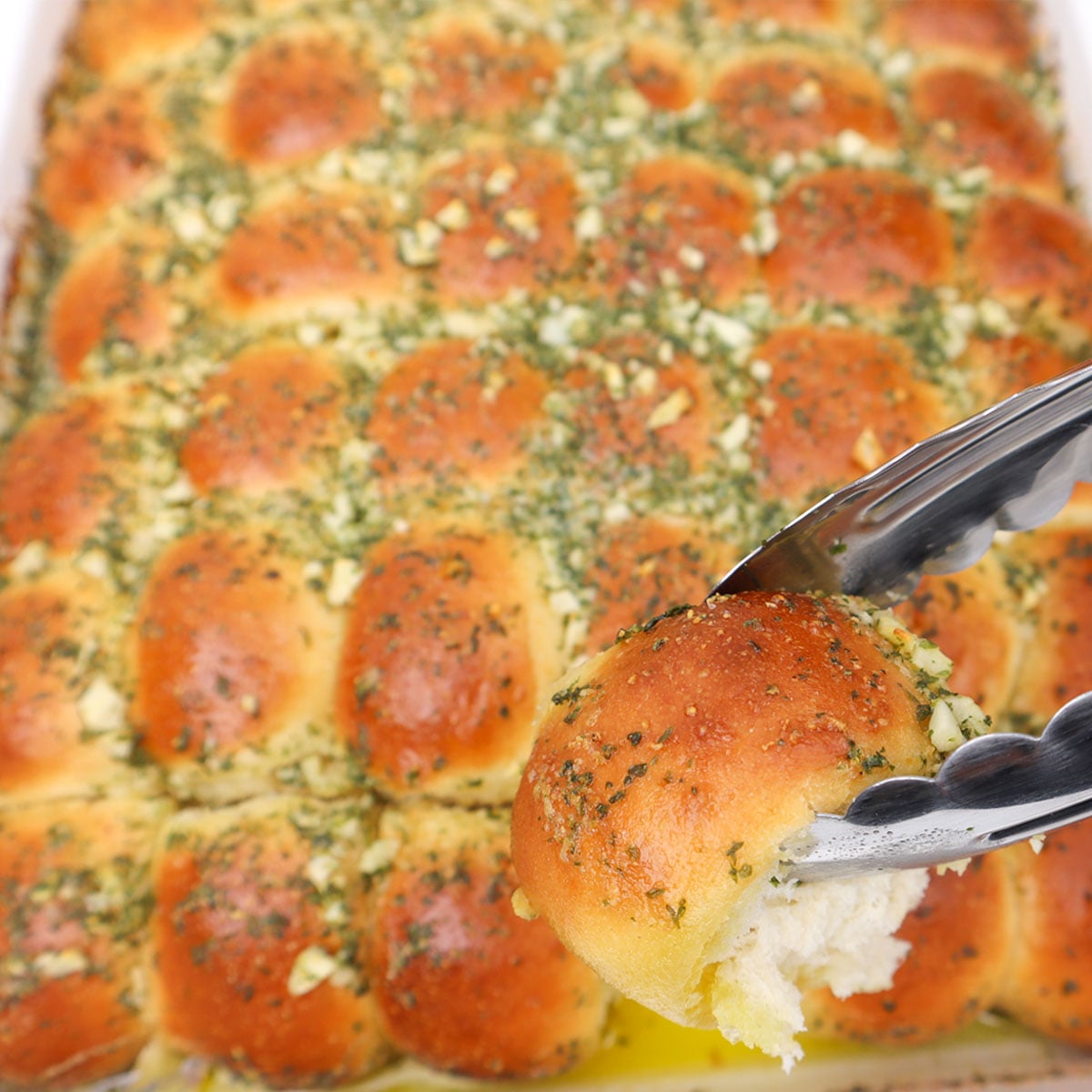
Servez ces boules de pâte à l’ail chaudes, lorsque le beurre à l’ail est fondu et parfumé. Elles sont parfaites avec des pizzas maison, des spaghettis bolognaise traditionnels ou tout plat de pâtes auquel il faut un accompagnement moelleux et beurré pour recueillir la sauce.
Elles conviennent également très bien comme amuse-bouche avant le plat principal. Placez-les au milieu de la table pendant qu’elles sont encore chaudes et laissez chacun les détacher. Elles sont particulièrement bonnes avec un verre de vin blanc vif.
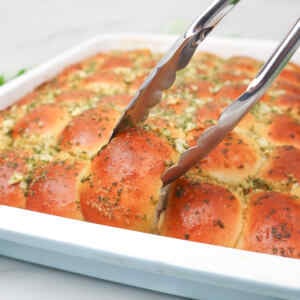
Boules de pâte à l’ail

Matériel
- Robot pâtissier (avec crochet pétrisseur)
- Balance de cuisine (facultatif)
- Torchon propre ou film alimentaire
- Plat à four à bords hautsou plat à rôtir
Ingrédients
Pour les boules de pâte
- 2 tasses d’eau tiède à environ 100°F
- 2 cuillères à soupe de levure instantanée
- ¼ tasse de sucre en poudre
- 1 cuillère à soupe de sel
- 1 gros œuf légèrement battu
- ¼ tasse de huile d’olive
- 7 ¾ tasses de farine à pain
- 1 gros œuf pour la dorure à l’œuf
- 1 trait d’eau pour la dorure à l’œuf
Pour la garniture au beurre à l’ail
- ½ tasse de beurre doux
- 3 gousses d’ail hachées
- 1 cuillère à café de persil séché
- 1 cuillère à café d’ail en poudre
- ½ cuillère à café de sel marin
- 1 cuillère à soupe de huile d’olive
Préparation
- Versez l’eau tiède, la levure instantanée et le sucre dans le bol d’un robot pâtissier.2 tasses d’eau tiède, 2 cuillères à soupe de levure instantanée, ¼ tasse de sucre en poudre

- Laissez reposer le mélange quelques minutes, jusqu’à ce qu’il dégage une légère odeur de levure et semble actif.
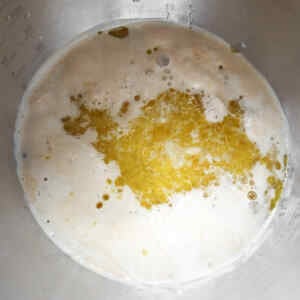
- Ajoutez dans le bol l’œuf légèrement battu, l’huile d’olive et le sel.1 cuillère à soupe de sel, 1 gros œuf, ¼ tasse de huile d’olive
- Pendant que le crochet pétrisseur fonctionne à faible vitesse, ajoutez la farine à pain, une tasse à la fois.7 ¾ tasses de farine à pain
- Continuez à mélanger jusqu’à ce que la pâte se détache des parois du bol.
- Prélevez un petit morceau de pâte et roulez-le en boule. Il doit être souple et ne laisser qu’un léger résidu collant sur vos doigts. Si la pâte est trop collante, ajoutez un peu plus de farine, quelques cuillères à soupe à la fois.
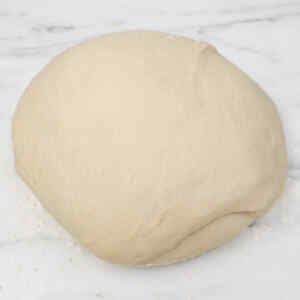
- Pétrissez la pâte pendant environ 8 minutes, jusqu’à ce qu’elle soit lisse, souple et légèrement collante.
- Laissez reposer la pâte pendant 5 minutes pour qu’elle se détende.
- Farinez légèrement votre plan de travail et déposez-y la pâte.
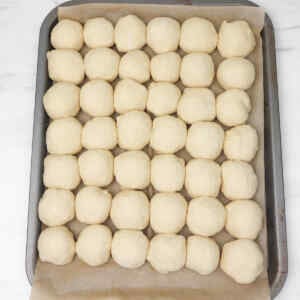
- Divisez la pâte en environ 42 morceaux égaux, selon la taille souhaitée. Pour obtenir des boules plus régulières, utilisez une balance de cuisine.
- Façonnez chaque morceau en boule lisse en ramenant les bords vers le centre.
- Déposez les boules de pâte sur une plaque recouverte de papier cuisson.
- Couvrez d’un torchon propre ou de film alimentaire.
- Laissez lever les boules de pâte dans un endroit chaud pendant environ 30 minutes, ou jusqu’à ce qu’elles soient gonflées.
- Préchauffez le four à 400°F / 200°C. Si votre four chauffe beaucoup, réduisez la température à 375°F / 190°C.
- Dans un petit bol, fouettez l’œuf avec un trait d’eau pour préparer la dorure.1 gros œuf, 1 trait d’eau
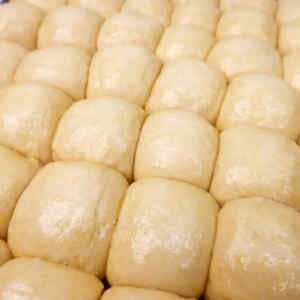
- Badigeonnez légèrement le dessus des boules de pâte de dorure à l’œuf.
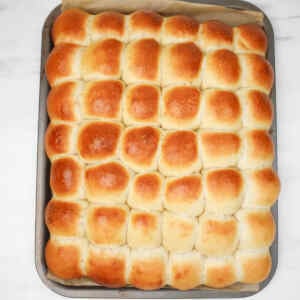
- Faites cuire pendant environ 20 minutes, ou jusqu’à ce qu’elles soient bien dorées.
- Une fois la cuisson terminée, la température à cœur doit atteindre 190-195°F.
- Transférez les boules de pâte sur une grille et laissez-les refroidir avant d’ajouter la garniture.
- Préchauffez de nouveau le four à 400°F / 200°C.
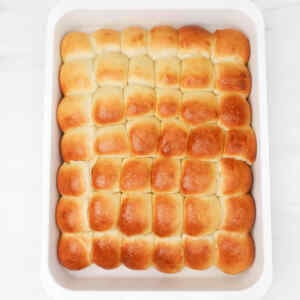
- Transférez les boules de pâte cuites dans un plat à bords hauts ou un plat à rôtir. Cela aide à empêcher le beurre à l’ail de s’échapper pendant la cuisson.
- Dans un petit saladier, mélangez le beurre doux, l’ail haché, le persil séché, l’ail en poudre, le sel marin et l’huile d’olive jusqu’à obtenir une préparation homogène.½ tasse de beurre doux, 3 gousses d’ail, 1 cuillère à café de persil séché, 1 cuillère à café d’ail en poudre, ½ cuillère à café de sel marin, 1 cuillère à soupe d’huile d’olive
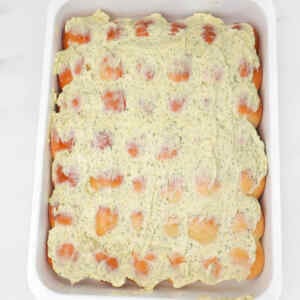
- Étalez le mélange de beurre à l’ail sur les boules de pâte cuites.
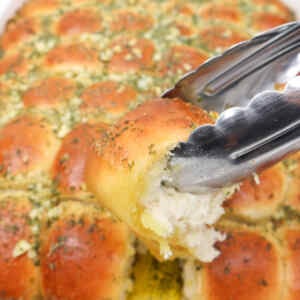
- Faites cuire pendant 10 minutes, jusqu’à ce que le beurre à l’ail ait fondu sur les boules de pâte.
- Servez chaud.
Notes
- Vérifiez la levure avant de préparer la pâte. Après avoir reposé avec l’eau tiède et le sucre, elle doit dégager une odeur de levure et sembler active.
- La pâte doit être souple et légèrement collante, et non sèche. Si nécessaire, ajoutez la farine supplémentaire quelques cuillères à soupe à la fois seulement.
- Utilisez une balance de cuisine si vous souhaitez obtenir des boules de pâte de taille régulière. Cela leur permet de cuire à la même vitesse.
- Laissez lever les boules de pâte jusqu’à ce qu’elles soient gonflées avant de les enfourner. Cela leur donne une texture plus moelleuse.
- Utilisez un plat à bords hauts pour la cuisson avec le beurre à l’ail. Il aide à maintenir le beurre fondu dans le plat au lieu de le laisser déborder.
- Laissez refroidir les boules de pâte avant d’ajouter la garniture afin de pouvoir les transférer et les enrober plus facilement.
- Servez les boules de pâte à l’ail chaudes pour profiter au mieux de leur texture et de leur saveur.
Valeurs nutritionnelles
Questions fréquentes
Puis-je diviser par deux cette recette de boules de pâte à l’ail ?
Oui. La recette entière donne environ 42 boules de pâte, mais vous pouvez diviser par deux la quantité de chaque ingrédient afin d’en préparer moins. Essayez de conserver des morceaux individuels de taille similaire pour qu’ils cuisent uniformément.
Puis-je congeler les boules de pâte à l’ail ?
Oui. Faites cuire les boules de pâte et laissez-les refroidir complètement, puis congelez-les avant d’ajouter le beurre à l’ail. Faites-les décongeler au réfrigérateur, ajoutez la garniture et enfournez-les jusqu’à ce qu’elles soient bien chaudes et dorées.
Pourquoi cuire les boules de pâte avant d’ajouter le beurre à l’ail ?
La première cuisson permet aux boules de pâte de cuire à cœur et de dorer avant l’ajout de la garniture au beurre. La seconde cuisson fait fondre le beurre à l’ail sur les boules de pâte déjà cuites sans trop humidifier la pâte.
Comment savoir si les boules de pâte sont entièrement cuites ?
Les boules de pâte doivent être bien dorées à l’extérieur. Pour une vérification plus précise, leur température à cœur doit atteindre 190-195°F.
Pourquoi utiliser un plat à bords hauts pour la cuisson avec le beurre à l’ail ?
Un plat à bords hauts ou un plat à rôtir aide à maintenir le beurre à l’ail fondu autour des boules de pâte. Cela empêche le beurre de s’échapper du plat pendant la cuisson.
Comment conserver les restes de boules de pâte à l’ail ?
Laissez refroidir les boules de pâte, transférez-les dans une boîte hermétique et placez-les rapidement au réfrigérateur. Consommez les restes réfrigérés dans les trois à quatre jours et ne réchauffez que la quantité que vous prévoyez de servir.
Les boules de pâte à l’ail sont-elles identiques aux nœuds à l’ail ?
Ces deux préparations utilisent beaucoup d’ingrédients identiques, mais les boules de pâte à l’ail sont façonnées en bouchées rondes plutôt que nouées. Cette recette prévoit également une seconde cuisson pour faire fondre le beurre à l’ail sur le pain déjà cuit.


