





Table of Contents
- A Simple Side Dish with Plenty of Butter and Fresh Herbs
- Why Start New Potatoes in Cold Water?
- Easy Ways to Change the Finish
- Use Fresh Parsley Instead of Dill
- Cut Larger Potatoes for a More Even Bowl
- Troubleshooting Texture and Seasoning
- If Some Potatoes Cook Faster Than Others
- If the Butter Does Not Coat Well
- If the Flavor Feels Too Mild
- What to Serve with Boiled New Potatoes
- Frequently Asked Questions
- How long do you boil new potatoes?
- Should I start new potatoes in cold or boiling water?
- Do I need to peel new potatoes before boiling?
- Can I use baby potatoes instead of new potatoes?
- Can I use parsley instead of dill?
- Jump to Recipe
A Simple Side Dish with Plenty of Butter and Fresh Herbs
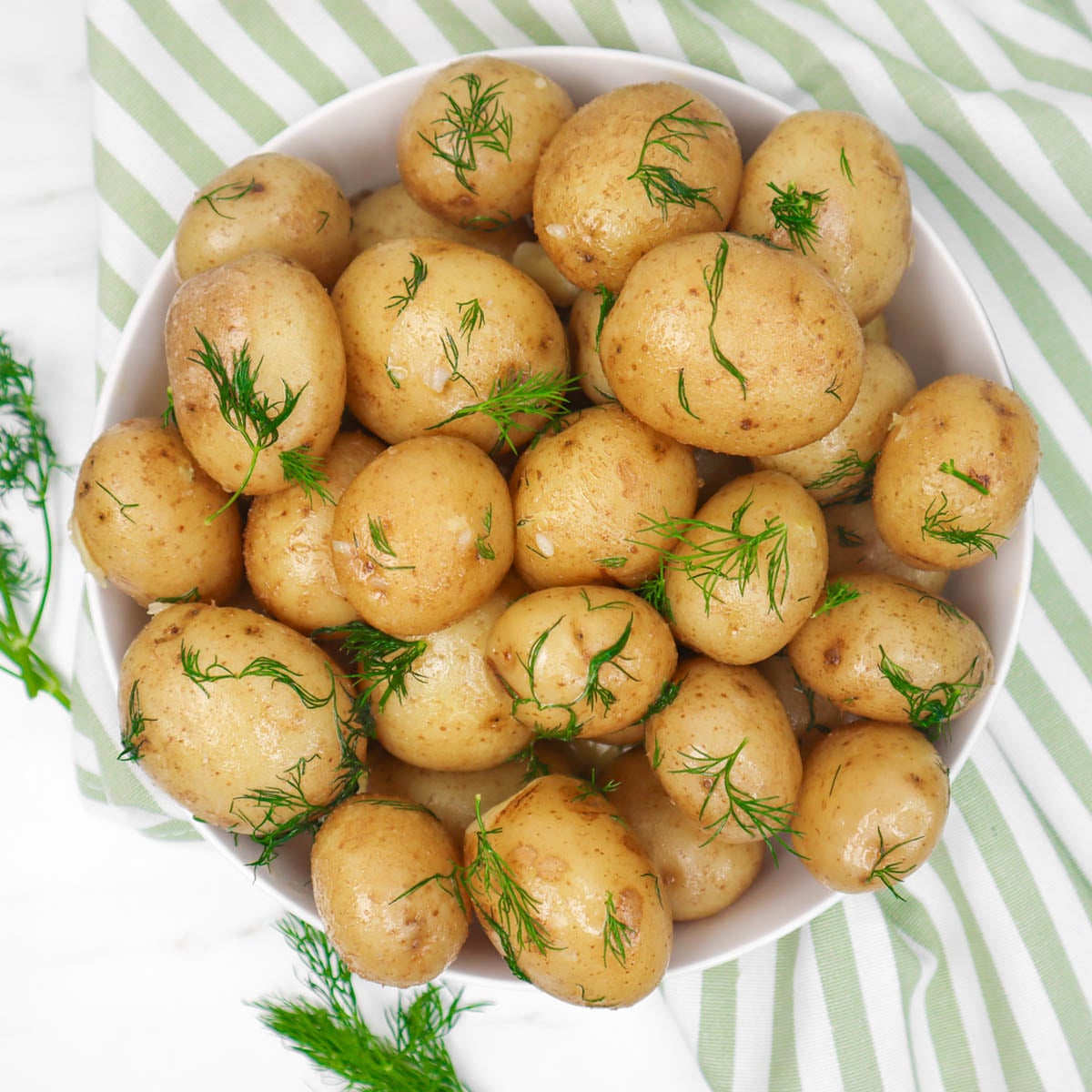
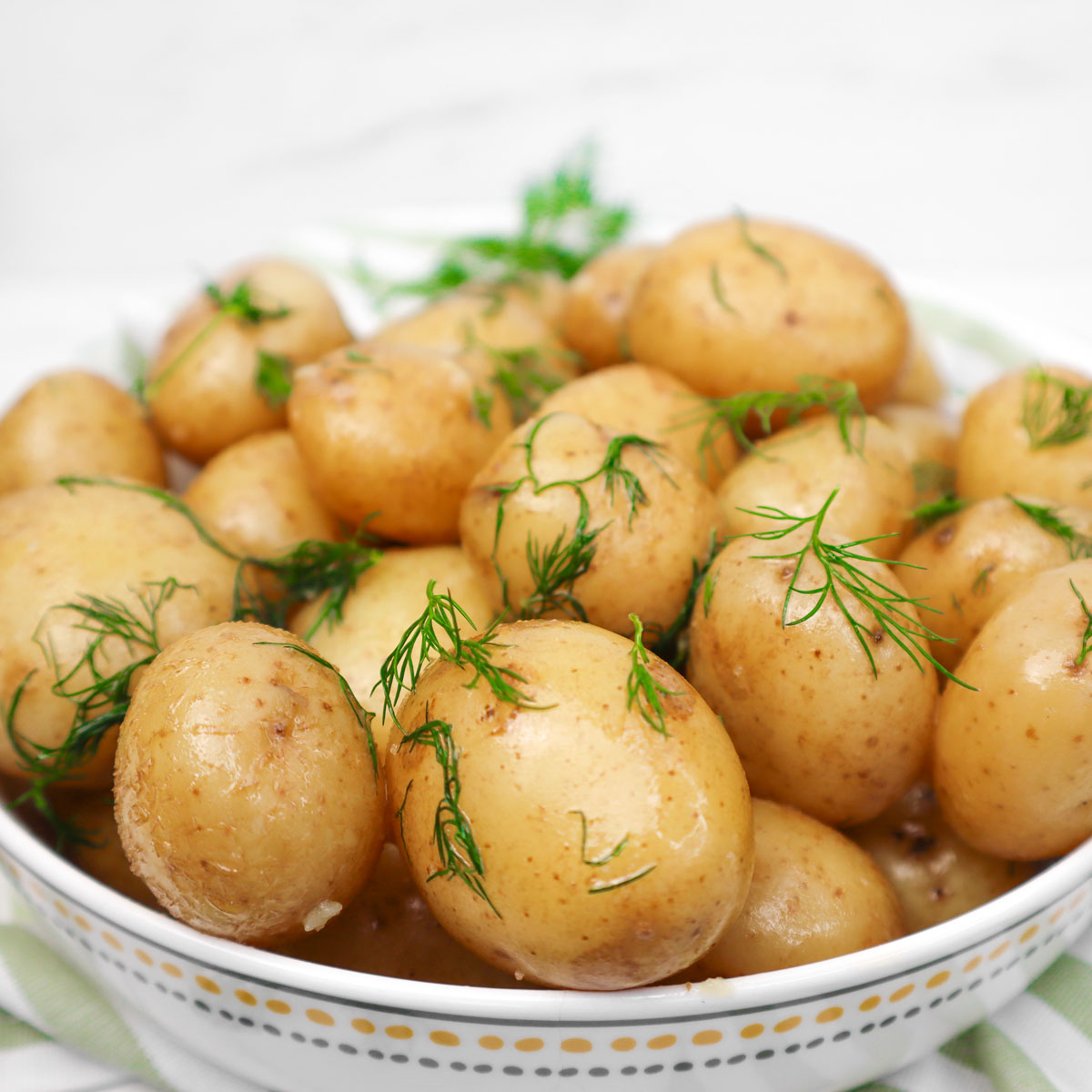
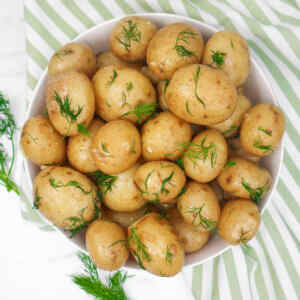
There is something very satisfying about a bowl of warm new potatoes coated in melted butter and fresh herbs. Once they are drained and returned to the pot, the heat from the potatoes melts the butter into a glossy coating that settles into every curve and crease. The garlic adds a gentle savory note, while the dill or parsley brings a fresh finish that keeps the whole dish feeling bright.
This is the kind of side I make when I want something easy, comforting, and reliable. The method is straightforward, but the result feels generous and complete. The potatoes stay tender and smooth, with just enough seasoning to let their natural flavor come through. A little black pepper and sea salt are all they need once the butter has done most of the work.
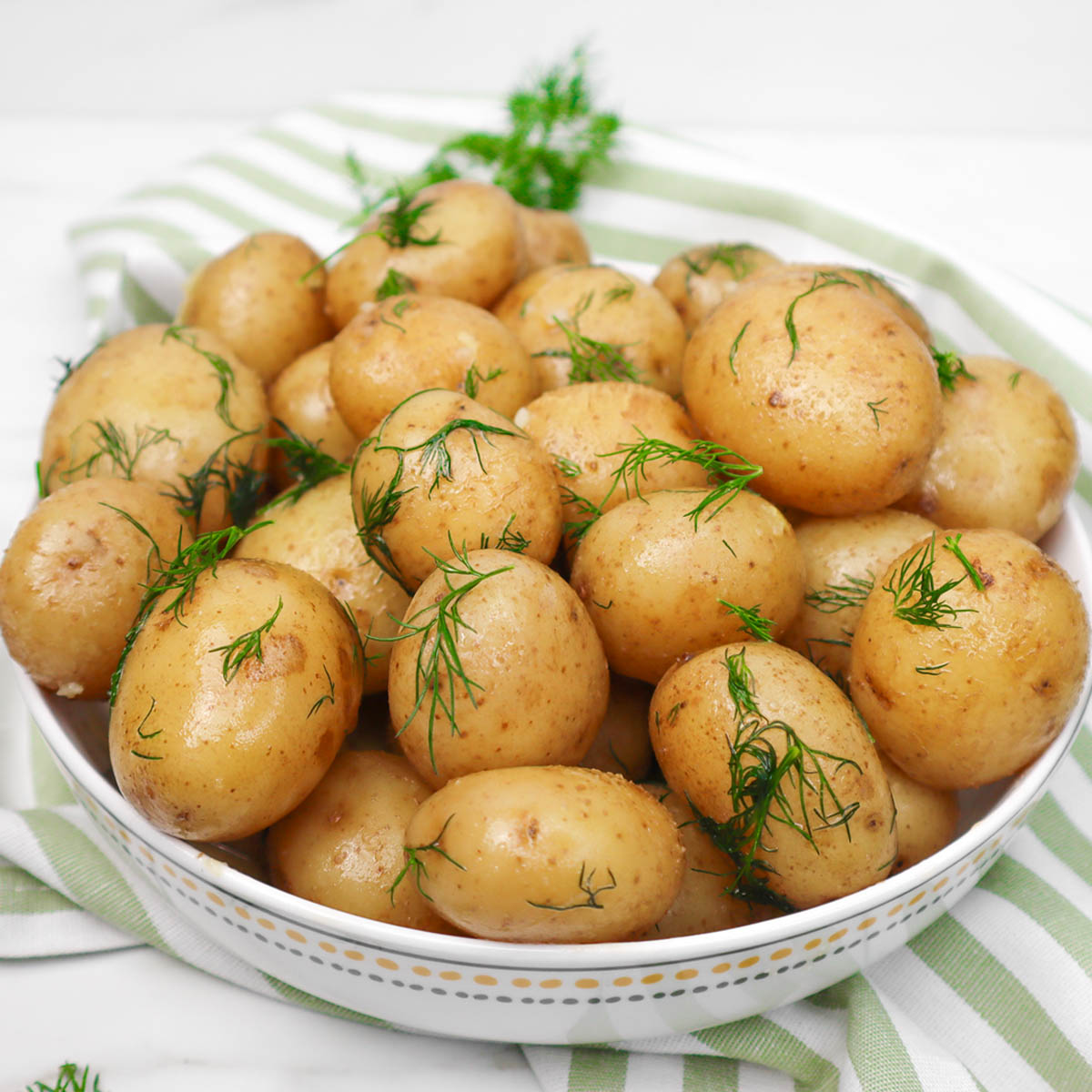
What I like most is how useful this recipe is. It can sit beside a larger meal without taking over the plate, but it still feels worth making in its own right. Cutting any larger potatoes helps everything cook more evenly, which makes the final bowl look and taste more consistent.
Served warm, this dish feels soft, buttery, and deeply comforting. It is simple food, but done well, and that is exactly why it works so well.
Why Start New Potatoes in Cold Water?
The first important step here is starting the potatoes in cold water. This helps them cook more evenly as the temperature rises, especially if some are slightly larger than others. If needed, cutting the bigger ones in half or quarters helps them cook at the same rate as the smaller pieces. You are looking for potatoes that feel tender when pierced with a fork, not falling apart.
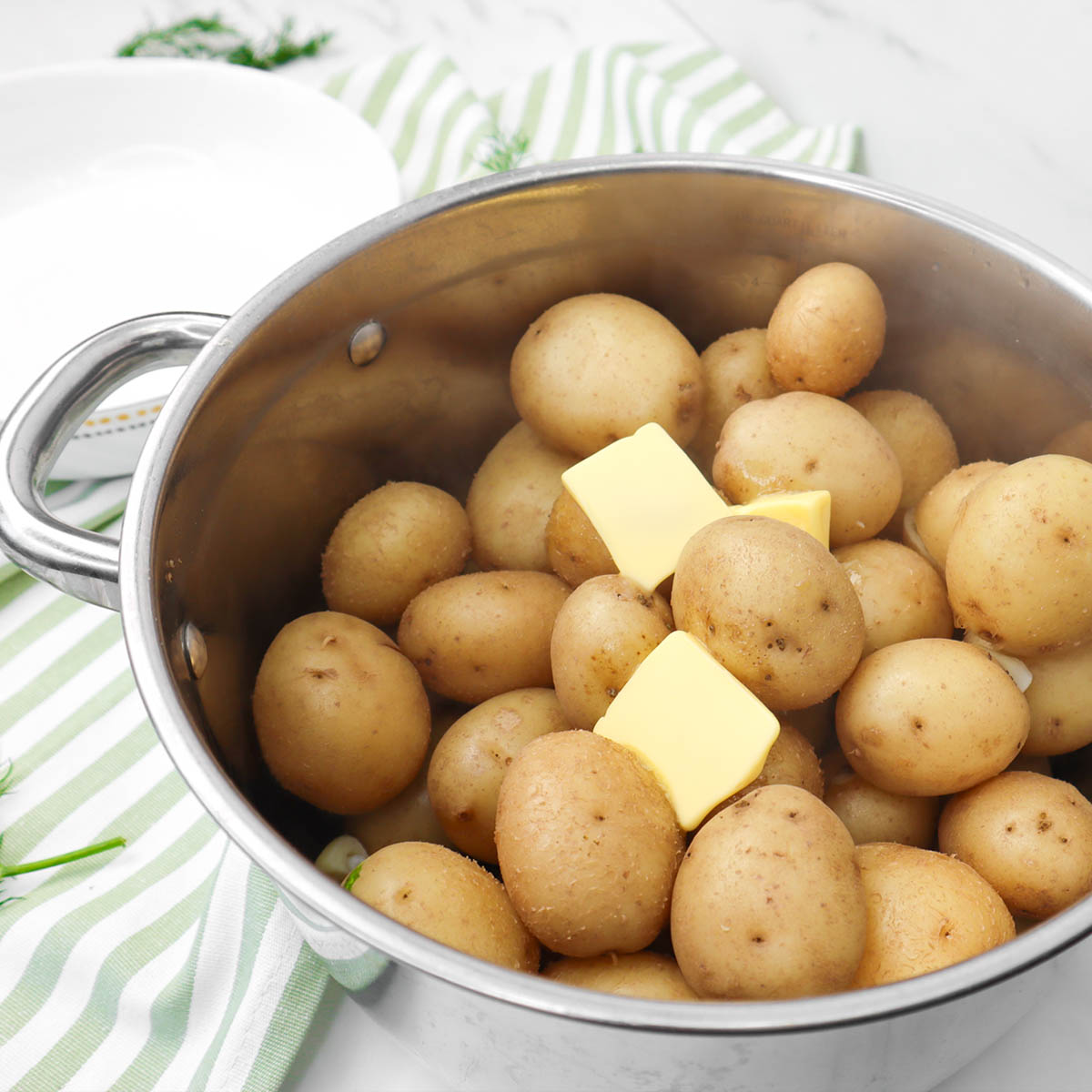
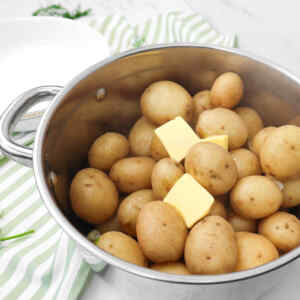
The second key point is what happens after draining. Returning the hot potatoes to the pot and adding the butter while they still hold plenty of heat lets the butter melt naturally around them. That residual heat helps coat them more evenly without needing any extra cooking. A wooden spoon or spatula is useful here, because it lets you toss everything gently without breaking the potatoes too much.
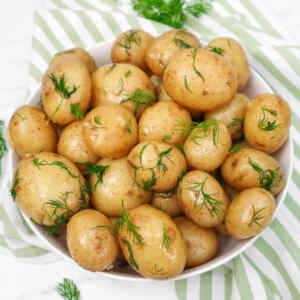
The garlic also plays a quiet but important role. Boiling the cloves with the potatoes gives the dish a subtle garlic aroma without making it too strong. Once everything is tossed together, the potatoes should look glossy and lightly coated, with the herbs scattered over the top. That visual cue tells you the butter has melted properly and the seasoning has had a chance to settle across the whole dish.
Easy Ways to Change the Finish
Use Fresh Parsley Instead of Dill
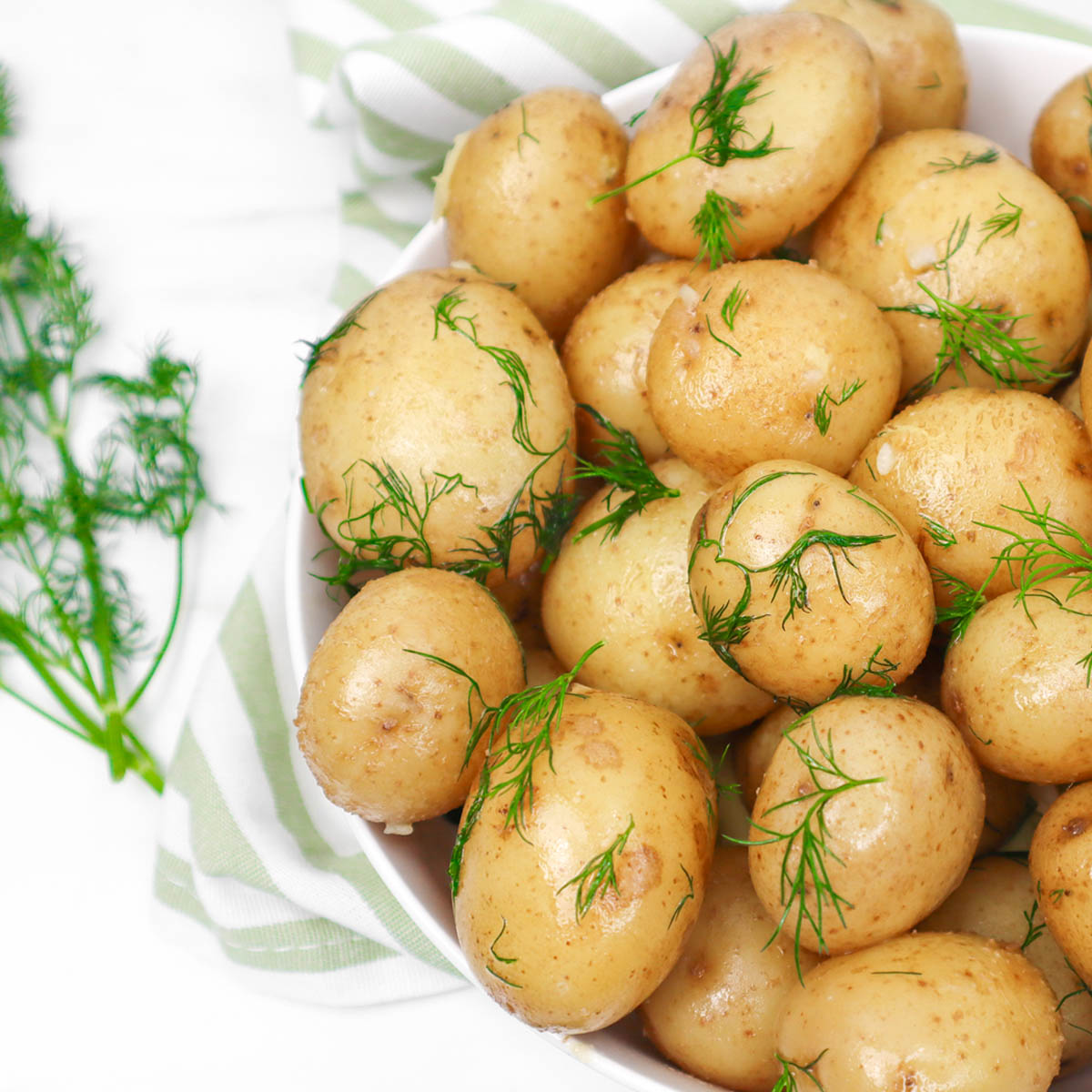
If you want a slightly different herb finish, use parsley instead of dill. It keeps the dish fresh and simple while giving it a slightly different feel.
Cut Larger Potatoes for a More Even Bowl
If some of the potatoes are much bigger, cut them into smaller pieces before boiling. This keeps the final dish more even and helps every piece cook at the same pace.
Troubleshooting Texture and Seasoning
If Some Potatoes Cook Faster Than Others
Cut the larger potatoes in half or quarters before boiling. That helps everything cook more evenly and gives you a more consistent final texture.
If the Butter Does Not Coat Well
Return the drained potatoes to the pot while they are still hot, then add the butter straight away. The residual heat helps it melt and spread more evenly.
If the Flavor Feels Too Mild
Finish with a pinch more sea salt or black pepper to taste. The fresh dill or parsley also helps lift the flavor at the end.
What to Serve with Boiled New Potatoes
These buttery boiled new potatoes are easy to fit into a family dinner. They work well with roast chicken, grilled fish, steak, lamb, or a simple vegetable side.
I served them this week with breaded cod and minted peas, and the buttery potatoes were lovely with the crisp fish and sweet peas. Serve them warm, straight from the pot, while the butter is still melted and glossy.
Buttery Boiled New Potatoes

Equipment
- Wooden spoon or spatula
Ingredients
- 3 lbs new potatoes any small waxy potato variety
- 4 cloves garlic
- 1 tablespoon sea salt for salting the water
- 4 tablespoons unsalted butter
- pinch sea salt to taste
- pinch ground black pepper to taste
- 3 tablespoons fresh dill or parsley
Instructions
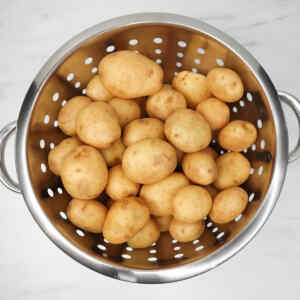
- Wash and scrub the potatoes thoroughly. Remove any sprouts or blemishes. If the potatoes are large, cut them in half or quarters for even cooking.3 lbs new potatoes

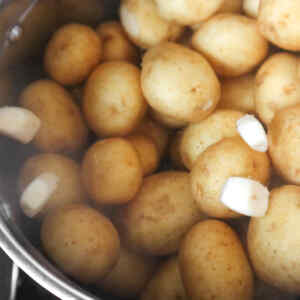
- Place the potatoes and garlic cloves in a large pot of cold water. Add 1 tablespoon of sea salt.4 cloves garlic, 1 tablespoon sea salt
- Bring the water to a boil, then reduce to a gentle simmer. Cook until the potatoes are tender when pierced with a fork, about 12-15 minutes.
- Drain the potatoes in a colander and return them to the pot. Add the butter and toss gently, allowing the residual heat to melt the butter and coat the potatoes evenly.4 tablespoons unsalted butter
- Season with a pinch of sea salt and black pepper. Sprinkle with fresh dill or parsley and serve warm.pinch sea salt, pinch ground black pepper, 3 tablespoons fresh dill
Notes
- Even cooking: Cutting larger potatoes ensures all pieces cook at the same rate.
- Extra flavor: For a subtle garlic aroma, leave the cloves in the water while boiling.
- Make ahead: Boil potatoes in advance, store in the fridge, and reheat with butter before serving.
- Serving idea: These are perfect alongside roast meats, grilled fish, or as part of a vegetable medley.
Nutrition
Frequently Asked Questions
How long do you boil new potatoes?
Boil new potatoes until they are fork-tender, usually about 12-15 minutes once the water reaches a gentle simmer. The exact time depends on the size of the potatoes, so check them with a fork before draining.
Should I start new potatoes in cold or boiling water?
Start new potatoes in cold salted water. This helps them cook more evenly, so the centers become tender before the skins and edges overcook.
Do I need to peel new potatoes before boiling?
No. New potatoes have thin, tender skins, so there is no need to peel them. Just wash and scrub them well before cooking.
Can I use baby potatoes instead of new potatoes?
Yes. Baby potatoes are a good substitute as long as they are small and waxy. If some are much larger than the others, cut them in half or quarters so they cook at the same rate.
Can I use parsley instead of dill?
Yes. Dill gives the potatoes a fresh, slightly grassy flavor, while parsley keeps them simple, clean, and more classic. Use whichever herb best suits the meal you are serving them with.


