




Table of Contents
- Why I Love This Classic Roast Chicken
- Tips for Golden Skin and Juicy Meat
- Easy Variations
- Add Lemon and Garlic
- Roast It Over Vegetables
- Use Fresh Herbs
- Troubleshooting Roast Chicken
- What to Serve With Roast Chicken
- Frequently Asked Questions
- Should I roast chicken covered or uncovered?
- Where should I check the temperature on roast chicken?
- How long should roast chicken rest before carving?
- How do I store leftover roast chicken?
- What can I make with leftover roast chicken?
- Jump to Recipe
Why I Love This Classic Roast Chicken
Roast chicken is one of those dinners that always feels comforting, even when the ingredients are simple. I love making it for a Sunday roast, but I also use this recipe as a practical meal prep staple. Quite often, I double the recipe and roast two chickens at once, one for dinner and one for the week ahead.
That extra chicken never goes to waste. It goes into sandwiches, curries, wraps, salads, and quick lunches throughout the week. It is also perfect for recipes like my coronation chicken, which makes a great sandwich filler for packed lunches. I also use it in chicken Waldorf salad and my favorite chicken Caesar salad.
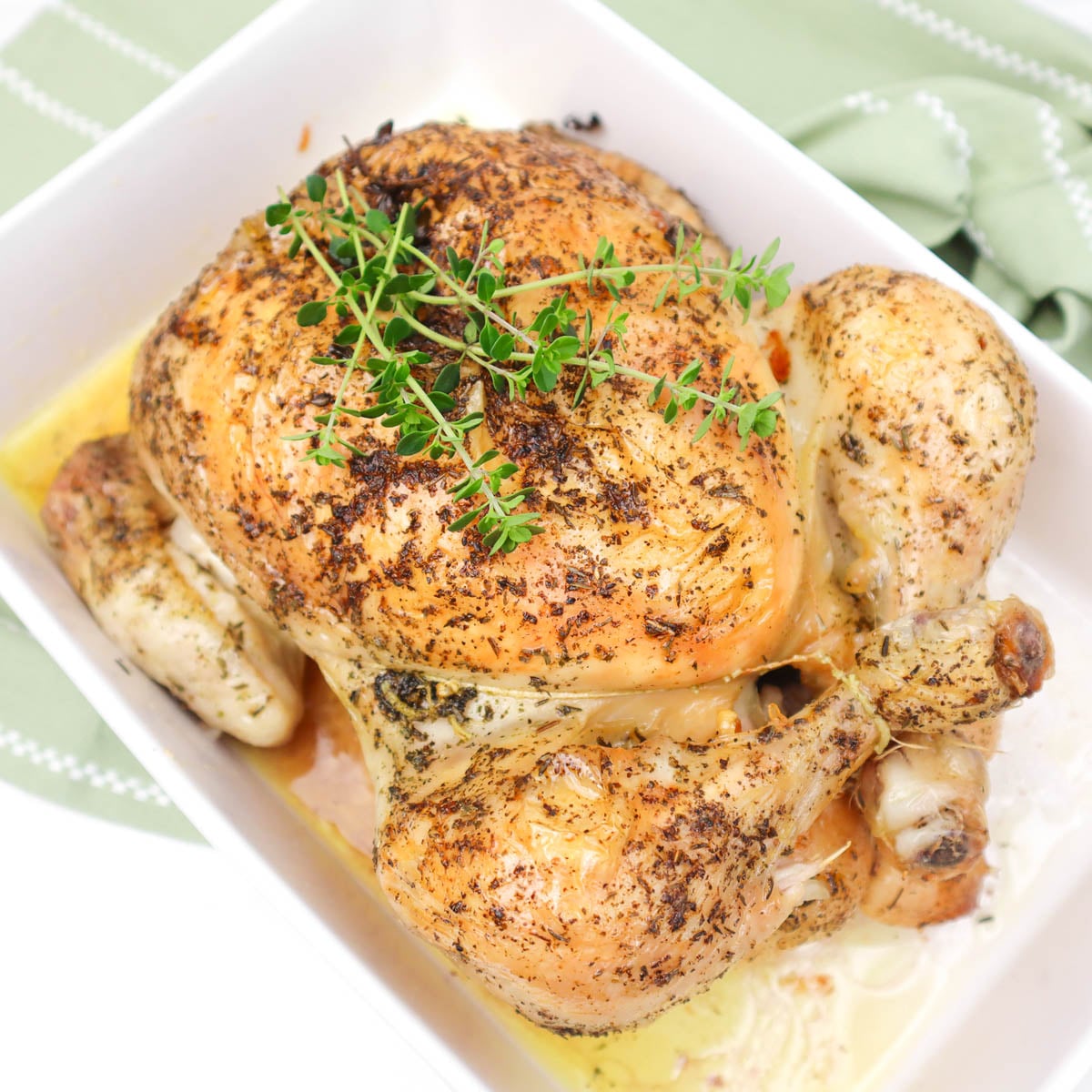
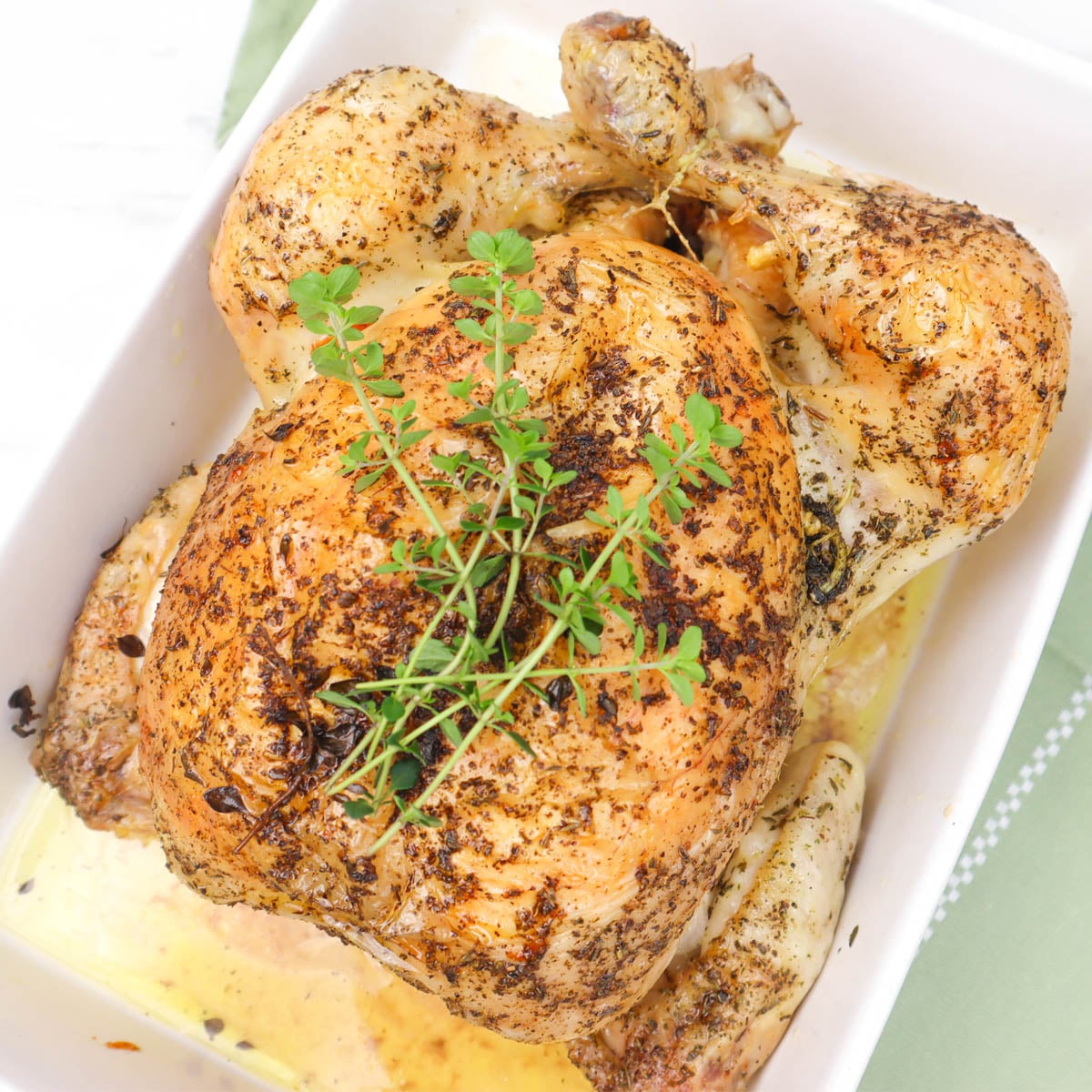
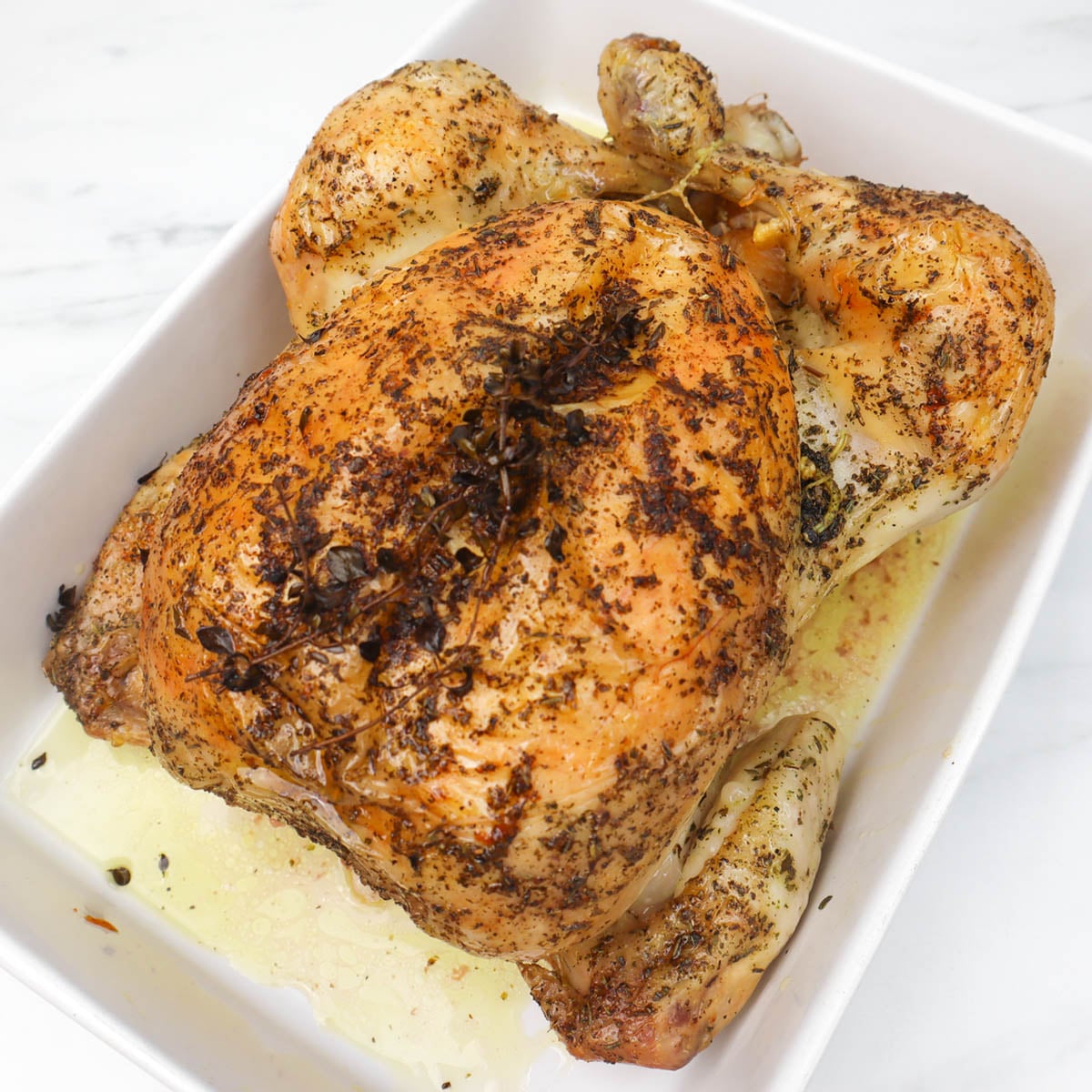
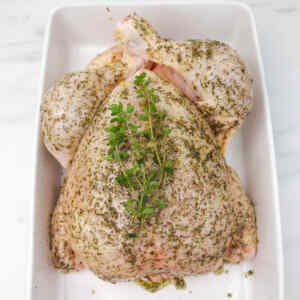
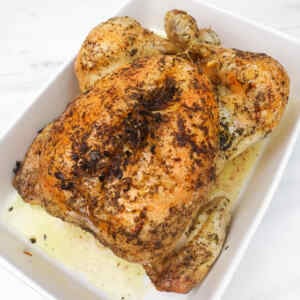
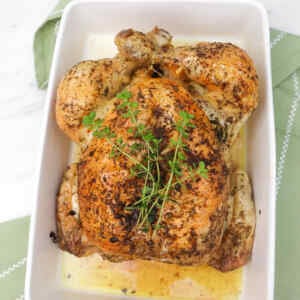
The method is simple and reliable. Patting the chicken dry helps the skin roast better, and then the seasoned olive oil gets brushed all over the surface. As it cooks, the skin turns golden, the herbs become fragrant, and the kitchen smells savory and inviting.
I also like that this recipe gives clear doneness cues. The chicken is done when the thickest part reaches 165°F / 74°C on a meat thermometer. The skin should look golden, and the juices should run clear, but the thermometer is the most reliable way to know it is fully cooked.
The rest before carving is important, too. It gives the juices time to settle, so the meat stays juicy when sliced. Simple, golden, and reliable, this is the kind of roast chicken I would happily make again and again.
Tips for Golden Skin and Juicy Meat
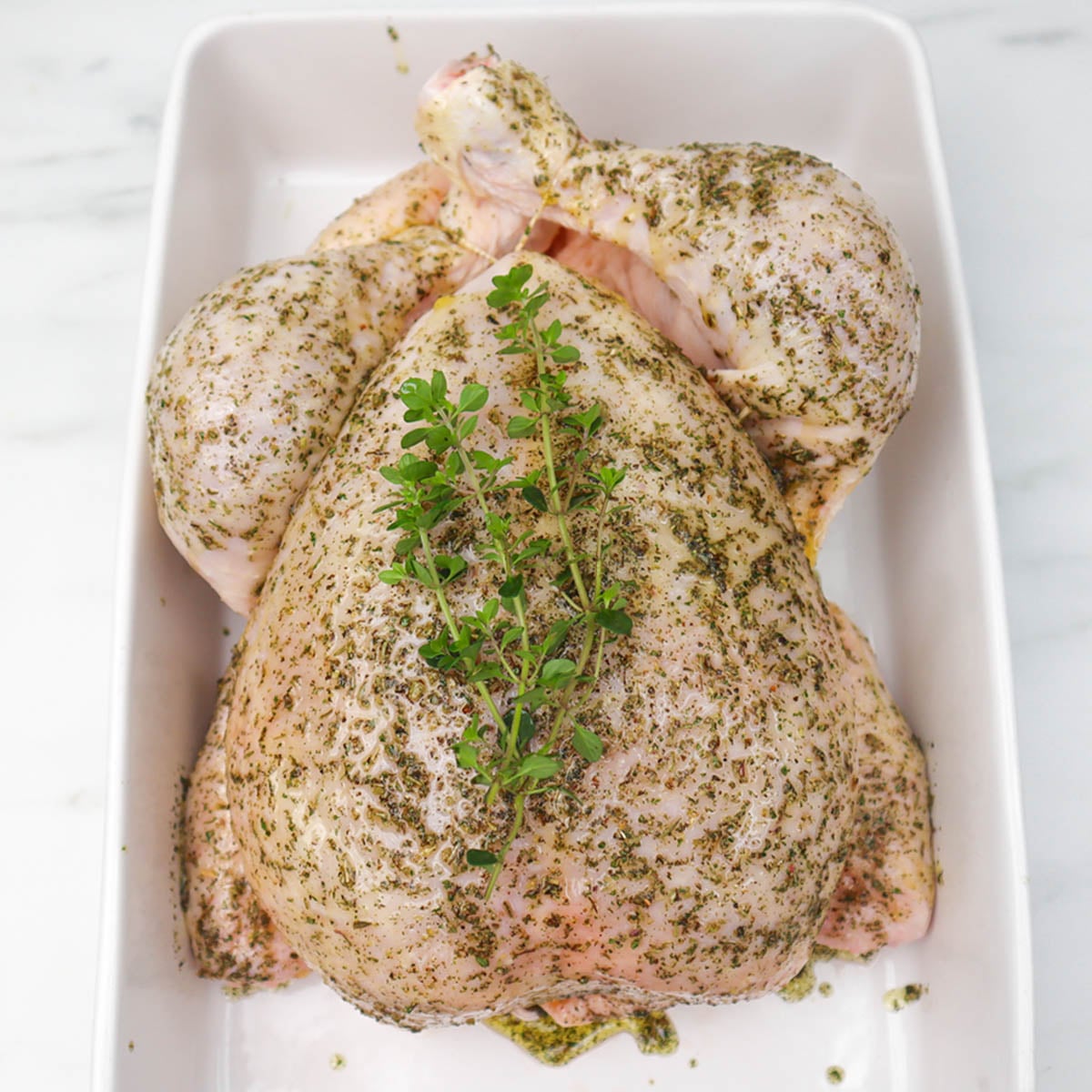
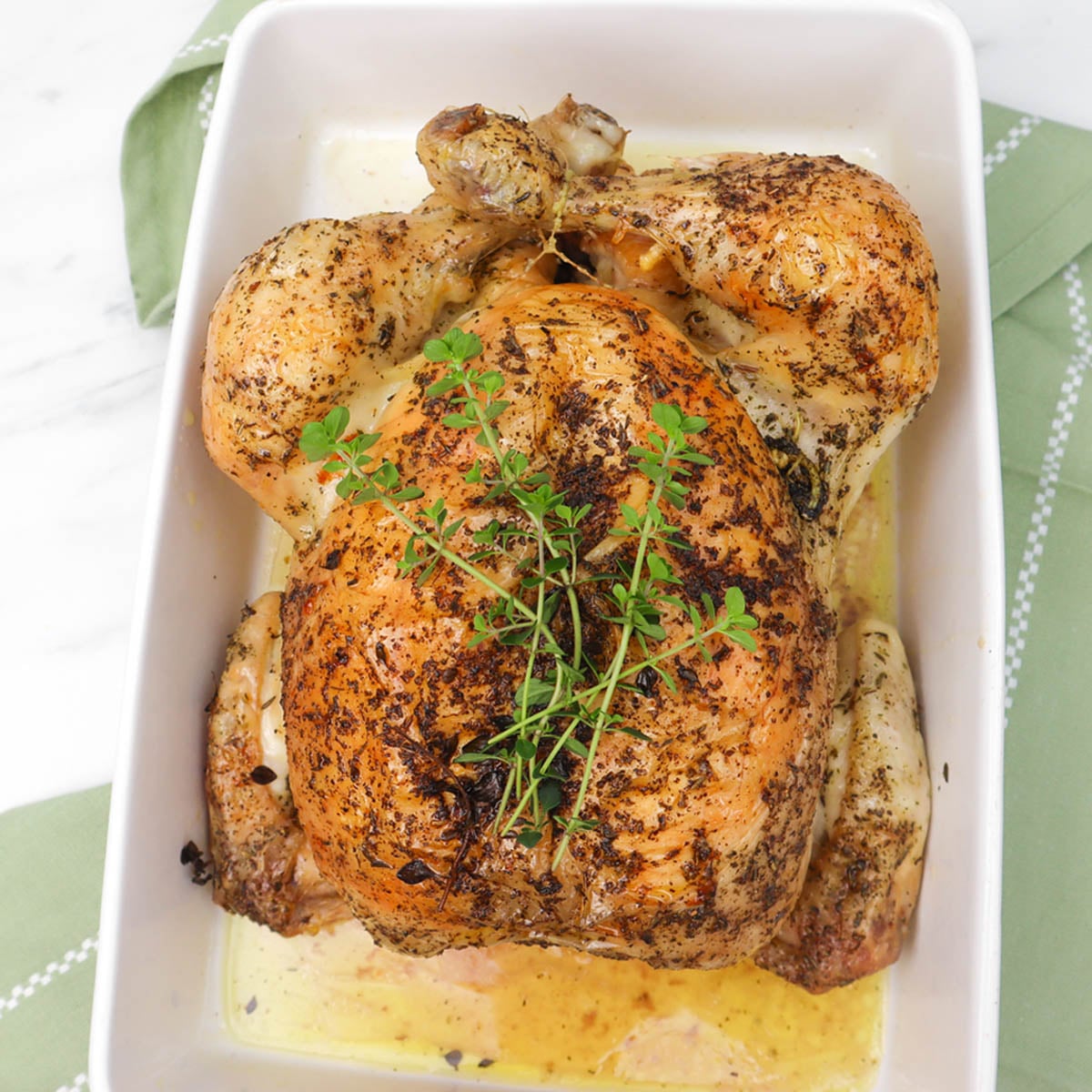
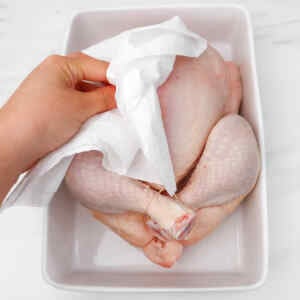
The first helpful step is patting the chicken dry with paper towels. Drying the surface helps the skin roast better in the oven. If the chicken goes into the roasting pan too wet, the surface may steam before it starts to brown.
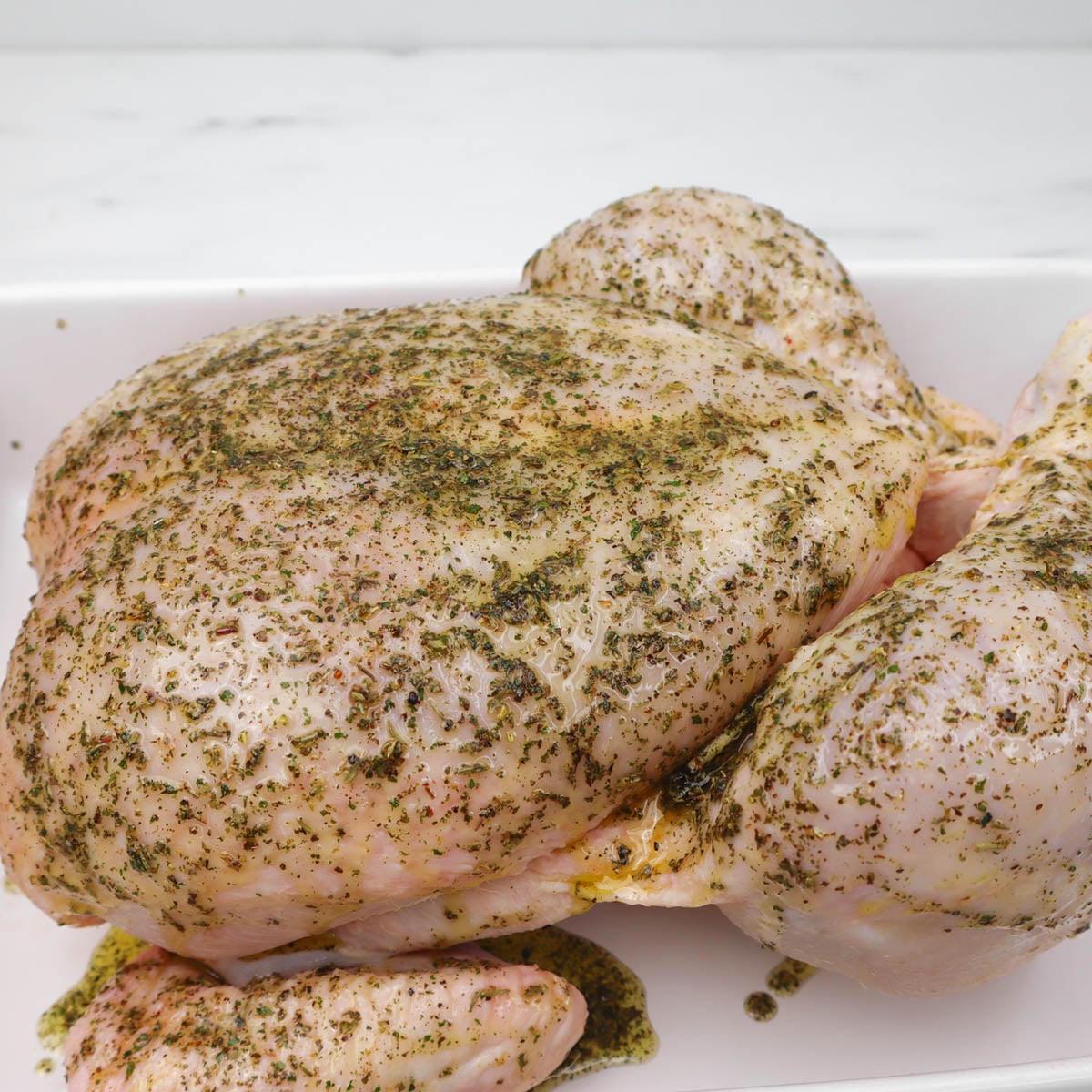
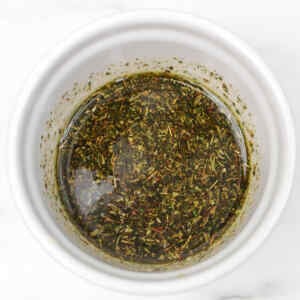
The seasoned olive oil also matters. Mix the olive oil, sea salt, black pepper, and Italian seasoning in a small bowl before brushing it over the chicken. This helps the seasoning spread more evenly over the skin. A pastry brush works well, but a spoon can also help coat the surface.
Basting halfway through cooking keeps the outside flavorful as the chicken roasts. This is also a good time to check the color of the skin. If it is browning too quickly before the chicken is fully cooked, loosely cover the top with foil near the end of cooking.
Use a meat thermometer to check doneness. The chicken is ready when the thickest part reaches 165°F / 74°C. Check the thickest part of the thigh without touching the bone for the most reliable reading.
Let the chicken rest before carving. A 10-minute rest is ideal for a whole roast chicken because it helps the meat stay juicy and makes the chicken easier to slice.
Easy Variations
Add Lemon and Garlic
Place lemon halves and a few garlic cloves inside the chicken before roasting. They add a fresh, savory aroma that works well with the thyme, Italian seasoning, and golden roasted skin.
Roast It Over Vegetables
Place chopped carrots, onions, or potatoes in the roasting pan before adding the chicken. The vegetables cook underneath the chicken and absorb the seasoned juices as everything roasts.
Use Fresh Herbs
Fresh rosemary, parsley, sage, or extra thyme can be added to the roasting pan for more flavor. This is an easy way to make the chicken feel a little more special without changing the basic method.
Troubleshooting Roast Chicken
Why is my roast chicken skin not browning?
The chicken may have been too wet before it went into the oven. Pat the skin dry with paper towels before adding the seasoned olive oil. A dry surface helps the skin brown instead of steam.
What if the skin browns too quickly?
If the top of the chicken is getting too dark before the meat is cooked through, loosely cover it with foil near the end of roasting. This protects the skin while the chicken finishes cooking.
How do I know when roast chicken is done?
Use a meat thermometer and check the thickest part of the thigh without touching the bone. The chicken is done when it reaches 165°F / 74°C.
Why is my roast chicken dry?
Dry chicken is usually caused by overcooking or carving too soon. Use a thermometer so you do not roast it longer than needed, then let the chicken rest before slicing.
What to Serve With Roast Chicken
Serve this roast chicken warm after resting and carving. It makes a classic main dish for Sunday dinner, family meals, or a cozy weekend roast.
For a traditional roast dinner, pair it with roast potatoes, carrots, green beans, peas, gravy, or Yorkshire puddings. For something lighter, serve it with a crisp green salad, steamed vegetables, buttered new potatoes, or a simple pasta salad.
The golden skin, thyme, Italian seasoning, and olive oil coating give the chicken plenty of flavor without overpowering the meal, so it works well with simple sides that let the roast chicken stay the focus.
Roast Chicken

Equipment
- Paper towels
- Pastry brush or spoon
- Meat thermometer
Ingredients
- 1 whole roasting chicken about 3 ½ lb
- 2 tablespoons extra-virgin olive oil
- pinch sea salt
- ½ teaspoon freshly ground black pepper to taste
- ½ teaspoon Italian seasoning
- 1 sprig thyme
Instructions
- Preheat the oven to 400°F (200°C). For a fan or convection oven, use 350°F (180°C).

- Pat the chicken dry all over with paper towels. This helps the skin roast better.1 whole roasting chicken

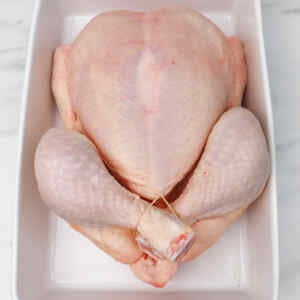
- Place the chicken in a roasting pan.
- In a small bowl, mix the olive oil, sea salt, black pepper, and Italian seasoning.2 tablespoons extra-virgin olive oil, pinch sea salt, ½ teaspoon freshly ground black pepper, ½ teaspoon Italian seasoning
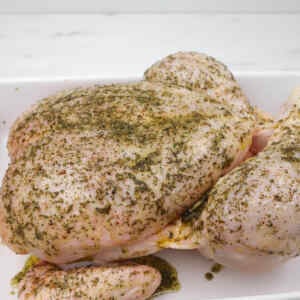
- Brush the seasoned oil all over the chicken.
- Add the thyme sprig to the chicken.1 sprig thyme
- Roast for 1 hour 30 minutes, basting halfway through cooking.
- The chicken is ready when the skin is golden brown and the internal temperature reaches 165°F (74°C).
- Remove the chicken from the oven and let it rest for 5 to 10 minutes before carving.
- Carve and serve warm.

Notes
- Patting the chicken dry helps the skin brown in the oven.
- Baste the chicken halfway through roasting to keep the surface flavorful.
- Use a meat thermometer to check the thickest part of the chicken.
- The safe internal temperature is 165°F / 74°C.
- Letting the chicken rest before carving helps the meat stay juicy.
- If the skin browns too quickly, loosely cover the chicken with foil near the end of cooking.
Nutrition
Frequently Asked Questions
Should I roast chicken covered or uncovered?
Roast the chicken uncovered so the skin can brown and turn golden. If the skin starts to brown too quickly before the chicken is fully cooked, loosely cover the top with foil near the end of roasting.
Where should I check the temperature on roast chicken?
Check the thickest part of the thigh with a meat thermometer, making sure the thermometer does not touch the bone. The chicken is fully cooked when it reaches 165°F / 74°C.
How long should roast chicken rest before carving?
Let the chicken rest for at least 5 minutes before carving, or closer to 10 minutes if you have time. Resting helps the juices settle so the meat stays moist when sliced.
How do I store leftover roast chicken?
Let the chicken cool, then remove the meat from the bone and store it in an airtight container in the refrigerator. For best quality and food safety, use leftover roast chicken within 3 to 4 days.
What can I make with leftover roast chicken?
Leftover roast chicken is great in sandwiches, wraps, salads, soups, pasta dishes, casseroles, rice bowls, and quick lunches. It also works well in coronation chicken, chicken Waldorf salad, and chicken Caesar salad.


