





Table of Contents
- Why You'll Love This Mediterranean Salad
- Tips for the Best Texture and Flavor
- Variations and Ingredient Substitutions
- What to Serve with Mediterranean Salad
- Frequently Asked Questions
- Can I make Mediterranean salad ahead of time?
- How do I stop Mediterranean salad from becoming watery?
- What olives are best for Mediterranean salad?
- Is Mediterranean salad the same as Greek salad?
- Can I make this salad without feta?
- What can I use instead of red wine vinegar?
- How long does Mediterranean salad last?
- Jump to Recipe
Why You'll Love This Mediterranean Salad
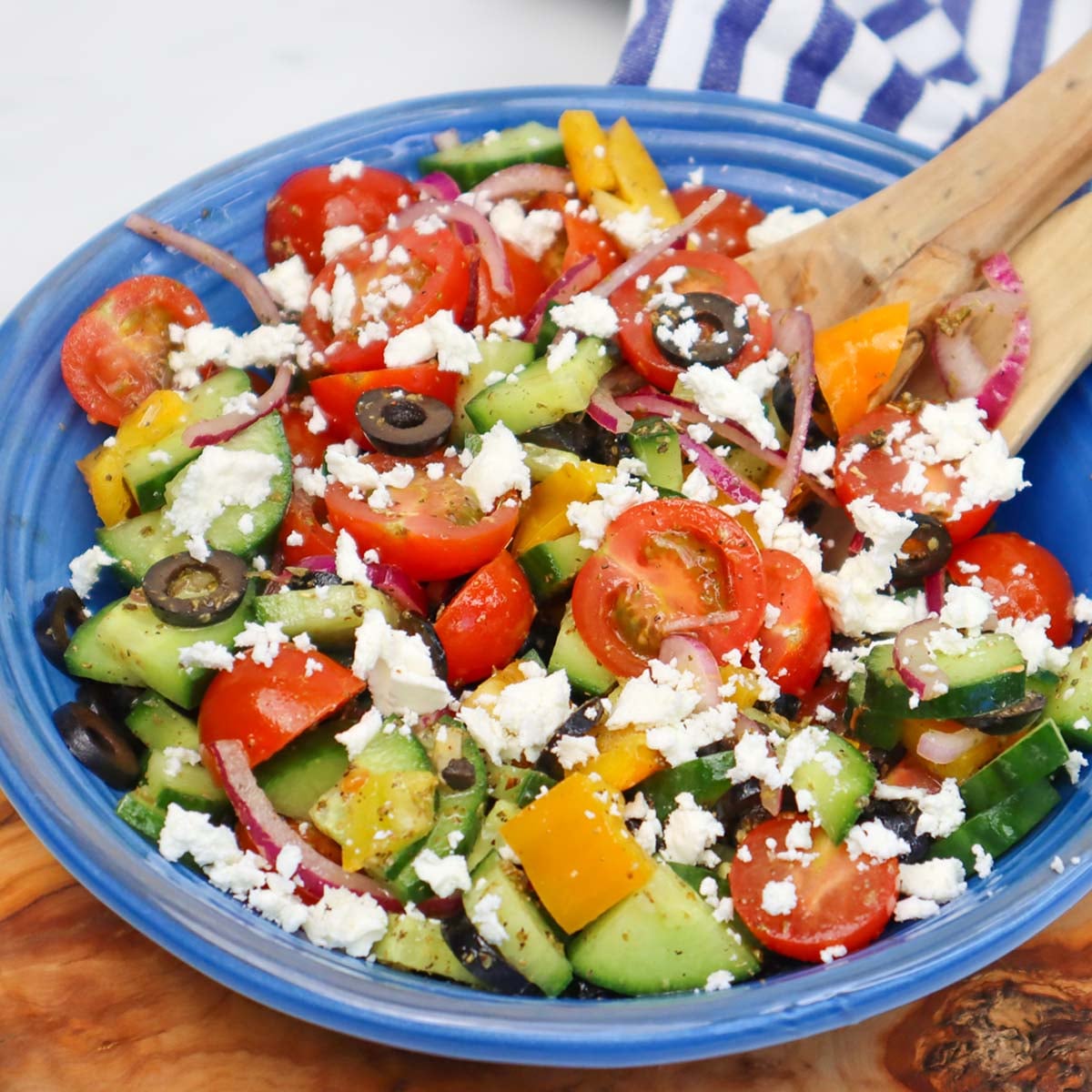
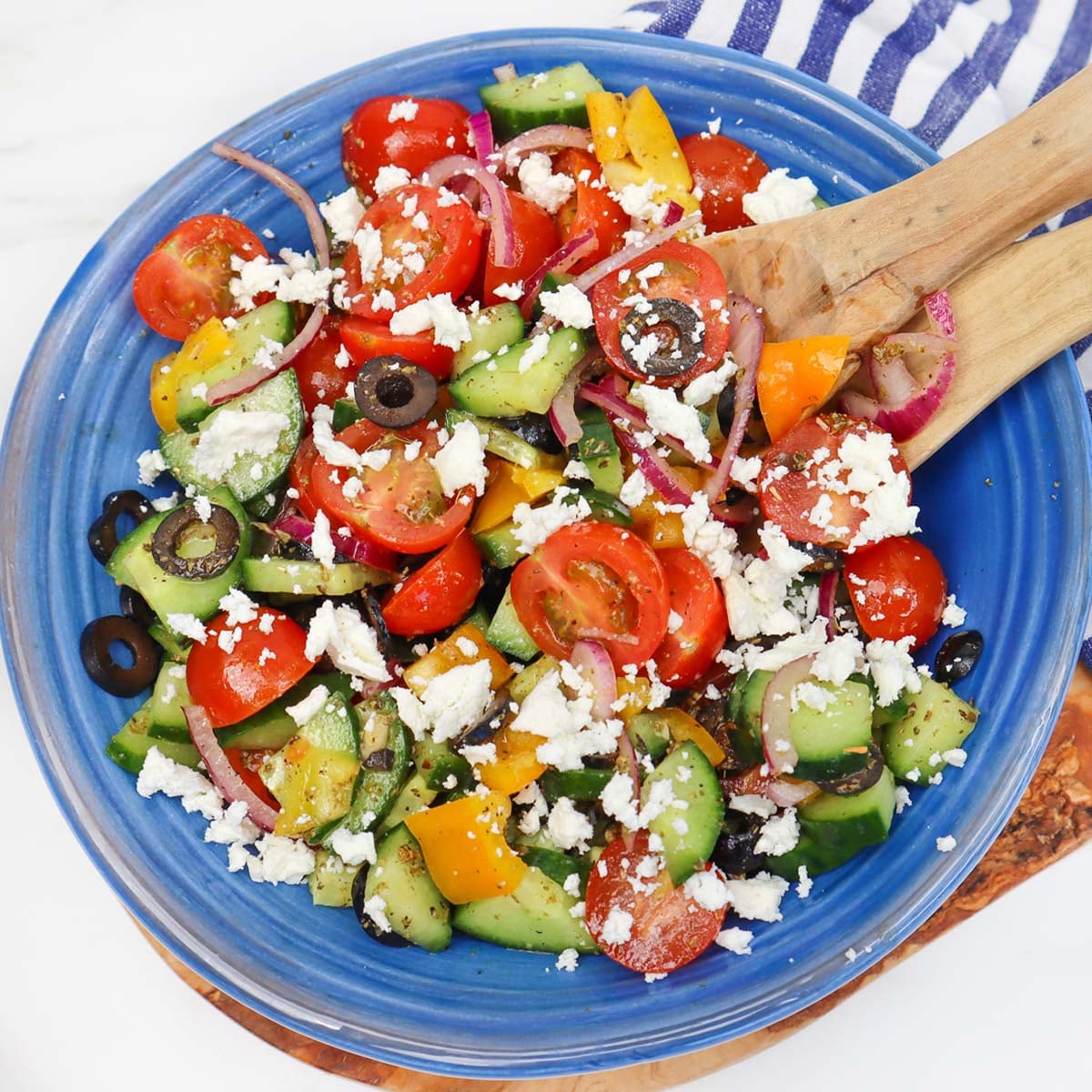
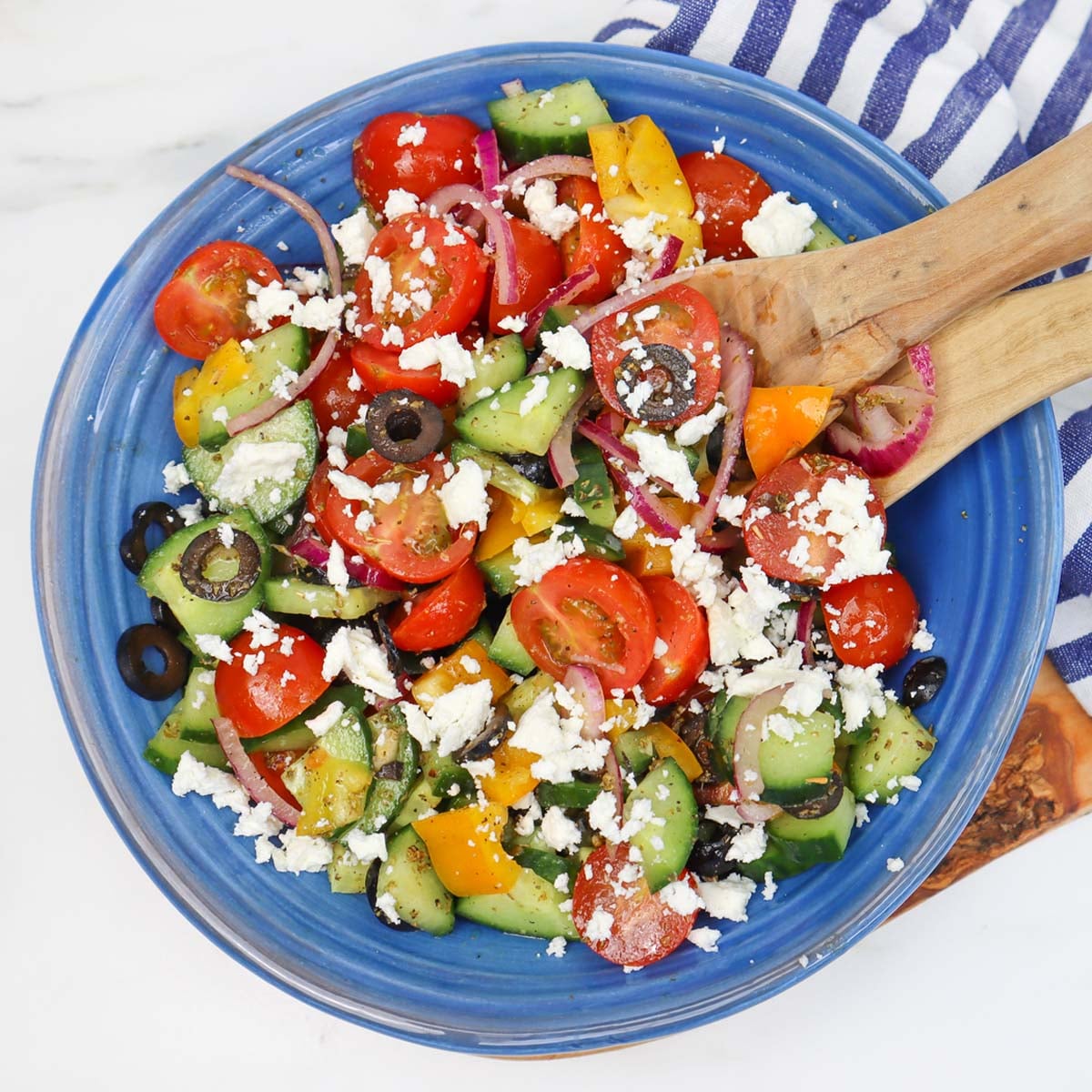
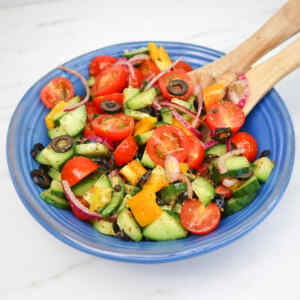
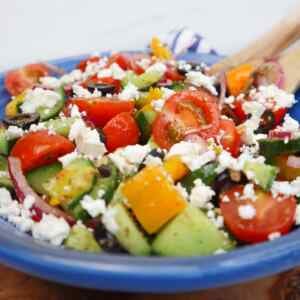
This Mediterranean salad is one of my favorite options when I need a quick side dish that does not require any cooking. The cucumber and yellow bell pepper provide plenty of crunch, while the cherry tomatoes add sweetness and juiciness. Black olives bring a mild salty flavor, and the crumbled feta gives the salad a creamy, savory finish.
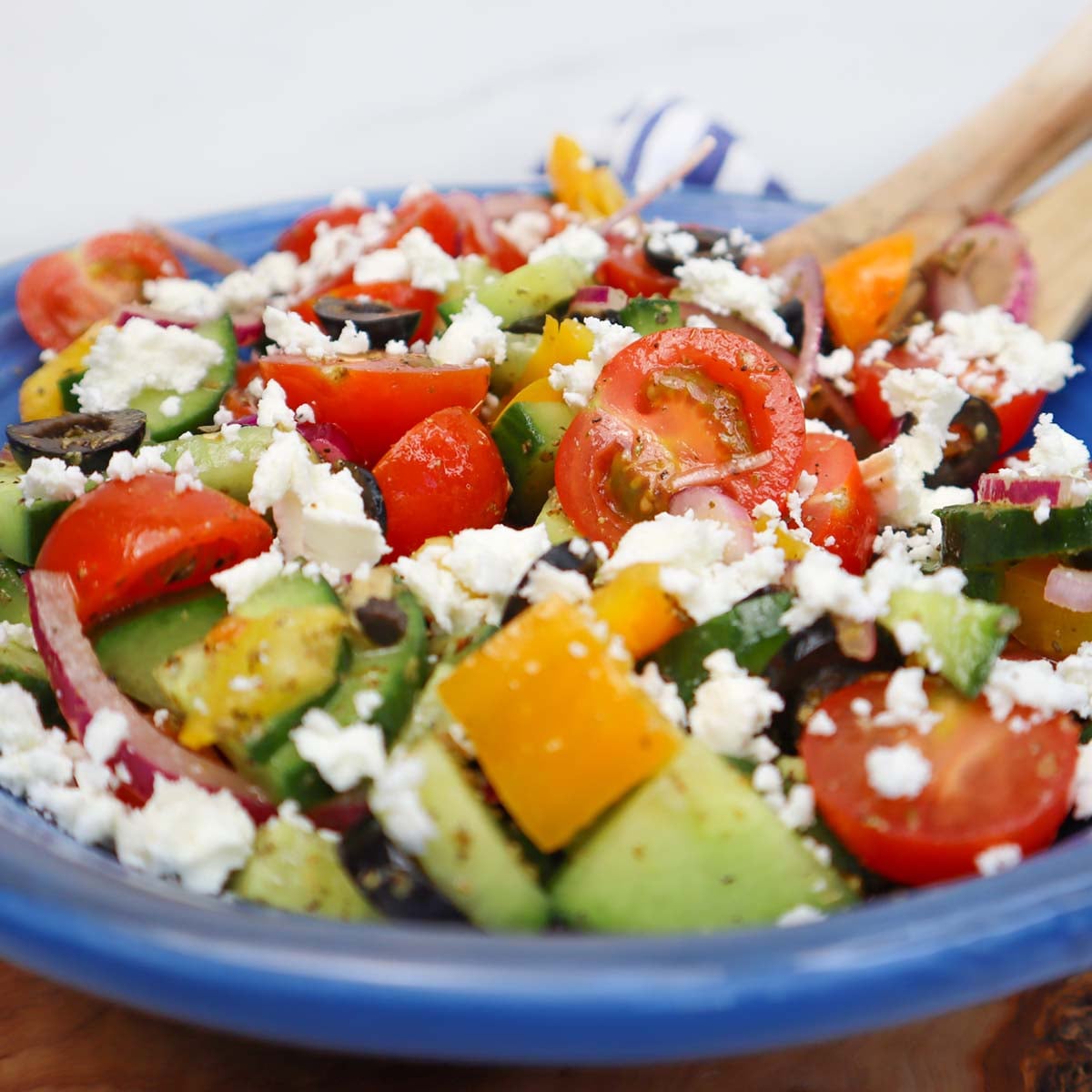
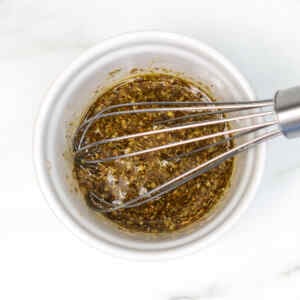
The dressing is a simple mixture of olive oil, red wine vinegar, oregano, kosher salt, and black pepper. It lightly coats the vegetables without overwhelming their flavor, and there is no need for a bottled dressing or a long list of ingredients.
Because the salad comes together in minutes, it is especially useful for busy weeknights, summer gatherings, and last-minute lunches. You can serve it immediately or refrigerate it briefly before serving.
Tips for the Best Texture and Flavor
Dry the vegetables well after washing them. Excess water can dilute the dressing and collect at the bottom of the bowl. A firm seedless cucumber works particularly well because it has small seeds and usually does not need to be peeled.
Cut the cucumber, bell pepper, and tomatoes into similar-sized pieces so each serving contains a balanced mixture of ingredients. Slice the red onion thinly so it adds a pleasant sharpness without overpowering the cucumber, tomatoes, and feta.
Whisk the dressing separately before pouring it over the vegetables. This helps the oil, vinegar, oregano, salt, and pepper combine evenly. The vegetables should be lightly coated rather than sitting in a pool of dressing.
Add the feta after dressing the vegetables. Gently toss it into the salad or scatter it over the top so it keeps its crumbly texture. When preparing the salad ahead of time, keep the dressing and feta separate until shortly before serving.
Variations and Ingredient Substitutions
Regular black olives give this salad a mild flavor, but Kalamata olives are a good alternative if you prefer something richer and more briny. Drain the olives well before adding them so they do not introduce unnecessary liquid.
Feta sold in a block generally has a creamier texture than pre-crumbled feta. Crumble it shortly before assembling the salad. For a dairy-free or vegan version, leave it out or use a dairy-free feta alternative.
You can also adapt the salad with one or two of the following additions:
- Add chickpeas to make it more filling.
- Add diced avocado shortly before serving for extra creaminess.
- Stir in chopped parsley or mint for a fresh herbal flavor.
- Add sun-dried tomatoes for a more concentrated tomato flavor.
- Finish the salad with a squeeze of fresh lemon juice for extra acidity.
Keep the additions simple so the cucumber, tomatoes, olives, and feta remain the main focus of the salad.
What to Serve with Mediterranean Salad
This Mediterranean salad pairs well with grilled chicken, fish, roasted vegetables, pasta, or warm flatbread. It can also be served on its own as a light lunch, especially with chickpeas added for a little more substance.
I served it at my parents' summer barbecue and kept the dressing and feta separate until shortly before eating. That simple step helped the vegetables remain crisp and prevented the feta from breaking down into the dressing.
Its fresh vegetables and tangy dressing make it a particularly good match for grilled or roasted foods, but it is versatile enough to serve alongside an everyday family dinner.
Mediterranean Salad

Equipment
- Small bowl (for dressing)
- Spoon or salad tongs
Ingredients
- 1 large seedless cucumber diced
- 1 yellow bell pepper diced
- 1½ cups cherry tomatoes cut in half
- ½ medium red onion sliced
- ⅔ cup black olives pitted and sliced
- ¾ cup feta cheese crumbled
- 2 tablespoons olive oil
- 2 tablespoons red wine vinegar
- 1 teaspoon oregano
- ½ teaspoon Kosher salt
- ⅛ teaspoon freshly ground black pepper
Instructions
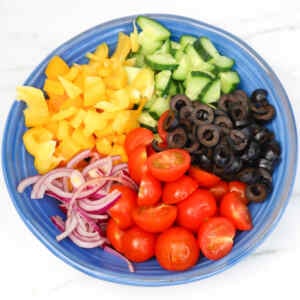
- Add the diced cucumber, halved cherry tomatoes, sliced red onion, diced bell pepper, and olives to a large mixing bowl.1 large seedless cucumber, 1 yellow bell pepper, 1½ cups cherry tomatoes, ½ medium red onion, ⅔ cup black olives

- In a small bowl, whisk together the olive oil, red wine vinegar, oregano, salt, and black pepper until well combined.2 tablespoons olive oil, 2 tablespoons red wine vinegar, 1 teaspoon oregano, ½ teaspoon Kosher salt, ⅛ teaspoon freshly ground black pepper
- Pour the dressing over the salad and toss gently to coat all the ingredients evenly.
- Sprinkle the crumbled feta cheese over the top and give the salad a light toss, or leave it on top for serving.¾ cup feta cheese
- Serve immediately, or chill in the fridge for 10-15 minutes to allow the flavors to develop.
Notes
- Slice onions thinly. This keeps the flavor balanced and not overpowering.
- Use fresh ingredients. The quality of your vegetables makes a big difference.
- Add feta last. This helps keep its texture intact.
- Customize it. Add sundried tomatoes, avocado, or chickpeas for extra variety.
- Make ahead. Prepare the salad in advance, but add the dressing just before serving for best texture.
- Extra flavor. A squeeze of lemon juice can brighten the dish even more.
- Serving idea. Perfect as a side dish, light lunch, or BBQ addition.
Nutrition
Frequently Asked Questions
Can I make Mediterranean salad ahead of time?
Yes. Chop the vegetables and prepare the dressing ahead of time, then refrigerate them separately. Add the dressing and feta shortly before serving so the vegetables stay crisp and the feta keeps its texture.
How do I stop Mediterranean salad from becoming watery?
Dry the vegetables well after washing them, drain the olives, and avoid adding the salt and dressing too early. If you use a large cucumber with a watery seed core, scoop it out before chopping. Dress the salad shortly before serving for the crispest texture.
What olives are best for Mediterranean salad?
Kalamata olives have a rich, fruity, and pleasantly briny flavor that works especially well in Mediterranean-style salads. Regular black olives are milder and are also a good choice. Use whichever variety you enjoy most.
Is Mediterranean salad the same as Greek salad?
Not necessarily. Greek salad, also known as horiatiki, is a specific Greek dish traditionally made with ingredients such as tomatoes, cucumber, onion, olives, feta, oregano, and olive oil. Mediterranean salad is a broader term that can include many different vegetables, dressings, grains, beans, or cheeses.
Can I make this salad without feta?
Yes. You can simply leave out the feta or use a dairy-free feta alternative. Chickpeas or avocado can also be added to make the salad more substantial, although they will not provide the same salty flavor as feta.
What can I use instead of red wine vinegar?
White wine vinegar is the closest substitute and can generally be used in the same amount. Fresh lemon juice also works, although it gives the dressing a brighter citrus flavor. Add it to taste and adjust the seasoning as needed.
How long does Mediterranean salad last?
Mediterranean salad is best eaten on the day it is made, but leftovers can be stored in an airtight container in the refrigerator for up to two days. The vegetables will gradually soften and release liquid, so gently stir the salad and drain off any excess dressing before serving.


