


Table of Contents
- Why I Love These Homemade Burger Buns
- Tips for Soft Dough and Golden Burger Buns
- Easy Variations
- Make Mini Burger Buns
- Make Plain Golden Buns
- Troubleshooting Homemade Burger Buns
- What to Serve with Them
- Frequently Asked Questions
- Can I make burger buns without a stand mixer?
- Why is my burger bun dough sticky?
- How do I know when the dough has risen enough?
- How do I know when burger buns are fully baked?
- How should I store homemade burger buns?
- Can I freeze homemade burger buns?
- Can I use all-purpose flour instead of bread flour?
- Jump to Recipe
Why I Love These Homemade Burger Buns
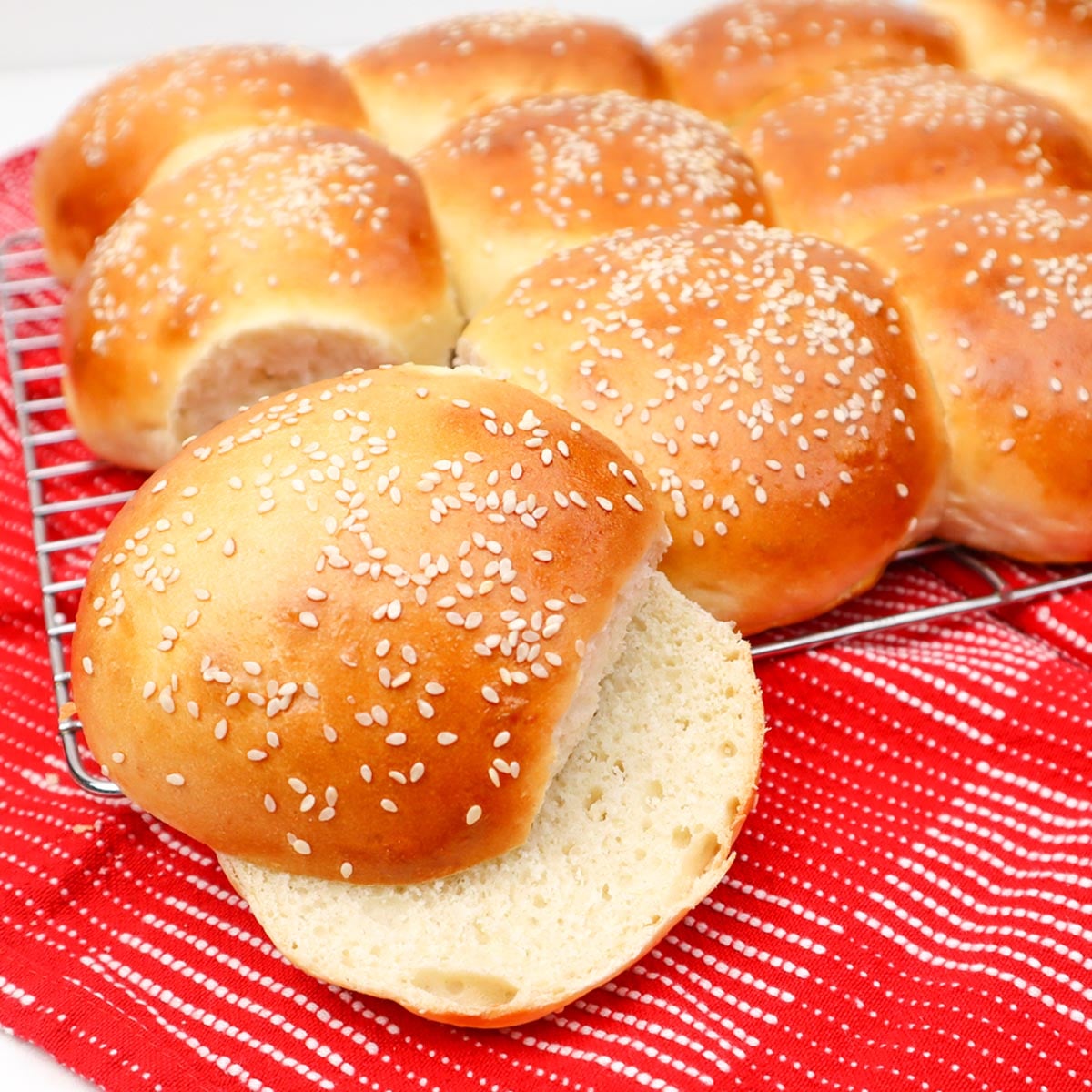
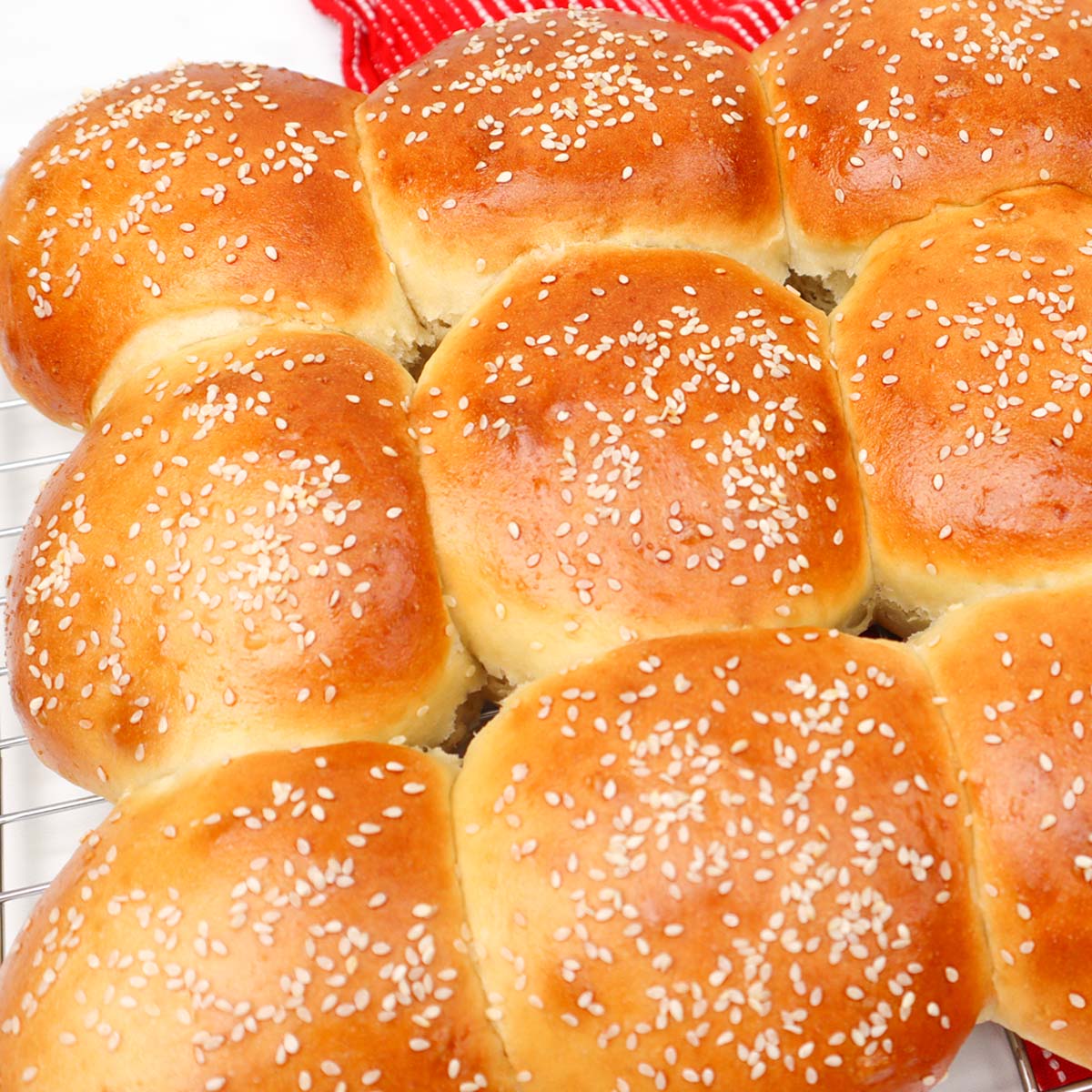
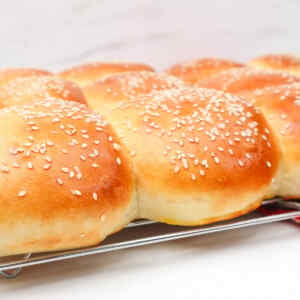
These soft homemade burger buns are one of my favorite recipes for family cookouts, with golden sesame tops and a tender crumb that holds up well around a generous filling. The dough comes together in the stand mixer, then bakes into buns with shiny tops and a classic sesame seed finish. They make even a simple dinner feel more homemade.
I made a batch this week and filled the buns with spicy bean burgers, sliced cheese, and a spoonful of vegan chili. The buns were soft enough to bite into easily, but still sturdy enough to hold the filling. That is exactly what I want from a homemade bun.
I also like how useful the leftovers are. The next day, I used the extra buns to make Coronation Chicken sandwiches for my kids' school lunches. They worked beautifully because the texture stayed soft after cooling.
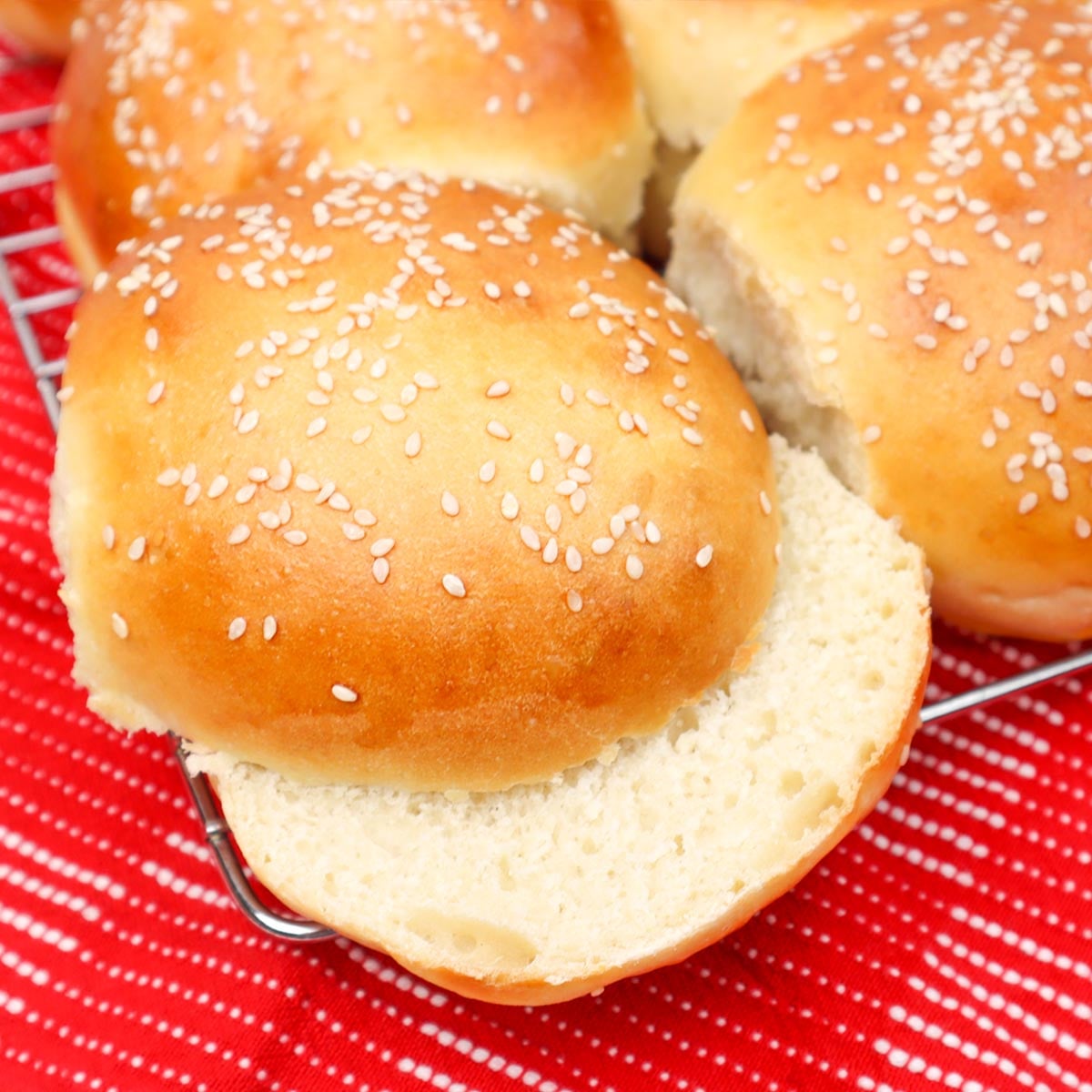
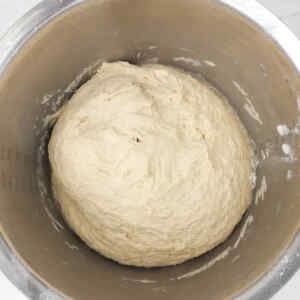
The recipe gives clear cues as you go. The dough should pull away from the bowl, feel slightly tacky, and rise until puffy before baking. Once the buns come out golden, let them cool fully before slicing.
Tips for Soft Dough and Golden Burger Buns
The dough texture is the main thing to watch. Add the flour gradually while the dough hook runs on low speed. This helps the flour mix in evenly and lets you stop when the dough reaches the right feel. It should pull away from the sides of the bowl, but still feel slightly tacky.
The pinch test is useful here. Pinch off a small piece, roll it into a ball, and check how it feels. It should be soft, with only a little sticky residue on your fingers. If it feels wet or messy, add more flour a few tablespoons at a time.
Kneading for about 8 minutes helps the dough become smooth and soft. The 5-minute rest afterward lets the dough relax, which makes shaping easier. When shaping, pull the edges into the center to create a smooth ball, then press each bun slightly wider.
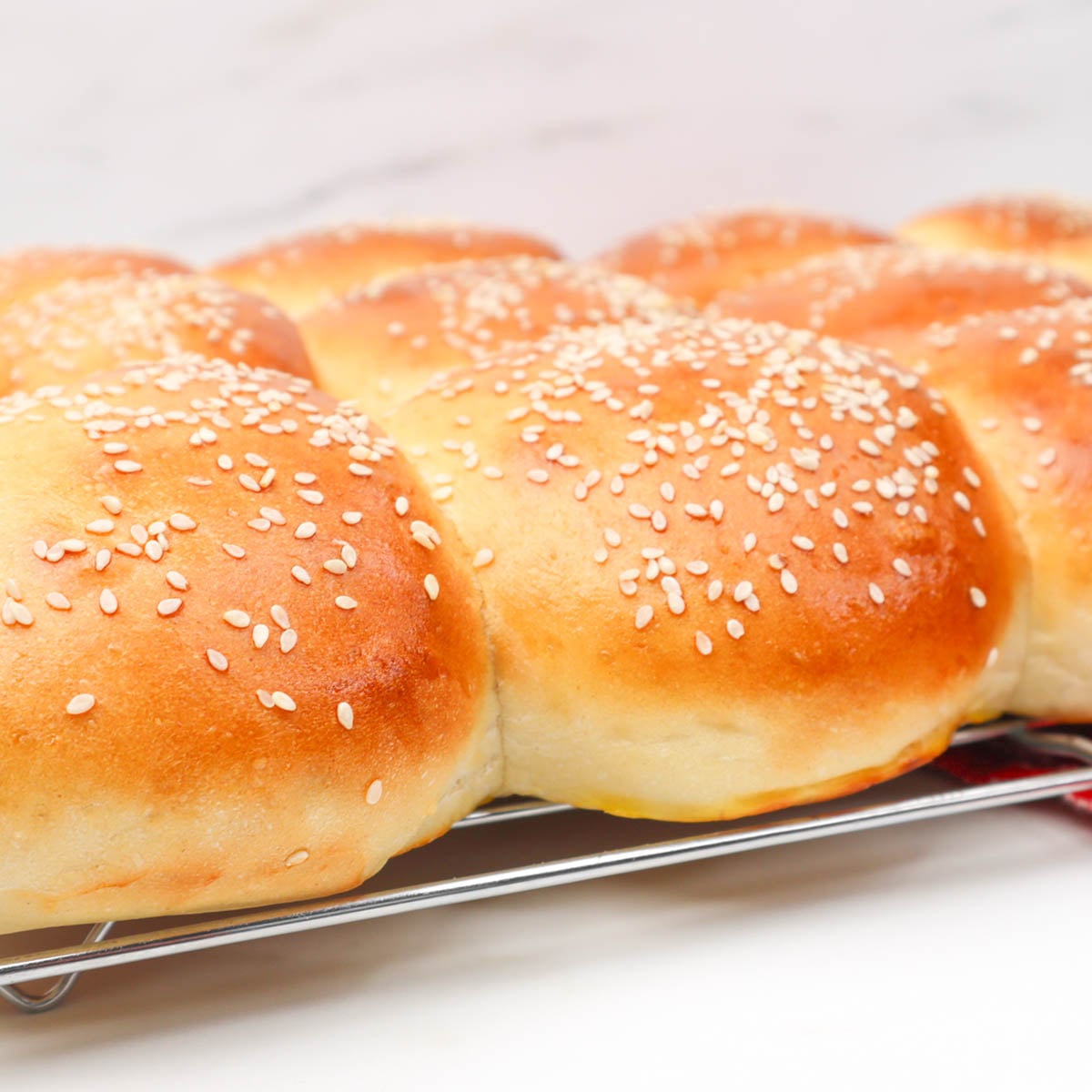
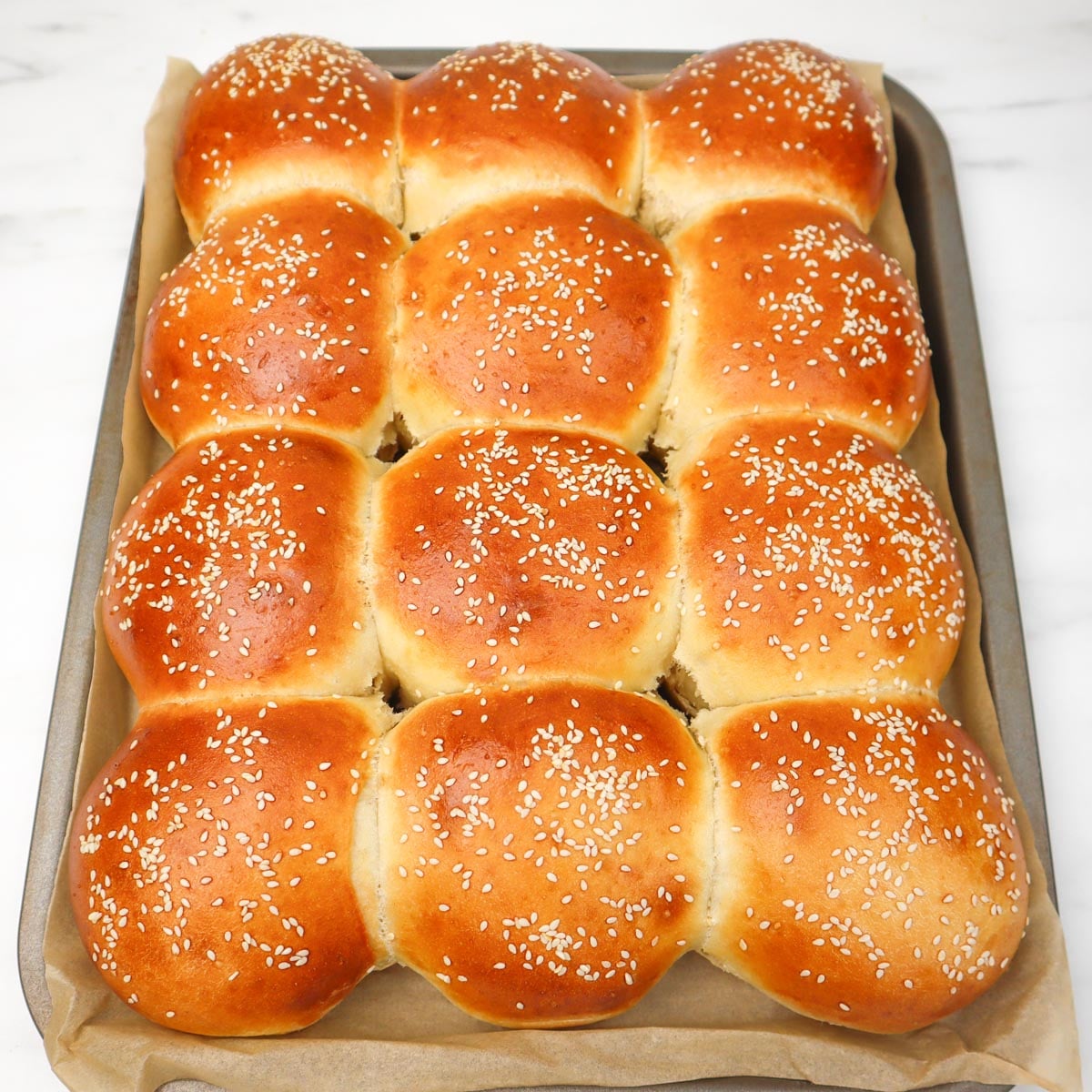
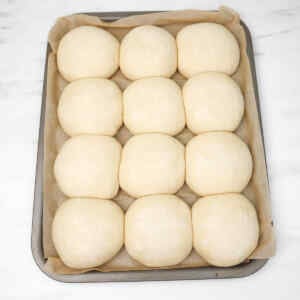
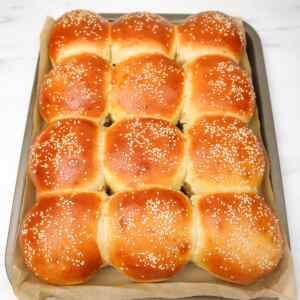
Even sizing matters because the buns bake more consistently. A kitchen scale is helpful if you want each piece to be close to 135 grams. Before baking, the buns should look puffy. The egg wash gives the tops a shiny, golden finish, and the buns are fully baked when the center reaches 190-195°F.
Easy Variations
Make Mini Burger Buns
Divide the dough into smaller pieces to make mini burger buns or slider buns. Keep the shaping method the same, but check them earlier in the oven because smaller buns may bake faster.
Make Plain Golden Buns
Skip the sesame seeds and bake the buns with just the egg wash. They will still have a glossy, golden top.
Troubleshooting Homemade Burger Buns
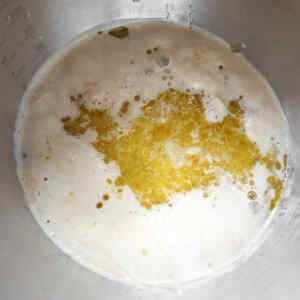
If the dough feels too sticky, add more flour a few tablespoons at a time. Avoid adding too much, because the dough should stay slightly tacky. If the buns look uneven, use a kitchen scale when dividing the dough. If the buns do not rise well, check that the yeast is fresh and that the water is warm rather than hot. After resting, the mixture should show at least a few bubbles or a light layer of foam before adding the remaining ingredients. If the tops look pale, check that they were brushed lightly with egg wash. Let the buns cool completely before slicing so the inside sets properly.
What to Serve with Them
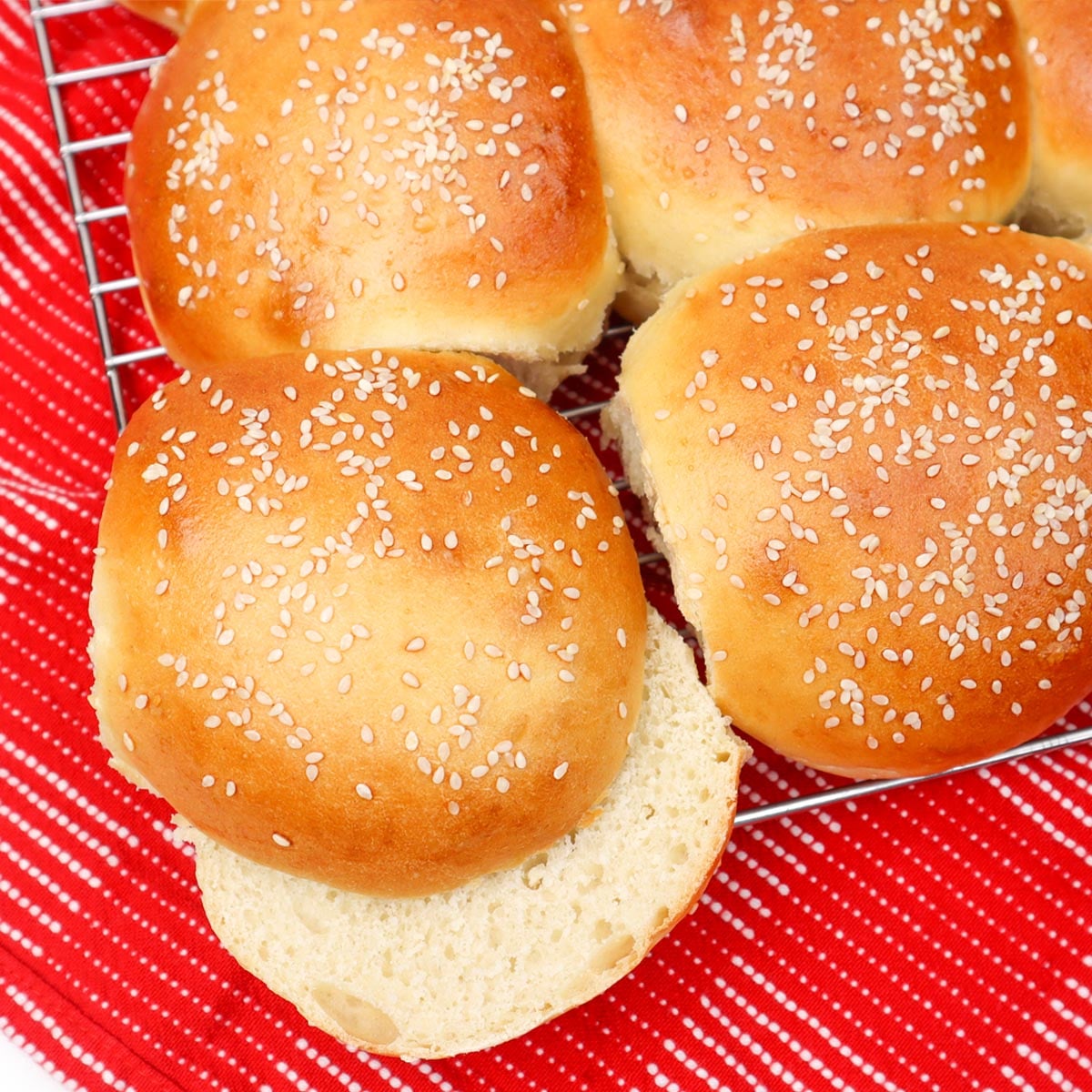
These buns are made for homemade burgers, grilled fillings, or simple sandwich-style meals. Their soft texture and golden tops make them feel more special than store-bought buns. Let them cool fully before slicing so they hold their shape. Use them the day they are baked, or store cooled buns in an airtight container for up to 3 days.
Burger Buns

Equipment
- Stand Mixer (with dough hook)
- Kitchen scale (optional)
- Clean kitchen towel or plastic wrap
Ingredients
- 2 cups warm water about 100°F
- 2 tablespoons instant yeast
- ¼ cup granulated sugar
- 1 tablespoon salt
- 1 large egg lightly beaten
- ¼ cup olive oil
- 7¾ cups bread flour
- 1 large egg for egg wash
- 1 splash water for egg wash
- sesame seeds for sprinkling on top
Instructions
Activate the Yeast
- Add the warm water, instant yeast, and sugar to the bowl of a stand mixer.2 cups warm water, 2 tablespoons instant yeast, ¼ cup granulated sugar
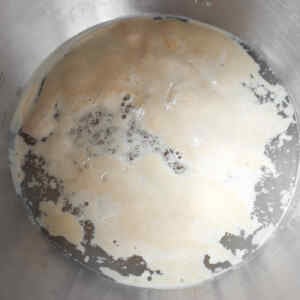
- Let the mixture sit for a few minutes until it smells slightly yeasty and looks active.
Make the Dough
- Add the lightly beaten egg, olive oil, and salt to the bowl.1 tablespoon salt, 1 large egg, ¼ cup olive oil
- With the dough hook running on low speed, add the flour one cup at a time.7¾ cups bread flour
- Continue mixing until the dough pulls away from the sides of the bowl.
- Test the dough by pinching off a small piece and rolling it into a ball. It should feel soft with only a slight sticky residue on your fingers.
- If the dough is too sticky, add a little more flour, a few tablespoons at a time.
- Knead the dough for about 8 minutes until smooth, soft, and slightly tacky.
- Let the dough rest for 5 minutes to relax the gluten.
Shape the Buns
- Lightly flour your work surface and turn out the dough.
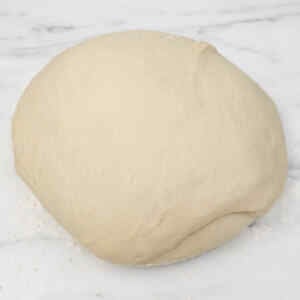
- Divide the dough into 12 equal pieces, about 135 grams each if using a scale.
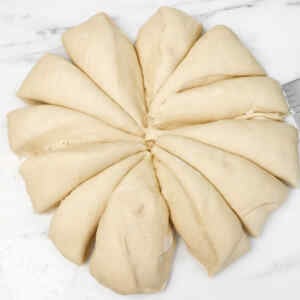
- Shape each piece into a smooth ball by pulling the edges into the center.
- Place the buns onto a parchment-lined baking sheet.
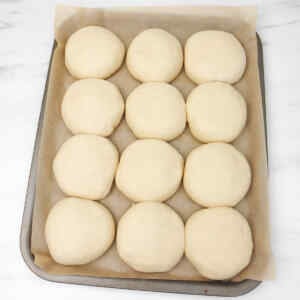
- Gently press down on each bun with your hand to create a wider burger bun shape.
Let the Dough Rise
- Cover the buns with a clean kitchen towel or plastic wrap.
- Place them in a warm spot and let rise for about 30 minutes, or until puffy.
Prepare for Baking
- Preheat the oven to 400°F.

- In a small bowl, whisk together the egg and a splash of water to make the egg wash.1 large egg, 1 splash water
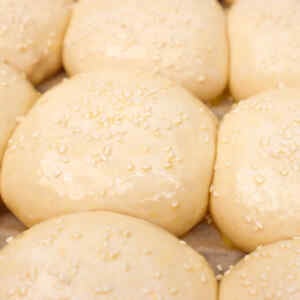
- Lightly brush the tops of the buns with the egg wash.

- Sprinkle with sesame seeds if desired.sesame seeds
Bake the Buns
- Bake for about 20 minutes, or until the buns are golden brown.
- The internal temperature should reach 190–195°F when fully baked.
Cool and Serve
- Transfer the buns to a wire rack and let cool completely before slicing.
Notes
- Check your yeast: A strong yeasty smell means the yeast is active and ready to use.
- Don’t add too much flour: The dough should feel slightly tacky, not dry.
- Even sizing: Use a kitchen scale for evenly sized buns that bake consistently.
- Warm rise spot: A slightly warm oven with just the oven light on can help the buns rise faster.
- Golden tops: The egg wash gives the buns their shiny, golden finish.
- Storage: Store cooled buns in an airtight container for up to 3 days.
Nutrition
Frequently Asked Questions
Can I make burger buns without a stand mixer?
This recipe is written for a stand mixer with a dough hook. If mixing by hand, use the same dough cues from the recipe. The dough should become smooth, soft, and slightly tacky before shaping.
Why is my burger bun dough sticky?
The dough should feel slightly tacky, but it should not be wet or difficult to handle. If it feels too sticky, add a little more flour, a few tablespoons at a time. Avoid adding too much flour, or the buns may turn out dry.
How do I know when the dough has risen enough?
The shaped buns should look puffy after rising for about 30 minutes. A warm spot helps the dough rise more evenly. The recipe also suggests using a slightly warm oven with just the oven light on if your kitchen is cool.
How do I know when burger buns are fully baked?
The buns should be golden brown on top. For the most accurate check, use a thermometer. The internal temperature should reach 190-195°F when fully baked.
How should I store homemade burger buns?
Store completely cooled burger buns in an airtight container at room temperature for up to 3 days. To freeze them, wrap the buns individually and place them in a freezer-safe bag or container. Thaw at room temperature, then warm briefly in the oven before serving.
Can I freeze homemade burger buns?
Yes. Let the buns cool completely, wrap them individually, and place them in a freezer-safe container. Thaw them at room temperature and warm them briefly before serving.
Can I use all-purpose flour instead of bread flour?
You can, although the buns may have a slightly softer and less chewy structure. Add the flour gradually because all-purpose flour may absorb the liquid differently.