




Table of Contents
- What do cranberries taste like?
- How do cranberries grow?
- Do cranberries grow underwater?
- How are cranberries harvested?
- Fresh cranberries, dried cranberries, juice, and cranberry juice cocktail
- Cranberry nutrition: a quick look
- What about cranberries and urinary tract infections?
- How to buy, store, and freeze fresh cranberries
- Common ways to use cranberries
- Frequently Asked Questions
- Are cranberries a fruit?
- Can you eat cranberries raw?
- Why do cranberries float during harvest?
- When are fresh cranberries in season?
- Is cranberry juice cocktail alcoholic?
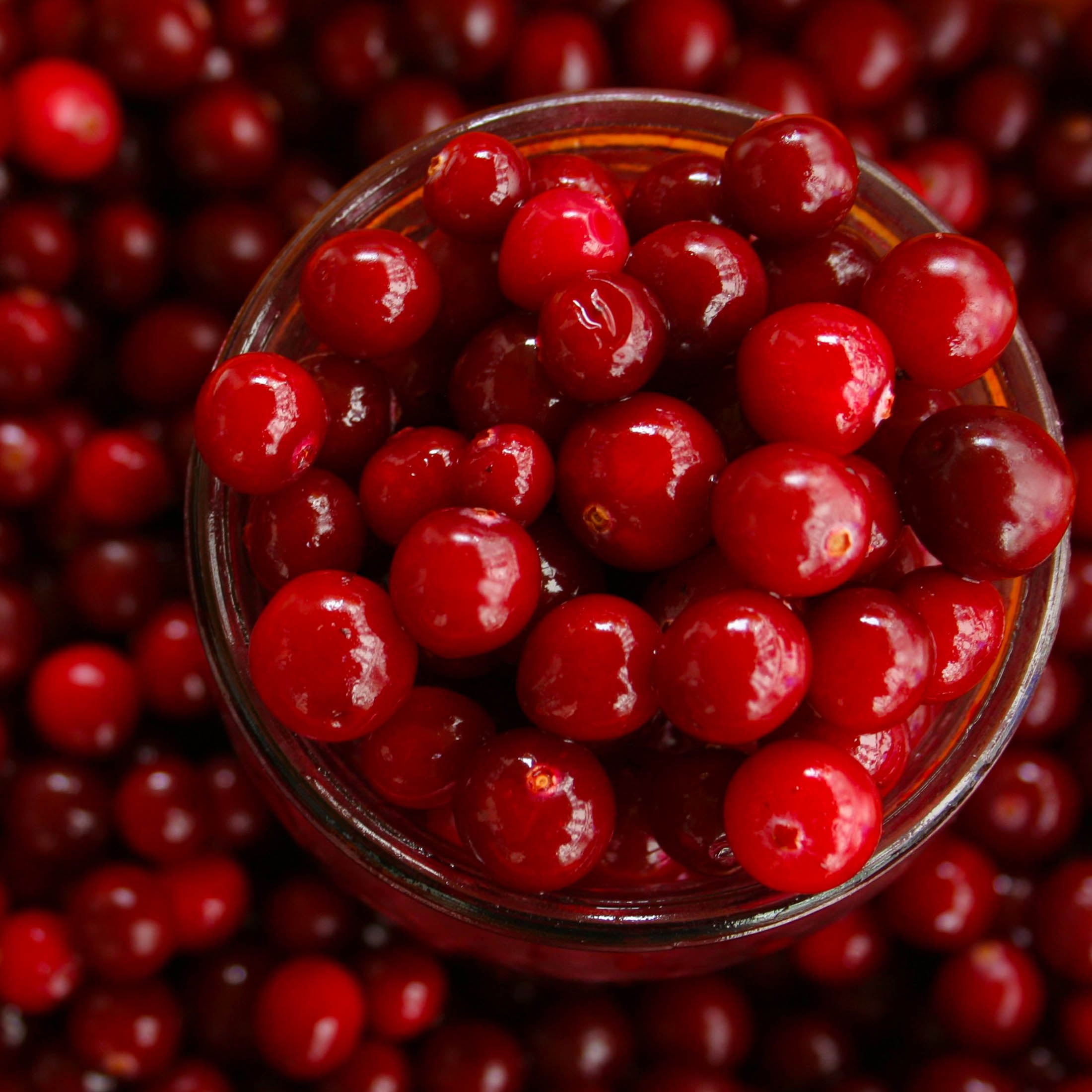
Cranberries are small, firm, intensely tart fruits. In the United States, the fresh berries used in sauce, juice, dried fruit, and many holiday dishes usually come from the American cranberry (Vaccinium macrocarpon), a low-growing perennial vine native to North America. It belongs to the heath family, which also includes blueberries.
Cranberry vines grow in acidic soil, not underwater. Flooded-field photographs show a wet-harvest method, not the plant's everyday growing conditions. Fresh cranberries are much sharper and less sweet than many cranberry drinks and dried products, which is why they are often paired with sugar, citrus, warming spices, and richer foods.
What do cranberries taste like?
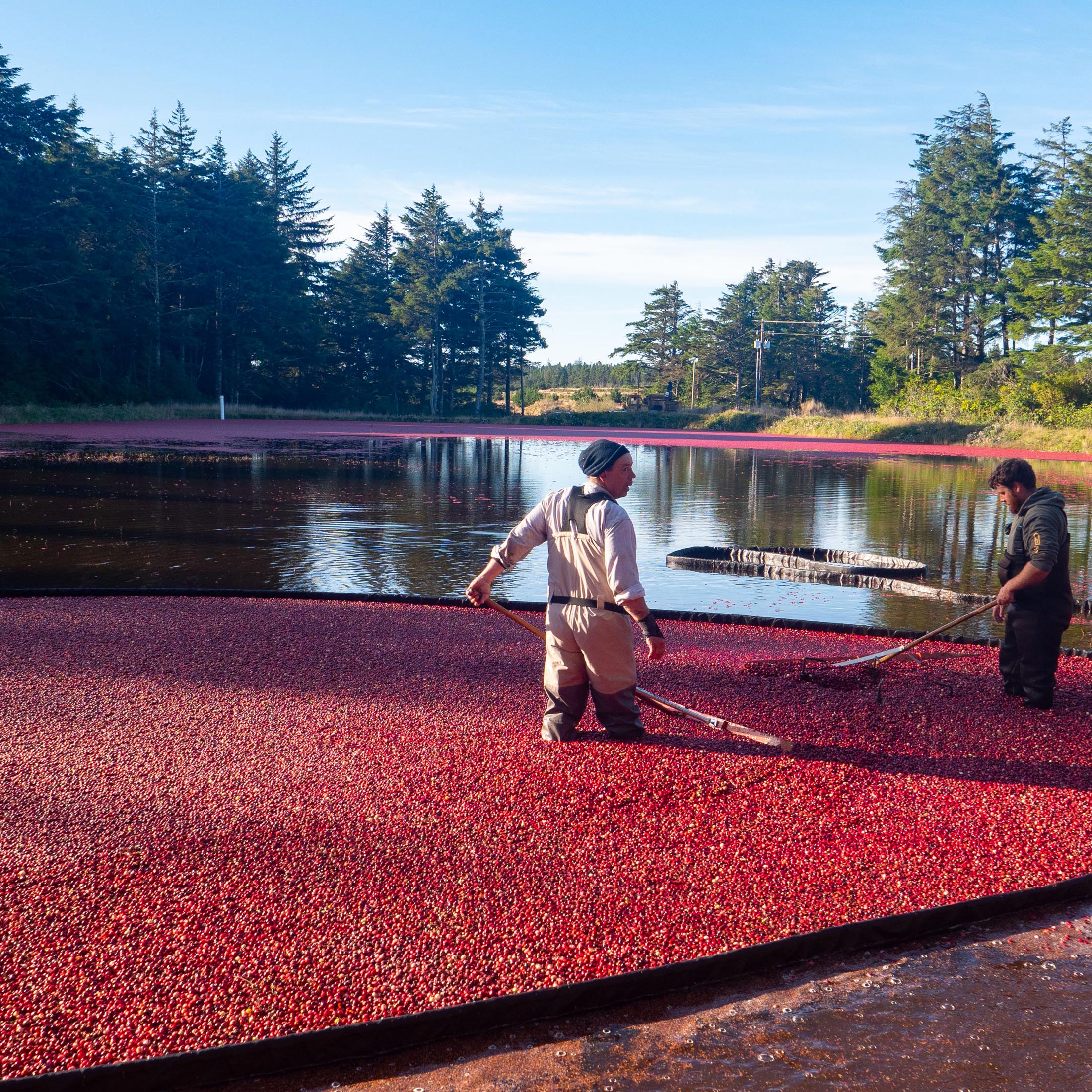
Fresh cranberries are firm and intensely tart. They are edible raw, but most people find them too sour to snack on by the handful. Cooking or pairing them with sweeter ingredients softens their edge, which is why cranberries are so often used in sauces, relishes, baked goods, and drinks.
Their flavor is sharply fruity, acidic, and only mildly sweet. Think of them as a berry with a distinctly sharp character. They taste more like a very tart cherry than a strawberry.
How do cranberries grow?
Cranberries grow on low, woody vines that spread across beds of acidic soil. The plants are perennial, which means the vines remain in place and can produce fruit over multiple growing seasons.
Do cranberries grow underwater?
No. Cranberry vines grow in soil rather than standing water. Depending on the growing region and farm practices, water may be used for irrigation, frost or winter protection, and wet harvesting.
How are cranberries harvested?
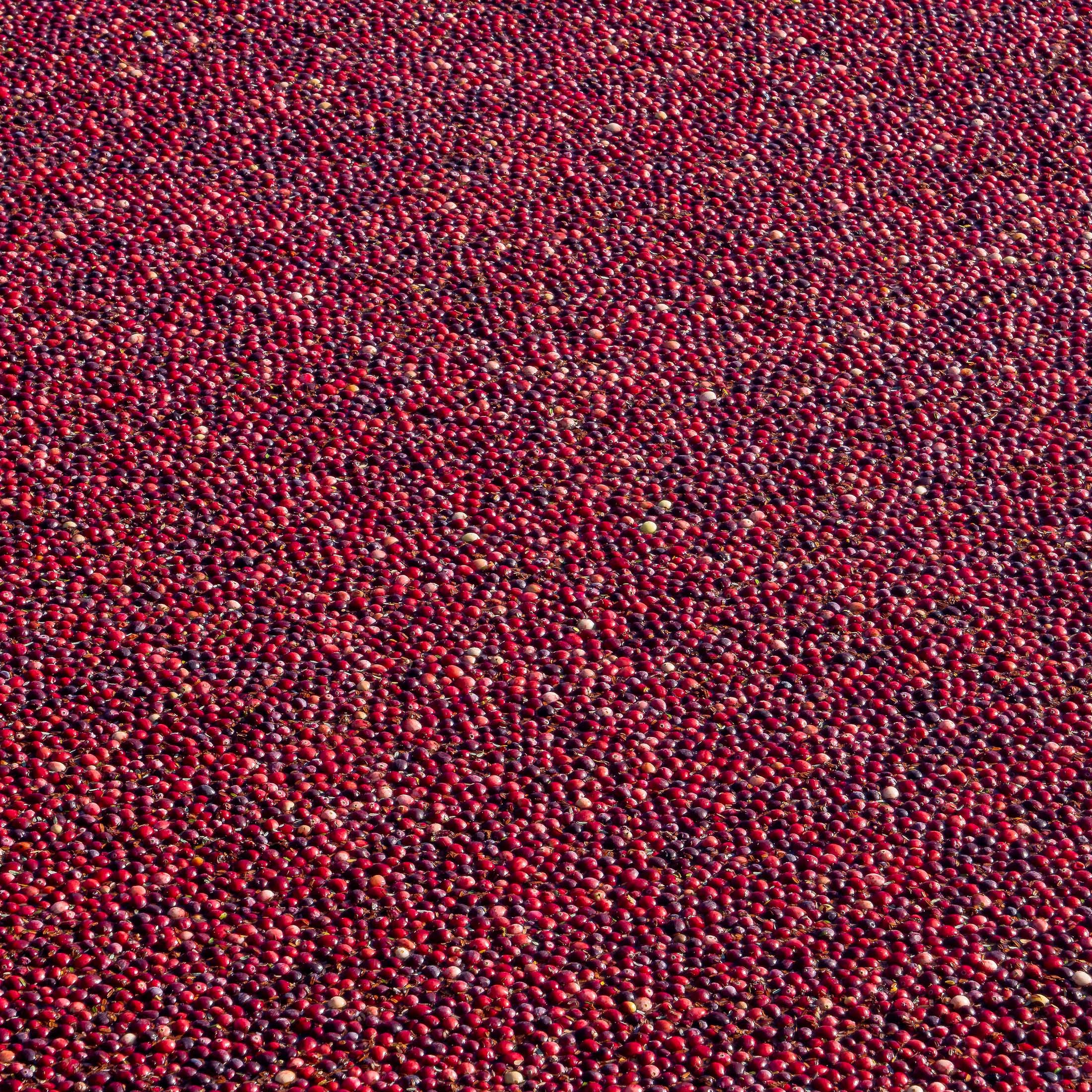
For wet harvesting, growers flood a cranberry bed and use machinery to loosen the ripe berries from the vines. Small air pockets inside the fruit allow the berries to float, so growers can gather them with floating booms before removing them from the bed.
Dry-harvested cranberries are collected without flooding and are usually intended for the fresh market. Wet-harvested berries are commonly processed into juice, sauce, dried cranberries, and other cranberry products.
In Maine, cranberry flowers open in late spring to early summer and berries ripen by late September or early October. Across growing regions, harvest timing varies by variety and location but generally falls from late summer into fall.
Fresh cranberries, dried cranberries, juice, and cranberry juice cocktail
The word “cranberry” appears on very different products, so the label matters.
| Product | What it is | What to know |
|---|---|---|
| Fresh cranberries | Whole, raw berries | Naturally tart; usually cooked or used in a prepared dish. |
| Frozen cranberries | Whole berries frozen for storage | Useful when fresh berries are out of season. |
| Dried cranberries | Dried berry products | Check the label: added sweeteners can vary by product. |
| Cranberry sauce | A prepared condiment | Usually sweetened; nutrition depends on the recipe or brand. |
| Pure cranberry juice | Juice made only from cranberries, often reconstituted from concentrate. | Intensely tart; check the ingredient list and Nutrition Facts label. |
| 100% juice cranberry blend | A beverage made entirely from fruit juices, with cranberry blended with other juices | “100% juice” refers to the whole beverage, not necessarily 100% cranberry juice. Check the ingredient list. |
| Cranberry juice cocktail or cranberry drink | A cranberry beverage commonly made with cranberry juice, water, and sweeteners or other juices | “Cocktail” here does not mean it contains alcohol. Juice percentage and added sugar vary by product, so read the label. |
“Cranberry juice cocktail” is commonly used in mixed drinks, but it is not the same as pure cranberry juice. It is a nonalcoholic beverage category; alcohol is only present when a recipe adds it.
In cocktails, cranberry's tart flavor helps balance sweeter ingredients in a Cosmopolitan cocktail. Choose the exact cranberry product a recipe calls for, rather than assuming pure juice and cranberry juice cocktail will taste the same.
Cranberry nutrition: a quick look
The nutrition below is for 1 cup (100 g) of whole cranberries, not sweetened dried cranberries, sauce, juice, or a juice cocktail:
| Nutrient | Amount 1 cup (100 g) |
|---|---|
| Calories | 46 |
| Carbohydrate | 12 g |
| Dietary fiber | 4 g |
| Total sugars | 4 g |
| Vitamin C | 16 mg |
Source: USDA SNAP-Ed cranberry nutrition information. The nutritional profile varies substantially once cranberries are sweetened, dried, juiced, or made into sauce, so use the package Nutrition Facts label for the product you are buying.
What about cranberries and urinary tract infections?
Some cranberry juice beverages and dietary supplements may help reduce the risk of recurrent urinary tract infections in healthy women who have previously had a UTI. However, the evidence is limited, and for cranberry juice beverages it is limited and inconsistent.
The FDA permits carefully worded qualified claims only for specified cranberry juice beverages and dietary supplements. These claims do not apply to every food or drink made with cranberries.
Cranberries do not treat or cure an active UTI. Contact a healthcare professional if you think you may have a UTI rather than relying on cranberry products for treatment. See the FDA's cranberry guidance.
How to buy, store, and freeze fresh cranberries
Choose berries that are firm, smooth, glossy, and fully red or yellowish red. Discard berries that are soft, shriveled, wrinkled, or visibly damaged.
Fresh cranberries are generally available after the fall harvest, usually from September to December. They can be refrigerated for up to a month or frozen for later use. To freeze them individually, wash and drain the berries, freeze them in a single layer, then transfer them to a freezer-safe container.
Common ways to use cranberries
Cranberries are often paired with ingredients that balance their tartness. Common uses include:
- sauces and relishes for holiday meals, including cranberry sauce;
- baked goods and breakfast dishes, such as white chocolate, cashew, and cranberry cookies;
- salads and grain dishes, especially those made with dried cranberries;
- juices, sparkling drinks, cocktails, and nonalcoholic mixed drinks;
- garnishes made with fresh cranberries when they are in season.
If you are buying a prepared product, decide whether you want the fruit's naturally sharp flavor or a sweeter cranberry product. The two can produce very different results.
Frequently Asked Questions
Are cranberries a fruit?
Yes. Cranberries are berries: the edible fruit of cranberry plants in the Vaccinium genus.
Can you eat cranberries raw?
Yes. Fresh cranberries are edible raw, but their intense tartness is why they are more commonly cooked, sweetened, or blended into other foods and drinks.
Why do cranberries float during harvest?
Small air pockets inside cranberries make them buoyant. During wet harvesting, berries float in flooded beds, allowing growers to gather them with booms and collection equipment. The vines themselves are grown in soil, not underwater.
When are fresh cranberries in season?
Fresh cranberries are a fall crop. Harvest timing varies by region and variety, but fresh berries are generally available in US stores from September to December.
Is cranberry juice cocktail alcoholic?
No. In this context, “cocktail” describes a nonalcoholic cranberry beverage; it does not mean alcohol has been added. Certain mixed-drink recipes may still add vodka or another spirit, so always check the full ingredient list.


