




Table of Contents
- Why I Love This Puffy Oven Pancake
- Why the Hot Skillet and Rested Batter Matter
- Dutch Baby Pancake Variations
- Make It Extra Sweet
- Make It Savory
- Troubleshooting the Puff and Texture
- What to Serve with It
- Frequently Asked Questions
- Why didn't my Dutch baby pancake puff?
- Do I need a cast iron skillet for a Dutch baby?
- Why does a Dutch baby deflate after baking?
- Can I make Dutch baby batter ahead of time?
- What is the difference between a Dutch baby and a regular pancake?
- Can I make this Dutch baby savory?
- Jump to Recipe
Why I Love This Puffy Oven Pancake
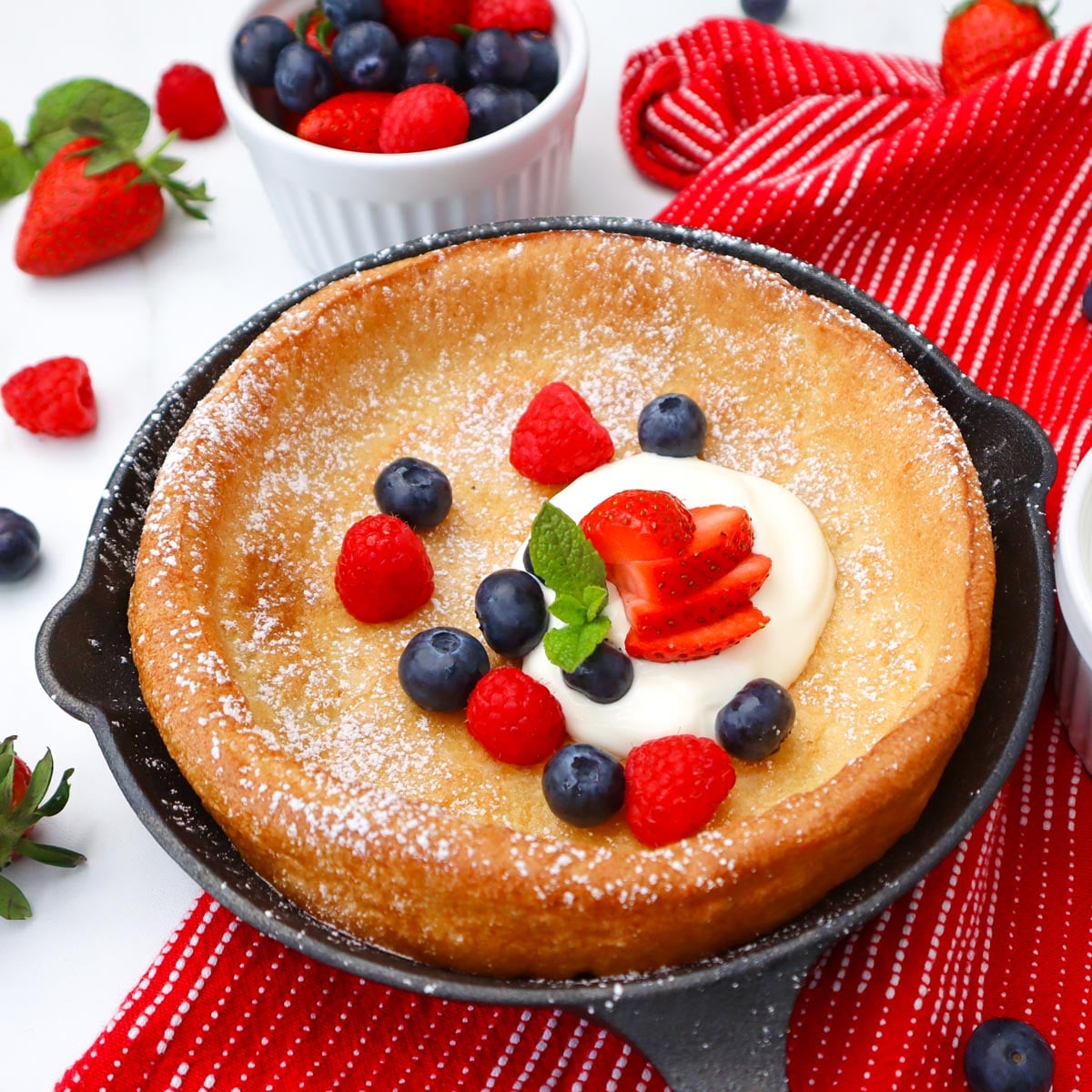
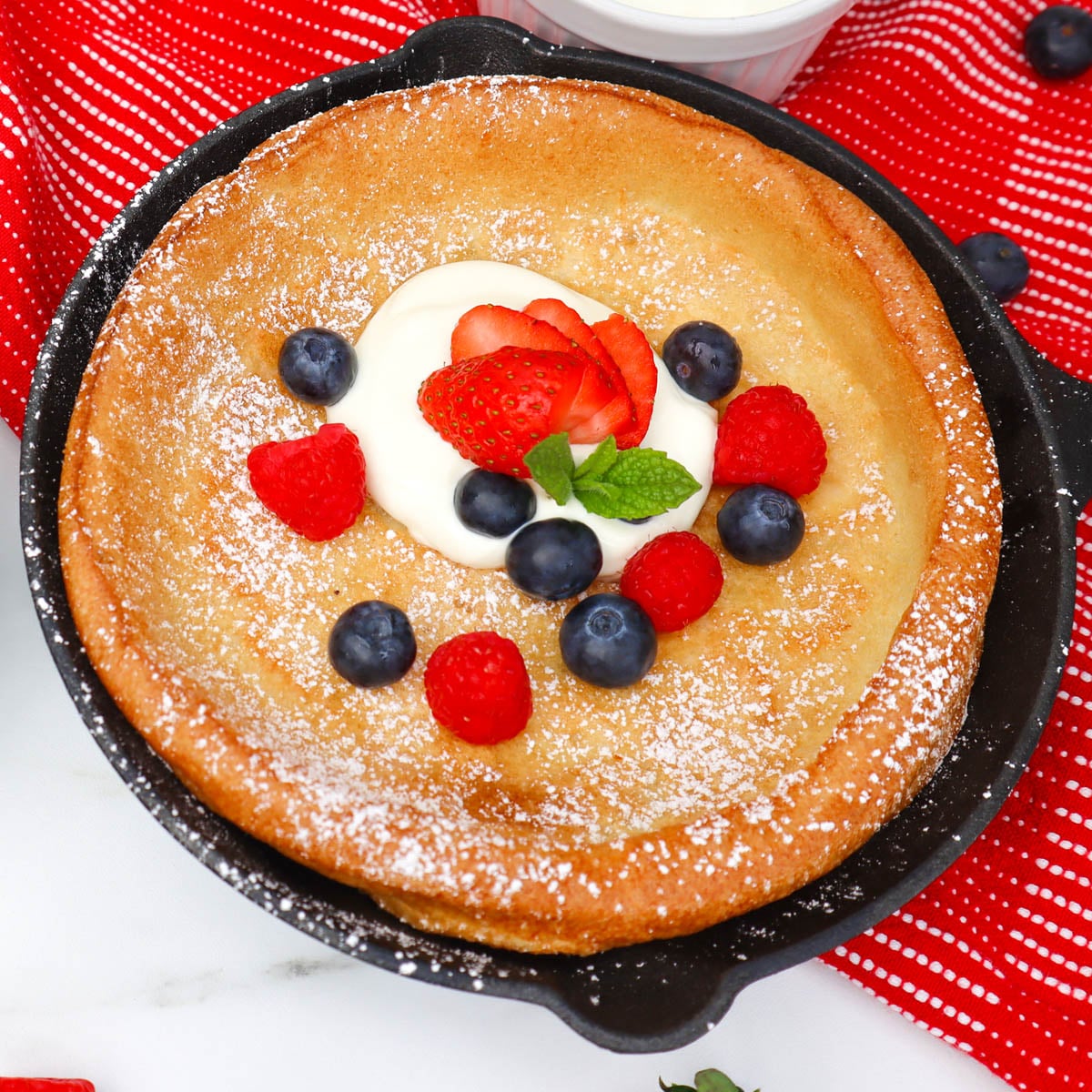
A Dutch baby pancake is one of those recipes that feels special the moment it comes out of the oven. The batter is thin and simple, but the hot skillet helps it rise into a puffed, golden pancake with deep golden-brown edges. I love the contrast between the crisp outer rim and the softer center.
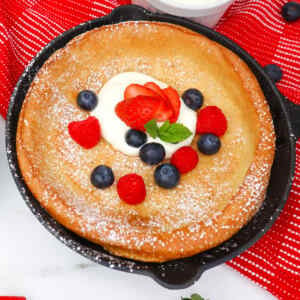
The flavor is gentle and warm, with vanilla, sugar, and a little kosher salt giving the batter balance. Once it is dusted with powdered sugar and topped with fresh berries, it looks bright and inviting without needing much work. It is the kind of breakfast that feels impressive, but the blender does most of the mixing.
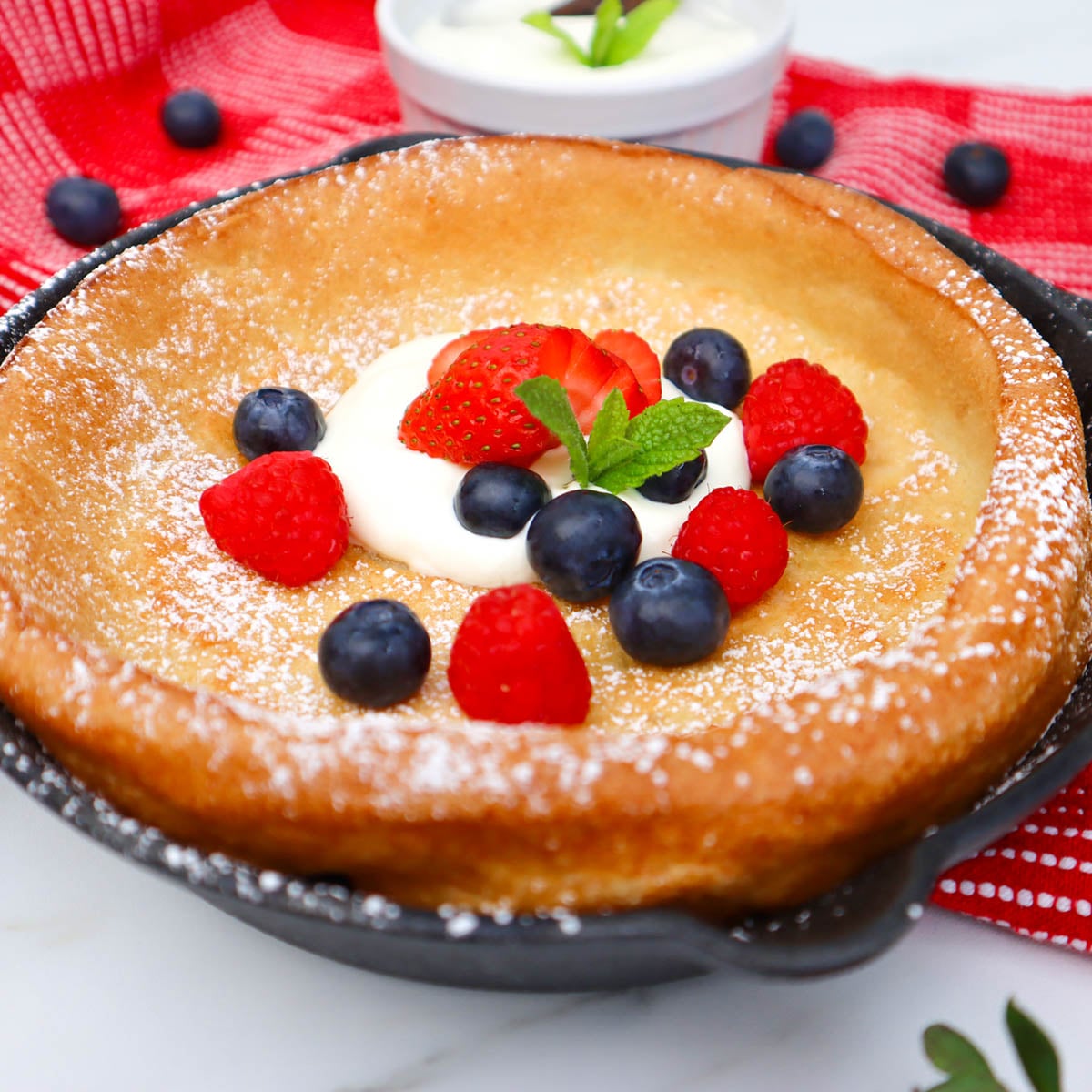
I always preheat the skillet because that hot pan is what helps create the dramatic rise. The butter melts quickly and coats the bottom and sides, giving the pancake its rich edge. When the batter hits the hot skillet, it starts cooking right away.
This dish is best served immediately, while it is still tall and puffed. It will slowly settle as it cools, but that is part of its charm. Slice it into wedges and serve it warm.
Why the Hot Skillet and Rested Batter Matter
The rise starts before the batter ever goes into the oven. Blending the flour, milk, eggs, sugar, vanilla, and salt makes the mixture smooth and pourable. Scraping down the sides and blending again helps remove dry pockets, so the batter bakes evenly.
Resting the batter for 20 to 25 minutes is also important. This gives the flour time to absorb the liquid and helps improve the pancake's final texture. The batter should still look thin after resting, but it should be smooth and ready to pour.
The skillet needs to preheat inside the oven. A very hot 9- to 10-inch oven-safe skillet helps the pancake puff quickly. Once the butter melts and coats the pan, pour the batter in and return it to the oven right away.
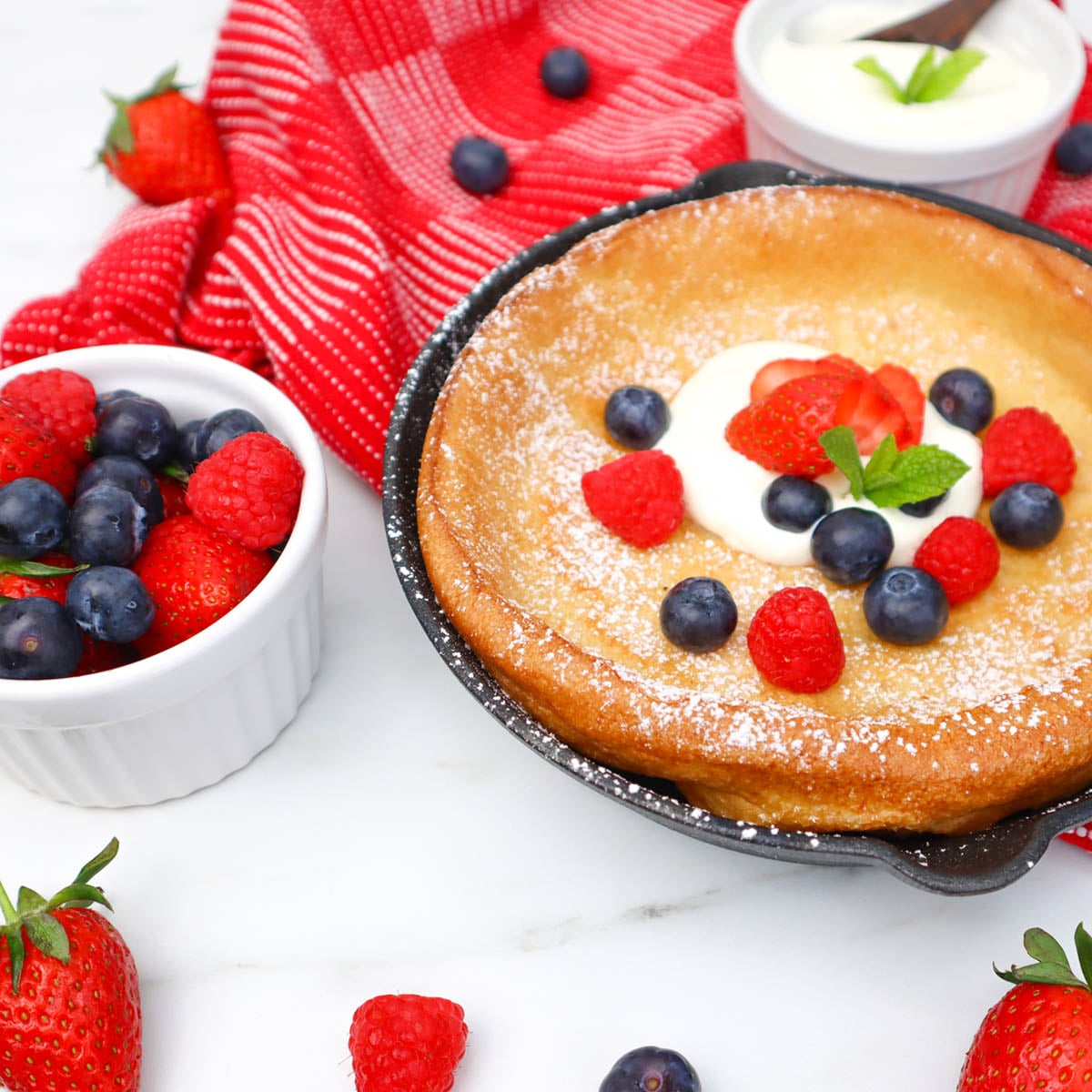
Avoid opening the oven door while it bakes. The pancake should become puffed, golden on top, and deeper brown around the edges. Those visual cues tell you it is ready. Serve it straight from the oven, because it looks most impressive before it settles.
Dutch Baby Pancake Variations
Make It Extra Sweet
Serve the pancake with fresh berries, lemon juice, whipped cream, or chocolate sauce. Keep the batter the same and add the toppings just before serving.
Make It Savory
Skip the sugar and vanilla, then top the baked pancake with cheese, herbs, or sautéed vegetables. You still get the same puffed edges, but with a savory brunch-style finish.
Troubleshooting the Puff and Texture
If the pancake does not puff well, the skillet may not have been hot enough. Preheat it in the oven before adding the butter and batter. If the batter looks uneven, scrape down the blender and blend again until smooth. If the pancake deflates quickly, it may have been disturbed too early. Avoid opening the oven door while it bakes. If the edges are pale, bake until they look deeper brown and the top is golden.
What to Serve with It
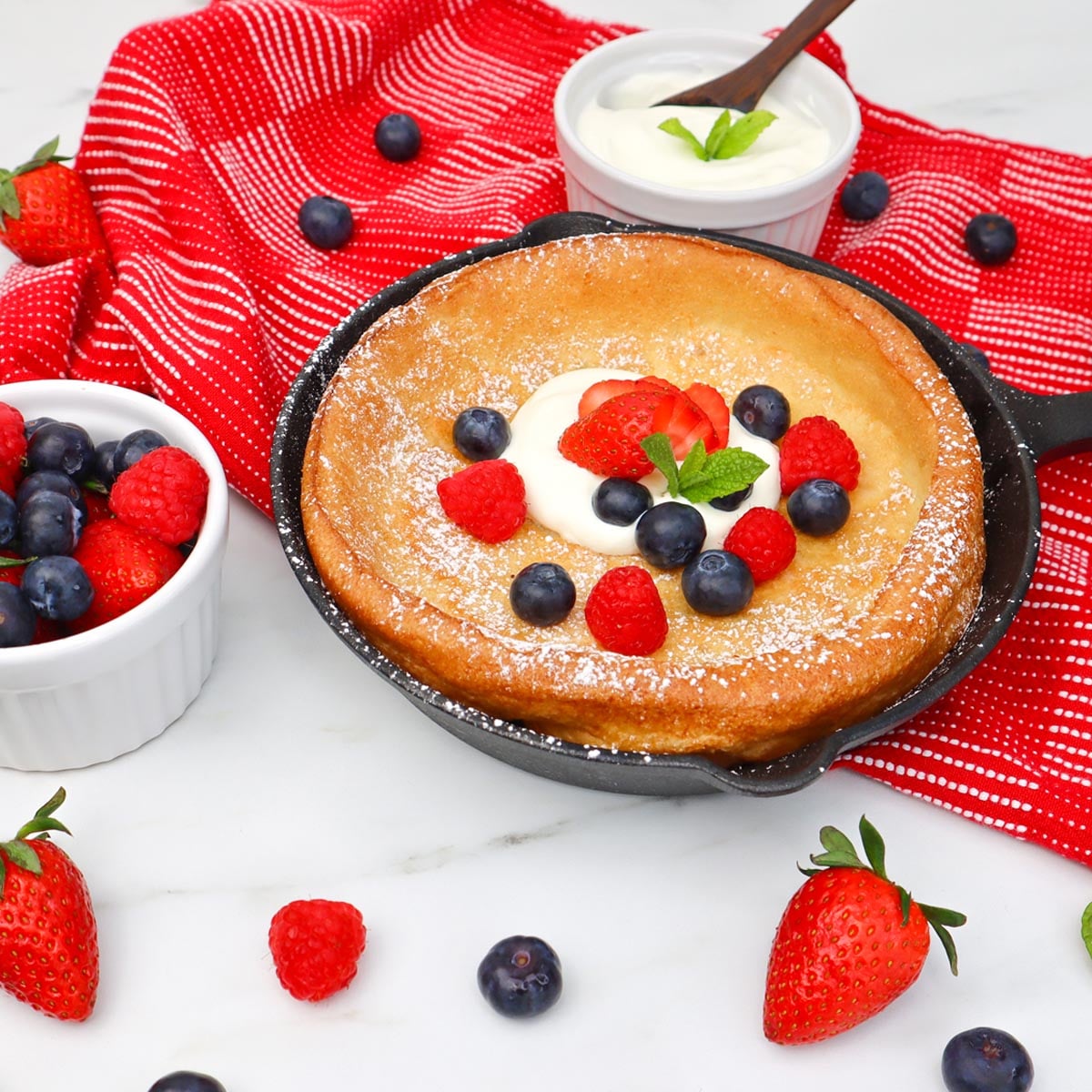
Serve this pancake warm, dusted with powdered sugar and topped with fresh berries. Maple syrup or jam also works well if you want a sweeter finish. For a more indulgent plate, add whipped cream or chocolate sauce. Slice it into wedges as soon as it comes out of the oven, while the center is soft and the edges are still crisp.
Dutch Baby Pancake

Equipment
- Blender or food processor
- 9-10 inch oven-safe skillet (cast iron works best)
- Knife or pizza cutter
- Serving plate (optional)
Ingredients
- ½ cup all-purpose flour
- ½ cup whole milk
- 2 large eggs
- 2 tablespoons granulated sugar
- 1 teaspoon vanilla extract
- ½ teaspoon kosher salt
- 2 tablespoons unsalted butter
- ½ teaspoon powdered sugar for serving
- fresh berries for serving
Instructions
- Add the flour, milk, eggs, sugar, vanilla extract, and salt to a blender or food processor. Blend for about 10 seconds, then scrape down the sides and blend again for another 10 seconds until the batter is smooth. The batter will be thin and pourable.½ cup all-purpose flour, ½ cup whole milk, 2 large eggs, 2 tablespoons granulated sugar, 1 teaspoon vanilla extract, ½ teaspoon kosher salt, 2 tablespoons unsalted butter
- Leave the batter in the blender and allow it to rest for 20-25 minutes. This resting time helps the flour absorb the liquid and improves the texture of the pancake.
- While the batter is resting, place a 9-10 inch oven-safe skillet on the middle rack of your oven. Remove any racks above it to allow space for the pancake to rise. Preheat the oven to 425°F (220°C) with the skillet inside.
- Once the oven is hot, carefully remove the skillet using oven mitts and place it on the stovetop. Add the butter and swirl the pan until it melts and coats the bottom and sides of the skillet.
- Pour the rested batter into the hot skillet over the melted butter. Tilt the pan slightly if needed to ensure the batter spreads evenly.
- Place the skillet back into the oven and bake for 15-20 minutes, or until the Dutch baby pancake is puffed, golden on top, and deeper brown around the edges.

- Remove from the oven and serve immediately. Dust with powdered sugar and slice into wedges. Serve with maple syrup, jam, or your favorite toppings.½ teaspoon powdered sugar, fresh berries
Notes
- Preheat the skillet. A very hot pan is key to achieving the dramatic puff.
- Don’t open the oven door. This can cause the Dutch baby to deflate before it finishes baking.
- Serve immediately. Dutch babies look their most impressive straight out of the oven as they slowly settle.
- Try sweet toppings. Fresh berries, lemon juice, whipped cream, or chocolate sauce all work beautifully.
- Make it savory. Skip the sugar and vanilla and top with cheese, herbs, or sautéed vegetables.
- Use room temperature ingredients. This helps the batter blend smoothly and rise better in the oven.
Nutrition
Frequently Asked Questions
Why didn't my Dutch baby pancake puff?
Your skillet may not have been hot enough, or the oven door may have been opened too early. Preheat the skillet fully, pour the batter into the hot butter, and keep the oven closed until the pancake is puffed and golden.
Do I need a cast iron skillet for a Dutch baby?
Cast iron works best because it holds heat well, but any 9 to 10-inch oven-safe skillet can work. The key is preheating the pan before adding the batter.
Why does a Dutch baby deflate after baking?
That is normal. A Dutch baby rises from the steam in the oven, then slowly settles as it cools. Serve it right away for the most dramatic puff.
Can I make Dutch baby batter ahead of time?
You can blend the batter a short time ahead and keep it covered in the refrigerator. Let it sit at room temperature for a few minutes and blend again before baking.
What is the difference between a Dutch baby and a regular pancake?
A regular pancake cooks on the stovetop and is flipped. A Dutch baby bakes in the oven in a hot skillet, creating puffed edges and a soft center.
Can I make this Dutch baby savory?
Yes. Skip the sugar and vanilla, then top it with cheese, herbs, sautéed mushrooms, spinach, or smoked salmon.


