Inhoudsopgave
Een onmisbaar product in je voorraadkast dat je waarschijnlijk nog nooit hebt opgemerkt.
Het zit in saladedressings, sauzen, glutenvrije bakwaren en zelfs in je tandpasta. En toch hebben de meeste mensen er nog nooit van gehoord. Toen ik voor het eerst met xanthaangom in aanraking kwam tijdens het bakken van een glutenvrije lekkernij, was ik er helemaal van onder de indruk. bananenbrood, Ik geef toe dat ik het even moest opzoeken. Wat is xanthaangom? Het blijkt een veelvoorkomend voedingsadditief te zijn, afgeleid van eenvoudige suikers, en geliefd bij voedingswetenschappers en thuiskoks vanwege de indrukwekkende verdikkende en stabiliserende eigenschappen.

Hoe xanthaangom wordt gemaakt
Het productieproces van xanthaangom klinkt meer als iets uit een laboratorium dan van een boerderij. Het begint met het fermenteren van suiker (vaak afkomstig van maïs, tarwe of soja) met een bacterie genaamd Xanthomonas campestris. Deze bacterie produceert een kleverige, gomachtige substantie die vervolgens wordt gedroogd en vermalen tot het fijne witte poeder dat we in de winkels zien liggen. Hoewel het industrieel wordt geproduceerd, wordt het over het algemeen als veilig beschouwd en is het goedgekeurd door voedselregelgevende instanties over de hele wereld.


Waarom het in zoveel voedingsmiddelen zit
Heb je je ooit afgevraagd waarom bepaalde sauzen perfect glad blijven of waarom glutenvrij brood niet uit elkaar valt? Dan speelt xanthaangom waarschijnlijk een rol. Het bindt vocht en zorgt voor elasticiteit en structuur in de afwezigheid van gluten. Het voorkomt ook dat emulsies zoals vinaigrettes zich scheiden en helpt diepvriesproducten hun textuur te behouden bij temperatuurschommelingen. Een klein beetje is al voldoende: een halve theelepel kan een heel recept transformeren.

Xanthaangom thuis gebruiken
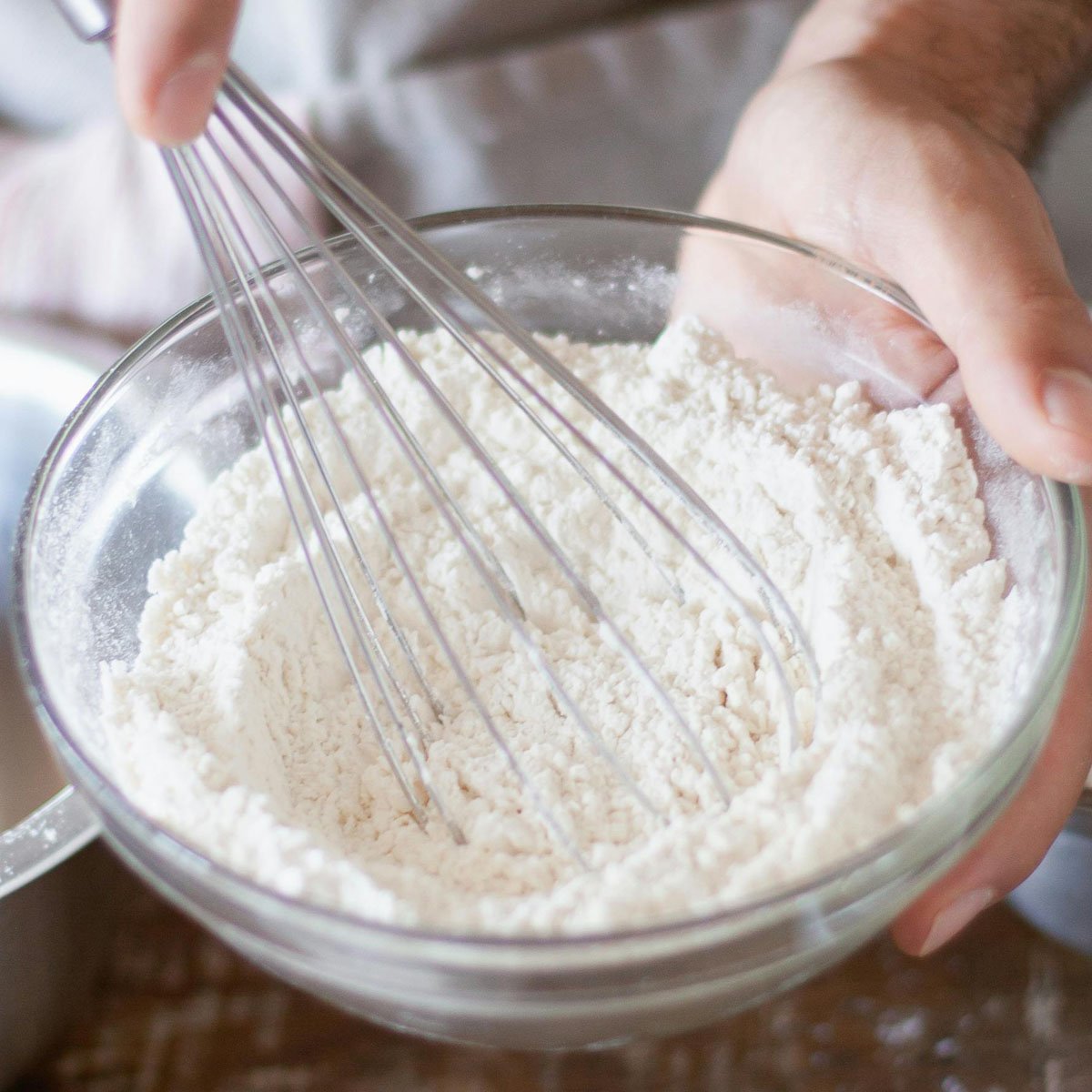
Thuiskoks komen xanthaangom vaak tegen wanneer ze zich verdiepen in glutenvrij of veganistisch bakken. Ik heb nu een klein potje in mijn keukenkastje staan voor als ik experimenteer met brownies zonder bloem of de taaie textuur van klassieke koekjes probeer na te bootsen. De sleutel is matigheid: te veel en je eten kan te kleverig worden. Je kunt het het beste toevoegen aan de droge ingrediënten voordat je ze mengt, en altijd goed kloppen of mixen om klontjes te voorkomen.
Waarvoor u xanthaangom kunt gebruiken
Xanthaangom is ongelooflijk veelzijdig en komt in een breed scala aan recepten voor, vooral in recepten die wat extra textuur of structuur nodig hebben. Of je nu glutenvrij kookt of gewoon gladdere sauzen wilt, het is een handig ingrediënt om in je voorraadkast te hebben. Hier zijn een paar populaire toepassingen:
- Glutenvrij bakken - Helpt de structuur na te bootsen die gluten bieden in brood, koekjes en gebak.
- Saladedressings - Houdt olie en azijn van scheiden.
- Smoothies - Voegt romigheid toe zonder extra zuivel of banaan.
- Sauzen en jus - Verdikt zonder klontjes en zonder dat er bloem of maizena nodig is.
- Ijsje - Voorkomt ijskristallen en verbetert de textuur.
- Koolhydraatarme recepten - Werkt als bindmiddel of verdikkingsmiddel wanneer traditionele zetmeelsoorten niet worden gebruikt.
Een klein beetje is al genoeg, dus begin klein en pas het aan als dat nodig is!
Hoe xanthaangom te bewaren
Om xanthaangom vers en effectief te houden, bewaar je het in een luchtdichte verpakking op een koele, droge plaats, uit de buurt van vocht en direct zonlicht. Je voorraadkast of keukenkastje is hiervoor prima geschikt, zolang het maar niet in de buurt van het fornuis of de vaatwasser staat, waar hitte en vochtigheid de kwaliteit kunnen aantasten. Hoewel xanthaangom een lange houdbaarheid heeft, controleer altijd op klontervorming of een onaangename geur als het een tijdje heeft gestaan. Bij correcte bewaring kan het meerdere jaren meegaan zonder zijn verdikkende werking te verliezen.
Waar te koop
Xanthaangom is gemakkelijk verkrijgbaar in het bakafdeling van de meeste supermarkten, met name in het glutenvrije gedeelte. Het is ook eenvoudig online te vinden. Het heeft een lange houdbaarheid, waardoor het een handig ingrediënt is voor incidenteel gebruik zonder verspilling.
Wilt u meer weten?
Volg ons op sociale media Voor handige keukentips, inspiratie voor glutenvrije recepten en artikelen zoals deze, ben je bij ons aan het juiste adres. Wij helpen je graag om slimmer, eenvoudiger en zelfs een beetje wetenschappelijker te koken.