Índice
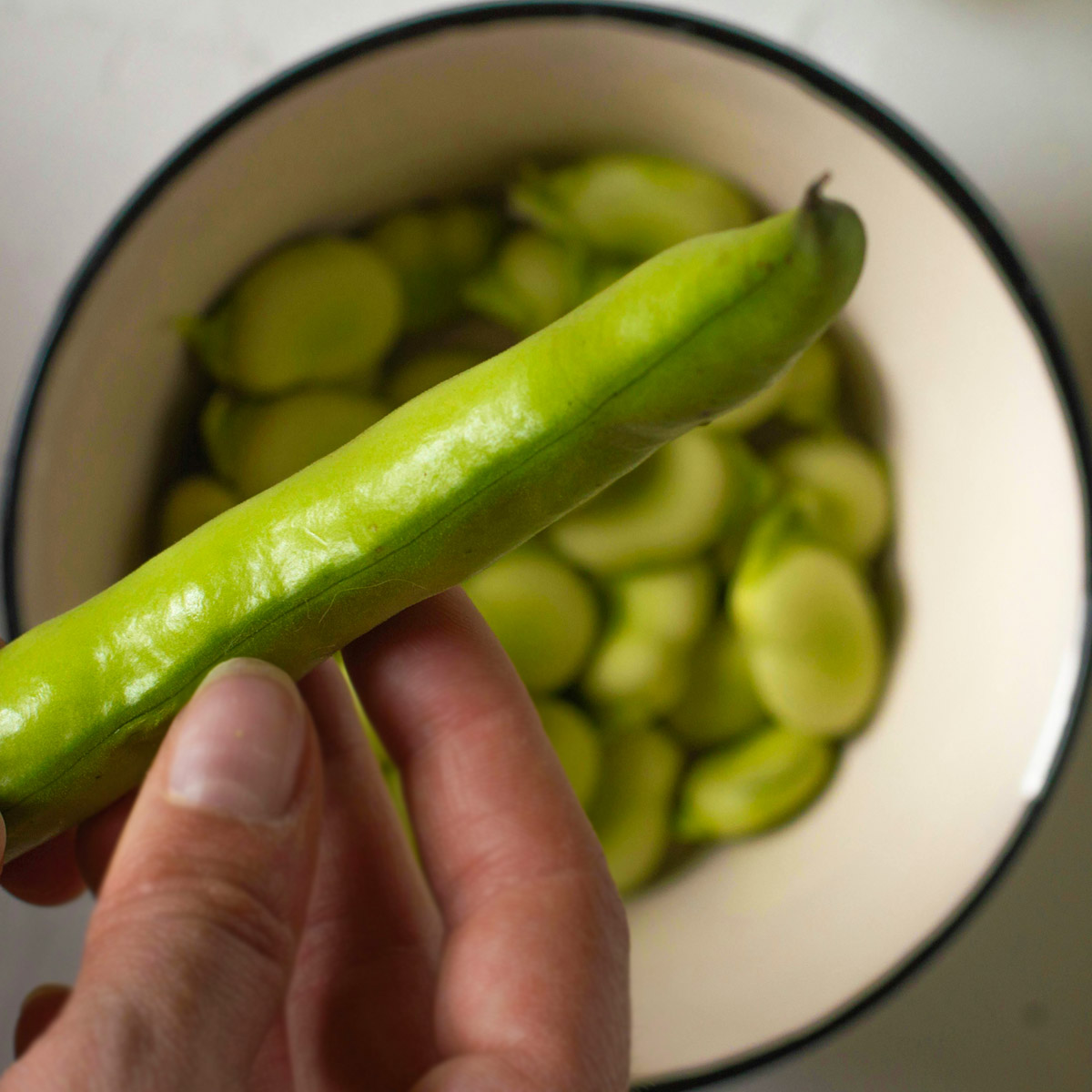
As favas, também conhecidas como favas, são leguminosas grandes e achatadas, cultivadas há milhares de anos. Envoltas em vagens verdes grossas e felpudas, elas contêm sementes verde-claras que podem ser consumidas frescas quando jovens ou secas para uso posterior.
Explicação sobre o feijão-fava
Se você já viu mercados mediterrâneos no início da primavera — com pessoas abrindo vagens e estourando grãos crus com queijo — você testemunhou uma tradição milenar. Do ponto de vista culinário, são apreciados por seu sabor robusto, levemente amendoado, e por sua textura macia e amanteigada quando cozidos. São ingredientes presentes em pratos do Oriente Médio, Norte da África, Europa e América Latina.
Além do sabor, as favas têm um significado cultural e histórico — e até algumas superstições curiosas —, o que as torna mais do que apenas mais um tipo de feijão no prato.


A antiga história das favas
A fava está entre as plantas cultivadas mais antigas da história. Descobertas arqueológicas remontam sua domesticação no Oriente Próximo a cerca de 10.200 anos atrás, em sítios neolíticos em Israel.
Eram alimentos básicos no antigo Egito, Grécia e Roma, oferecendo uma fonte de proteína acessível muito antes da chegada dos feijões do Novo Mundo à Europa. Até o século XVI, "feijão" frequentemente significava "fava" em muitos contextos europeus.
Culturalmente, elas estão impregnadas de lendas. O filósofo grego Pitágoras e seus seguidores as evitavam, supostamente acreditando que abrigavam as almas dos mortos ou simbolizavam o submundo. Essa evitação também pode estar ligada ao favismo, uma reação genética às favas.
Ainda assim, as favas permaneceram um alimento básico na dieta do Velho Mundo. Na Sicília, elas são abençoadas no Dia de São José, sendo costumeiramente distribuídas para afastar a fome. Dos ful medames egípcios aos rituais italianos de Dia do Trabalho com favas e pecorino, sua importância culinária perdura. Na culinária chinesa, elas também aparecem em pastas e molhos fermentados.
Preparação básica da fava
As favas frescas aparecem na primavera em grandes vagens verdes. Cada vagem contém vários grãos com uma casca grossa e ligeiramente cerosa. Quando muito jovens, podem ser consumidos inteiros, se cozidos. Mais frequentemente, os grãos precisam ser descascados.
As favas jovens podem ser consumidas cruas, com a casca intacta, pois têm um sabor levemente adocicado e herbáceo. Conforme amadurecem, a casca externa engrossa e geralmente é removida após o branqueamento em água fervente e imersão em água gelada. Esse método em duas etapas resulta nos grãos internos de um verde vibrante, o grande atrativo culinário.
As favas frescas descascadas funcionam muito bem em saladas, pastas brilhantes com alho e hortelã, salteadas com cebolinhas, ou cozidos com arroz e ervas. Combinam particularmente bem com queijos como pecorino ou feta e carnes curadas.
No Líbano e no Egito, as favas jovens são consumidas cruas com sal ou labneh. As favas secas — de cor castanha ou marrom — precisam ser deixadas de molho e cozidas de forma semelhante ao grão-de-bico ou à lentilha. Elas são essenciais em pratos como o ful medames egípcio, salgadinhos tostados latino-americanos ou o doubanjiang fermentado chinês.
Seu sabor é levemente amendoado, amanteigado e terroso — mais complexo do que o das ervilhas verdes — com uma textura firme, porém cremosa, quando totalmente cozidas.

Como diferentes culturas apreciam as favas
No Oriente Médio e no Norte da África, o feijão-fava é usado em falafel; O ta'ameya egípcio (falafel feito com fava) é anterior às versões feitas com grão-de-bico.
Na Europa, os italianos apreciam as favas da primavera com azeite e pecorino. Aparecem em sopas toscanas, ensopados portugueses e espanhóis com carne de porco ou chouriço, e pratos catalães como os faves a la catalana, com feijão e linguiça preta, bacon e hortelã.
Na China, você encontrará favas fritas e temperadas com mala como petiscos de rua. No Peru, elas são chamadas de habas e estão presentes em pratos como o saltado de habas. Sua versatilidade abrange desde humildes ensopados camponeses até a culinária sazonal com estrelas Michelin.
Na cultura pop, as favas são citadas na frase arrepiante de Hannibal Lecter sobre "um bom Chianti com favas" em *O Silêncio dos Inocentes*. Na agricultura, elas são valorizadas tanto como alimento quanto como cobertura vegetal, fixando nitrogênio no solo — uma prática que remonta a séculos.
O que saber antes de comer favas
As favas são ricas em proteínas, fibras, folato, vitamina K, ferro e magnésio, o que as torna um alimento popular em dietas à base de plantas. Elas oferecem antioxidantes e contribuem para a saúde do coração.
No entanto, representam um sério risco para indivíduos com deficiência de G6PD, uma condição genética comum em populações do Mediterrâneo, África e Sudeste Asiático. Para essas pessoas, o consumo de favas ou mesmo a inalação de pólen pode desencadear o favismo — uma forma grave de anemia hemolítica.
Os sintomas desencadeantes incluem fadiga, icterícia, urina escura e, em casos extremos, danos renais. O favismo foi observado muito antes de sua ligação com a G6PD ser compreendida; agora sabemos que o feijão contém vicina e convicina, que causam danos aos glóbulos vermelhos em indivíduos suscetíveis.
Para a maioria das pessoas, as favas são seguras e nutritivas. São isentas de glúten e excelentes em pratos vegetarianos ou veganos, como o prato de favas. homus, vegetariano hambúrgueres, ou como substitutos de carne em ensopados.
Fatos surpreendentes sobre a fava
Diz a lenda que Pitágoras morreu após se recusar a atravessar um campo de favas, honrando seu próprio tabu. Na Itália, biscoitos de "favas dos mortos" (fave dei morti) são feitos no Dia de Finados, relembrando antigas superstições que ligam as favas às almas dos falecidos.
Os agricultores cultivam favas há muito tempo como adubo verde, incorporando-as ao solo para enriquecer a terra. Suas flores são perfumadas e atraem abelhas.
Preparar favas frescas — descascando-as duas vezes — pode ser terapêutico, e as vagens restantes ajudam na compostagem. Linguisticamente, "fava bean" (feijão-fava) é redundante (fava = feijão em latim), e em inglês elas são chamadas de "broad beans" devido ao seu formato largo e achatado.
Independentemente do nome, essas leguminosas ancestrais nos conectam ao nosso passado culinário comum. Elas continuam a nos encantar com preparações simples — apenas azeite, alho e ervas — e permanecem um clássico da primavera.