Articles associés


Table des matières
- Une délicatesse sous la terre
- Champignons, pas chocolat : clarifier la confusion
- La science de l'arôme et de la saveur
- Un monde de variétés
- À la recherche de truffes
- Pourquoi la truffe est-elle si chère ? Un prix lié à sa rareté
- Produits à la truffe : huiles, sels et bien plus encore
- Un goût qui vaut la peine d'être recherché
- Vous voulez en savoir plus ?
Une délicatesse sous la terre
Qu'est-ce qu'une truffe ? Jusqu'à récemment, je n'aurais pas su vous en dire beaucoup plus que sa réputation d'ingrédient de choix. J'en avais vu râpées sur des pâtes dans des restaurants gastronomiques, entendu parler de leurs prix exorbitants et vu l'huile de truffe vantée sur les cartes des restaurants. Mais l'origine réelle de ce champignon insaisissable semblait tout droit sortie d'un conte de fées culinaire : cachée au cœur des forêts, débusquée par des cochons ou des chiens spécialement dressés, et servie en tranches si fines qu'elles suscitent l'enthousiasme.
Champignons, pas chocolat : clarifier la confusion
Soyons clairs : quand on parle de truffes ici, on ne fait pas référence aux chocolats ronds qu'on trouve dans les coffrets cadeaux. Les véritables truffes sont des champignons souterrains qui vivent en symbiose avec les racines des arbres, notamment les chênes et les noisetiers. De forme irrégulière, bosselées et au goût terreux, elles sont réputées pour leur difficulté de culture. Leur rareté, alliée à leur arôme musqué si particulier, explique leur grande valeur.


La science de l'arôme et de la saveur
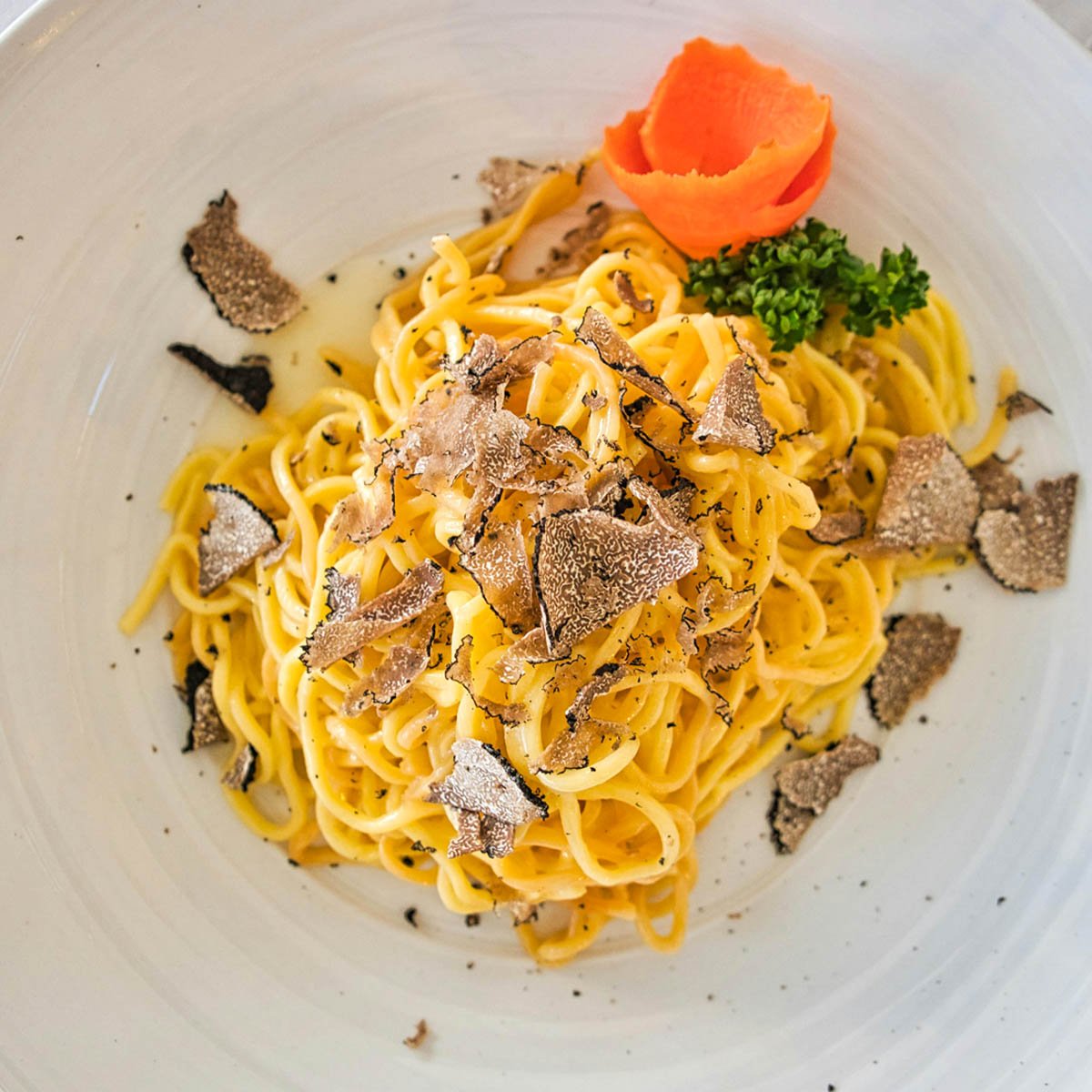
Ce qui distingue les truffes, ce n'est pas leur apparence, mais leur parfum. Leur arôme puissant et terreux, que certains décrivent comme évoquant la noisette, l'ail, voire une légère note animale, a conquis chefs et gourmets. Cet arôme s'intensifie à mesure qu'elles mûrissent sous terre, et ce bouquet envoûtant transforme des ingrédients simples comme les œufs, les pommes de terre ou les pâtes en mets raffinés. Les truffes s'apprécient de préférence fraîches, finement râpées sur des plats chauds pour libérer tout leur parfum.
Un monde de variétés
Il n'existe pas une seule variété de truffes. Parmi les plus prisées figurent la truffe blanche d'Alba en Italie et la truffe noire du Périgord en France. Chacune a sa saison, son profil aromatique et son prix. Les truffes blanches sont plus délicates et aromatiques, et se consomment généralement crues. Les truffes noires supportent une certaine cuisson et offrent une saveur plus profonde et plus intense. On trouve également des truffes d'été ou de Bourgogne, plus courantes mais plus douces.

À la recherche de truffes
Bien que je n'aie jamais vu de truffe trouvée, les histoires sont légendaires. Les cueilleurs s'enfoncent dans les bois à l'aube, leurs chiens trottinant à leurs côtés, le museau frétillant. Contrairement aux cochons – qui, autrefois, déterraient les truffes et les mangeaient souvent –, les chiens sont plus faciles à dresser et moins destructeurs. Dès l'instant où un chien s'arrête et creuse, la magie opère : l'extraction minutieuse de quelque chose d'invisible, d'enfoui et d'ancien, de délicieux.
Pourquoi la truffe est-elle si chère ? Un prix lié à sa rareté
Les truffes ne sont pas seulement chères : elles figurent parmi les ingrédients les plus onéreux du monde culinaire. Leur valeur dépend de l’espèce, de la saison et de leur origine. Les plus chères sont les truffes blanches italiennes (Tuber magnatum), qui peuvent atteindre plus de 4 000 TP4T la livre, surtout en pleine saison, à la fin de l’automne. Viennent ensuite les truffes noires du Périgord (Tuber melanosporum), dont le prix oscille généralement entre 800 et 1 500 TP4T la livre. Les truffes d’été et les truffes de Bourgogne, bien que toujours luxueuses, sont plus abordables, aux alentours de 200 à 400 TP4T la livre. Ce prix élevé s’explique par leur récolte aléatoire, leur courte durée de conservation et le travail considérable que représente leur recherche. Acheter une truffe, c’est payer pour la rareté de la nature et pour des siècles de vénération culinaire.

Produits à la truffe : huiles, sels et bien plus encore
Tout le monde n'a pas les moyens de s'offrir des truffes fraîches, c'est pourquoi le marché regorge de produits enrichis à la truffe. Huile de truffe, beurre de truffe, sel de truffe : autant de produits qui permettent de goûter au luxe à moindre coût. Attention toutefois : nombre d'entre eux utilisent des composés synthétiques pour imiter l'arôme naturel de la truffe, ce qui peut s'avérer trop prononcé et artificiel. Néanmoins, utilisés avec modération, ils peuvent sublimer vos plats maison.
Un goût qui vaut la peine d'être recherché
Malgré leur prix élevé et leur statut mythique, les truffes ont une origine étonnamment modeste : elles naissent sous terre, dépendent des arbres et des animaux, et sont découvertes grâce à l’intuition humaine et au flair canin. Alors, qu’est-ce qu’une truffe ? C’est la saveur de la forêt, un trésor éphémère et saisonnier, et un rappel que certains des plus grands plaisirs de la vie sont encore cueillis à la main, et non fabriqués industriellement.

Vous voulez en savoir plus ?
Suivez-nous sur les réseaux sociaux pour découvrir des recettes à base de truffes, des ingrédients phares et des astuces culinaires qui apporteront des saveurs gourmandes à vos repas du quotidien. Du choix de la meilleure huile à la maîtrise de plats simples et élégants, nos publications regorgent d'inspiration pour les cuisiniers curieux comme pour les gourmets avertis. Rejoignez la conversation, posez vos questions et apprenez-en plus sur les truffes avec nous, une publication à la fois.